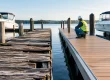
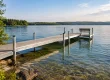
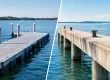
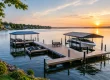
Municipalities can improve lake access quickly by deploying modular floating dock systems and pre-fabricated kayak launches. Unlike permanent concrete piers, these systems require minimal shoreline disturbance, often bypass complex heavy-construction permits, and can be installed in days, providing immediate utility for fishing, paddling, and boat mooring with lower capital investment.
Key Takeaways:
- Use modular systems to avoid the need for heavy machinery and dredging.
- Implement “soft launches” to give paddlers immediate water entry.
- Choose “anchored” over “piled” structures to reduce permanent environmental impact.
- Scale access by adding sections over multiple budget cycles.
- Focus on “ready-to-use” amenities that require zero curing time or painting.
Why This Matters
For many Texas towns, the “red tape” and cost of traditional waterfront construction are the biggest barriers to progress. A standard concrete or wood pier can take a year to permit, six months to build, and require massive disturbance to sensitive shorelines.
To improve lake access in a way that is fiscally and environmentally responsible, cities are turning to “low-impact” modular infrastructure. These systems allow a parks department to go from a blank shoreline to a functional boat launch or fishing pier in a single weekend. In a state where outdoor recreation demand is outpacing construction capacity, the ability to deploy amenities rapidly is a game-changer for community engagement.
Common Mistakes to Avoid
- Over-Engineering Small Projects: Treating a simple kayak launch like a bridge project, leading to unnecessary costs.
- Ignoring the “Non-Permanent” Advantage: Failing to realize that modular docks can often be moved or stored, which may simplify permitting in flood-prone areas.
- Dismissing Modular Stability: Assuming that because a dock isn’t “bolted to the earth,” it won’t be stable (modern systems offer exceptional buoyancy).
- Poor Site Selection: Placing new access points in areas with high siltation or heavy crosswinds without checking modular anchoring options.
- Lack of Scalability: Buying a “one-off” custom dock that can’t be added to later as the park’s popularity grows.
Best Practices
You don’t need a bulldozer to create a world-class waterfront.
1. The “Soft Launch” Strategy
Instead of pouring a concrete ramp, use a modular floating launch for kayaks, canoes, and paddleboards. These can be secured with simple land-based anchors and offer a stable, low-profile entry that prevents users from getting muddy or slipping on rocks.
2. Utilize Floating Boardwalks
If your shoreline is marshy or ecologically sensitive, don’t build a permanent road. A floating boardwalk “floats” on top of the vegetation, providing a dry path for visitors while allowing the ecosystem underneath to thrive.
3. Rapid Mooring Solutions
Add “courtesy slips” to existing parks by attaching modular floating sections to the end of an old ramp or pier. This immediately increases the capacity for boaters to stop and visit park amenities without requiring a new land-based structure.
4. Anchoring over Pilings
Traditional pilings require a barge and a pile-driver. To improve lake access without the heavy equipment, use “deadweight” anchors (concrete blocks on the lake floor) or stiff-arm shore brackets. These are easier to install and maintain.
Maintenance & Operations Plan
- Monthly: Check the “shore-to-water” connection points for any shifting.
- Seasonally: Adjust anchoring cables to account for summer evaporation or spring rains.
- Yearly: Inspect the modular couplers; most modern systems use “silent” rubber couplers that simply need a quick visual check for wear.
Budget & Planning Notes
- Speed to Market: Because these systems are “off-the-shelf,” you can improve your park’s metrics in the same fiscal year the funds are approved.
- Labor Savings: Many modular systems can be installed by your existing parks maintenance crew, eliminating the need for expensive marine contractors.
Safety & Liability Considerations
Low-construction does not mean low-safety. Modular systems often feature integrated handrails and non-slip surfaces that are more consistent and safer than “custom-built” wooden piers. Ensure all modular joints are tight to prevent “pinch points” for small fingers or toes.
FAQ
Can we really install a dock without a construction crew?
Yes. Most modular systems are designed for “man-portable” installation. A team of three or four people can often assemble and anchor a standard 20-foot dock in a few hours.
Do we still need a permit for modular docks?
Usually, yes, but the “Low Impact” nature of the design often qualifies for streamlined permitting (like “Nationwide Permits” from the Army Corps) because there is no dredging or filling involved.
How do modular docks handle “Texas-sized” waves?
High-quality modular systems are designed to “flex” with the water. Unlike a rigid wood dock that fights the wave (and eventually breaks), a modular dock moves with the energy, which is much more durable in high-wind conditions.
What is the best way to improve lake access for shore-based fishing?
Add a “T-shaped” modular pier. This gives anglers more “edge” space and keeps them out of the way of people walking along the shoreline.
Are these systems ADA compliant?
Absolutely. You can add specialized ADA-compliant ramps, transfer benches, and handrails to modular systems to ensure everyone can reach the water.
What happens if we need to move the dock later?
That is the biggest advantage. You can simply unbolt the sections and tow them to a new location or store them for the winter if your lake is prone to ice or extreme flooding.
Is it possible to add boat slips later?
Yes. The “modular” part means you can start with a straight walkway this year and add 5 or 10 slips next year without starting over.
How do we clean modular docks?
A simple pressure washer and water are usually enough. Because the material is non-porous, it doesn’t hold onto dirt or algae like wood does.
Checklist for Park Managers
- [ ] Identify 2–3 “underserved” shoreline areas that could benefit from access.
- [ ] Map the water depth 10 feet out from the shore at those locations.
- [ ] Check for existing land-based anchor points (trees, concrete walls, or large rocks).
- [ ] Choose a modular system that allows for tool-free or simple-tool assembly.
- [ ] Estimate the “man-hours” saved by choosing modular over permanent construction.
- [ ] Review “low-impact” permit requirements with your local river authority.
- [ ] Designate a “Kayak/Paddlesport” entry zone to separate users.
- [ ] Add a “trash and recycling” station near the new access point.
- [ ] Ensure the new path to the water is clear of tripping hazards.
- [ ] Take “before” photos of the shoreline to document the low-impact installation.
- [ ] Schedule a “Grand Opening” event for the community.
Improving your community’s relationship with the water shouldn’t take years of planning and construction. At EZ Dock Texas, we specialize in rapid-deployment, high-durability solutions that help you improve lake access in weeks, not years. Our modular systems are designed to grow with your park, providing a flexible and fiscally smart way to enhance Texas waterfronts. Ready to see how fast you can upgrade your park? Contact us today or see our latest “quick-install” projects on Facebook.