To reduce liability at public lakes, municipalities must implement a “defense-in-depth” strategy that combines clear, standardized safety signage with physical hazard mitigation. Key actions include installing non-slip modular decking, maintaining physical barriers between motorized and swimming zones, and keeping a meticulous, date-stamped log of all safety inspections and infrastructure repairs.
Key Takeaways:
- Use industry-standard, icon-based signage to overcome language barriers.
- Maintain strict separation between boat traffic and swim areas.
- Eliminate physical trip, splinter, and burn hazards with modern materials.
- Document every inspection and repair in a centralized “Safety Log.”
- Provide accessible, visible rescue equipment like life rings and PFD stations.
Why This Matters
Public waterfronts are “attractive nuisances” in the eyes of the law. While Texas offers some protections through the Tort Claims Act and recreational use statutes, these do not provide a “get out of jail free” card if a municipality is found to be grossly negligent.
To reduce liability at public lakes, park directors must move beyond “warning” the public and start “designing” for the public. This means proactively identifying where accidents are likely to happen—such as slippery ramps, dark walkways, or confusing swim boundaries—and using modern infrastructure to eliminate those risks. A safe park is not just a community benefit; it is a fiscal necessity that protects the city’s insurance premiums and legal reputation.
Common Mistakes to Avoid
- “Hidden” Hazard Failure: Knowing about an underwater stump or a loose dock board but failing to mark it or fix it immediately.
- Inconsistent Signage: Using different safety icons or messaging at different parks within the same county.
- Over-Reliance on Lifeguards: Assuming a lifeguard can solve poor design issues like “blind spots” or dangerous currents.
- Neglecting “After-Hours” Safety: Failing to provide lighting or clear boundary markers for visitors who use the park at dusk or dawn.
- Failing to Track “Near-Misses”: Ignoring minor incidents or complaints that are actually warning signs of a major future accident.
- Inadequate ADA Paths: Creating “safety hazards” for those with mobility aids by using uneven or steep waterfront transitions.
Best Practices
Risk management is about reducing the probability and the severity of an incident.
1. Standardized “Warning Zones”
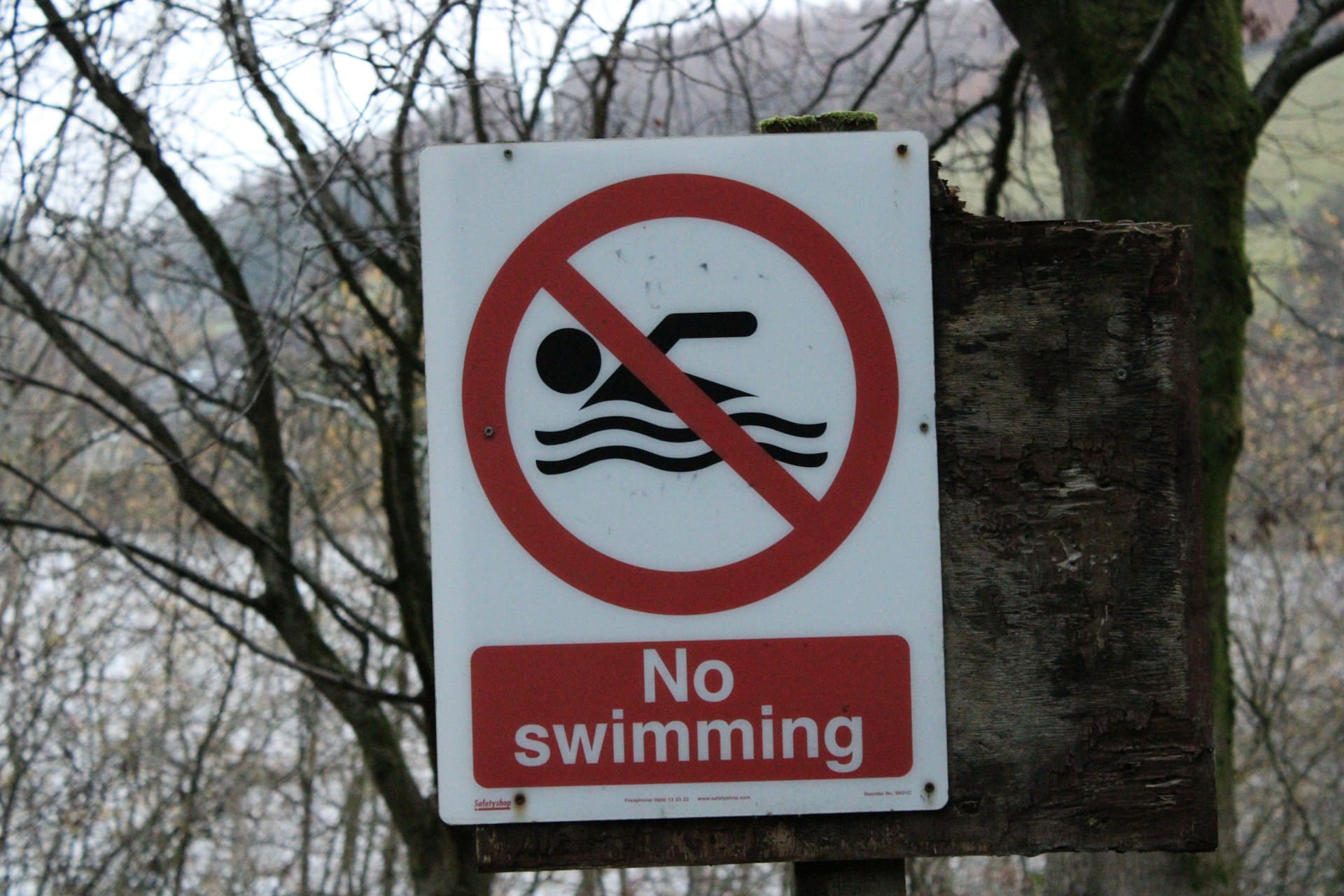
Every entry point to the water should have a “Safety Hub.” This hub should include a map of the area, rules for usage, and emergency contact info. In Texas, where many visitors may not speak English as a first language, use international symbols for “No Diving,” “Life Jacket Required,” and “Boats Only.”
2. Eliminate the “Big Three” Hazards
Most waterfront injuries fall into three categories: Slips, Splinters, and Burns.
- Slips: Use modular decking with a molded-in aggressive texture.
- Splinters: Transition away from aging wood to composite or HDPE materials.
- Burns: Use light-colored, UV-stable materials that stay cool even in the Texas heat.
3. Physical Boundary Enforcement
Don’t just tell boaters to stay away from swimmers; make it impossible for them to cross paths. Use heavy-duty buoy lines to create a physical “wall” for the swim area. Ensure boat launches have dedicated “loading only” zones that keep people away from active propellers.
4. The “Paper Trail” Defense
If an incident occurs, your best defense is your maintenance log. To reduce liability at public lakes, you must prove a pattern of “Reasonable Care.”
- Use a digital system to track weekly safety walks.
- Photograph repairs as they are completed.
- Keep records of staff safety training (e.g., PFD station management, basic first aid).
Maintenance & Operations Plan
- Daily: Quick visual sweep for “immediate hazards” (broken glass, fishing hooks, or loose boards).
- Weekly: Test the stability of all handrails and gangways.
- Monthly: Conduct a “Hardware Audit” to ensure no bolts have loosened or sheared.
- Post-Incident: Perform an immediate “Root Cause” inspection and document any changes made to prevent a recurrence.
Budget & Planning Notes
- Insurance Credits: Some municipal insurance pools offer lower premiums or grants for departments that install standardized safety equipment and modern, low-risk modular infrastructure.
- Safety First CAPEX: When proposing new docks, categorize them as “Safety & Compliance Upgrades” rather than “Recreation Enhancements” to prioritize funding.
Safety & Liability Considerations
Liability doesn’t end at the dock edge.
- Lighting: Ensure the path from the water to the parking lot is well-lit to prevent “after-dark” falls.
- Depth Markers: Clearly mark the depth at the end of every dock.
- Rescue Stations: Ensure life rings are not “under lock and key” but are instantly accessible to any bystander.
FAQ
Can a municipality be sued if a visitor drowns?
In Texas, government entities have some immunity, but they can be liable if they fail to warn against a “known dangerous condition” that a visitor wouldn’t reasonably discover.
What is the best way to mark “No Diving” areas?
Use “permanent” markers, such as those molded directly into modular dock surfaces, which cannot be vandalized or washed away like paint or stickers.
Are “Life Jacket Loaner” stations a liability?
Generally, no. In fact, providing them demonstrates a high level of “proactive care.” Ensure the station has a disclaimer that the user is responsible for the fit and condition of the jacket.
How do we reduce liability at our boat launches?
The most effective way is to use “non-slip” ramp materials and provide a separate, stable floating dock for passengers to wait while the boat is being backed in.
How do we prove we are maintaining our waterfront?
Keep a dated logbook (either physical or digital) that records every inspection, the name of the inspector, and any actions taken to fix hazards.
What should we do if we find a hazard we can’t fix immediately?
“Close” the affected area with physical barriers (caution tape/fencing) and post prominent “Danger: Area Closed” signage until the repair is complete.
Does ADA compliance help with liability?
Yes. Providing a safe, stable, and standardized path for all users reduces the likelihood of accidents among the most vulnerable visitors.
What is the “Recreational Use Statute”?
It is a Texas law that can limit the liability of a landowner (including some public entities) if they allow the public to use their land for recreation free of charge, but it doesn’t protect against gross negligence.
Checklist for Risk Managers
- [ ] Verify that all “No Diving” signs are legible and correctly placed.
- [ ] Check all dock surfaces for “slip-inducing” algae or slime.
- [ ] Ensure all swim areas have a continuous, anchored buoy line.
- [ ] Test every life-ring throw-rope for “dry rot” or brittleness.
- [ ] Confirm that “No Wake” zones are clearly marked.
- [ ] Audit the lighting along all waterfront paths and gangways.
- [ ] Review the last 12 months of maintenance logs for gaps.
- [ ] Inspect all transition plates for trip hazards or “toe-catchers.”
- [ ] Ensure that emergency vehicle access to the waterfront is unobstructed.
- [ ] Verify that depth markers are accurate for the current lake level.
- [ ] Train all seasonal staff on the park’s “Incident Reporting” protocol.
- [ ] Replace any rusted or damaged “Safety Hub” components.
Protecting your community starts with a commitment to a safer waterfront. At EZ Dock Texas, we help municipalities reduce liability at public lakes by providing infrastructure that exceeds safety standards. From our high-traction surfaces to our stable, ADA-compliant modular designs, we build with risk management in mind. To learn more about how we can help you harden your waterfront against accidents, contact us today or join our safety-first community on Facebook.