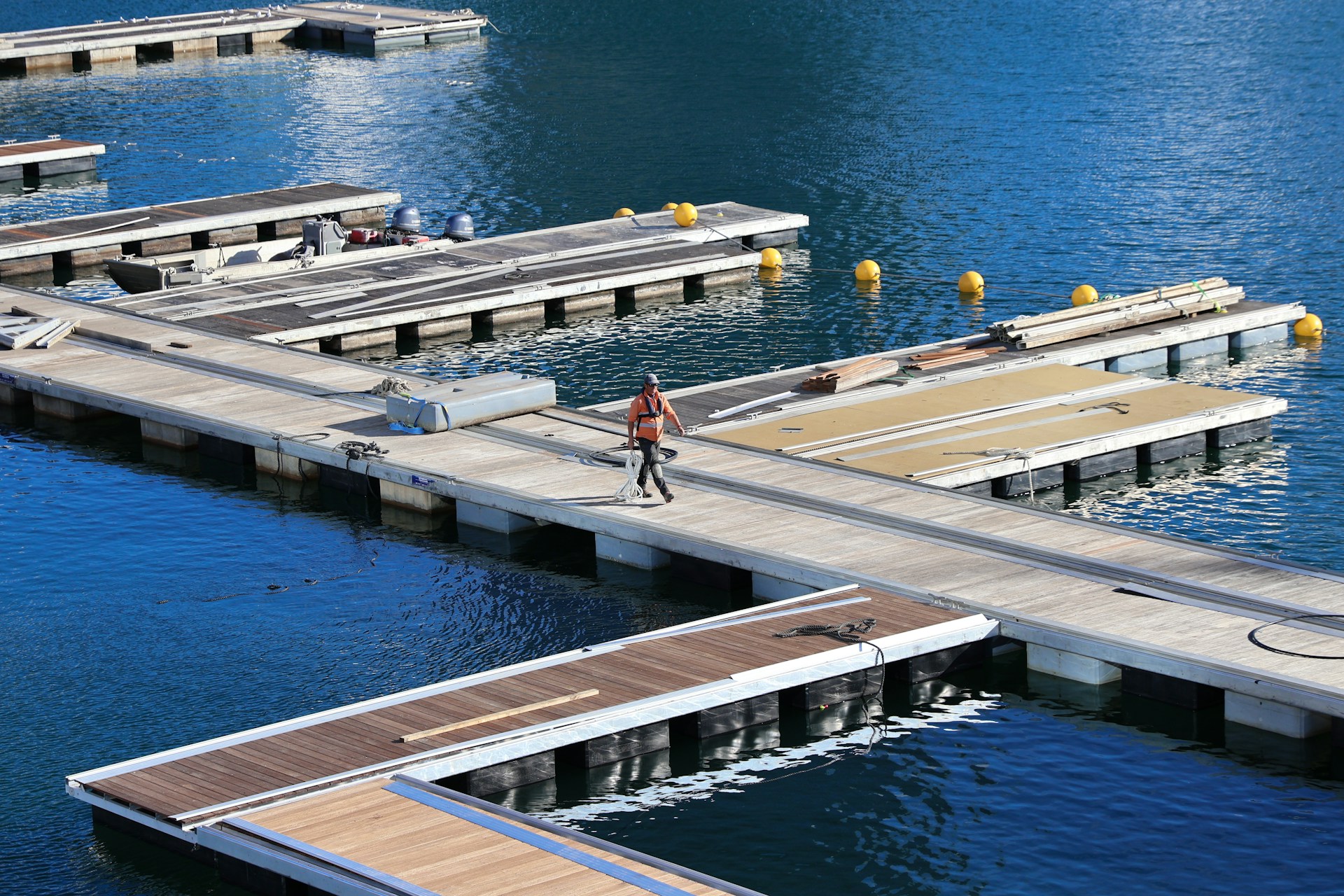
A seasonal dock maintenance checklist ensures Texas waterfronts survive extreme heat and sudden floods. Key tasks include quarterly hardware tightening, biannual cleaning to prevent slips, and annual structural audits of anchoring systems. Prioritizing the inspection of flotation units, gangway transitions, and safety signage helps prevent costly repairs and reduces community liability.
Key Takeaways:
- Tighten all hardware and fasteners at the start of every season.
- Inspect flotation units for punctures or uneven buoyancy monthly.
- Clean surfaces regularly to prevent algae-related slip hazards.
- Verify the integrity of anchoring systems after every major storm.
- Test all safety lighting and refresh emergency signage twice a year.
Why This Matters
Texas weather is notoriously hard on waterfront infrastructure. From the 100-degree summers that bake decking to the flash floods that strain anchoring systems, “set it and forget it” is not a viable strategy.
Following a seasonal dock maintenance checklist is the most effective way to protect a community’s capital investment. Regular inspections allow for minor “tweak-and-tune” repairs that prevent catastrophic failures. For HOAs and municipalities, a documented maintenance history is also a critical piece of risk management, proving that the organization has met its “duty of care” to the public.
Common Mistakes to Avoid
- Skipping Post-Storm Inspections: Assuming a dock is fine just because it’s still floating after a major wind event.
- Using Harsh Chemicals: Cleaning docks with bleach or phosphates that harm the local ecosystem and can damage dock materials.
- Neglecting the Anchoring: Only looking at the surface and ignoring the underwater cables or pilings that do the heavy lifting.
- Over-Tightening Hardware: Putting too much stress on fasteners, which can lead to shearing under the natural flex of the water.
- Ignoring Faded Signage: Allowing “No Diving” or “Warning” signs to become illegible, creating a massive liability gap.
- Reactive Cleaning: Waiting for the dock to become a “slip-and-slide” before addressing algae buildup.
Best Practices
Maintenance should be treated as a cycle, not a chore.
1. The Hardware “Tension” Check
Waterfront structures are constantly in motion. This movement eventually loosens even the best bolts. Every spring and fall, your crew should walk the dock with a wrench, checking every cleat, coupler, and railing post.
2. Buoyancy and Leveling
A dock that “leans” is a dock with a problem. Periodically check the waterline on your flotation units. If one section is sitting lower than the others, it may indicate a puncture or a loose bracket. Keeping the dock level ensures that gangways and transitions remain safe for wheelchairs and strollers.
3. Surface Traction Maintenance
Texas humidity can lead to rapid algae growth on shaded or low-traffic areas. Use a soft-bristle brush and water (or an eco-friendly marine cleaner) to keep walkways high-traction. This is the single easiest way to prevent “slip and fall” incidents.
4. Anchoring Adjustments
Texas lake levels change. Ensure your anchoring system (whether cables or piles) has enough “travel” to handle a sudden rise in water level. If using cables, they should be taut enough to prevent excessive drifting but loose enough to accommodate the lake’s natural “surge.”
Maintenance & Operations Plan
- Spring (The “Launch” Check): Deep clean, tighten all hardware, and reinstall any accessories removed for winter.
- Summer (The “Traffic” Check): Weekly visual sweep for debris, daily check of life jacket stations, and monthly hardware “spot checks.”
- Fall (The “Storm” Check): Inspect all anchoring points before the windy season and check for UV damage from the summer sun.
- Winter (The “Storage” Check): Remove or secure loose accessories like ladders and benches. If in a freeze-prone area, ensure de-icers are functional.
Budget & Planning Notes
- Lifecycle Savings: High-quality modular HDPE systems require about 80% less maintenance time than wood, allowing you to reallocate labor hours to other park needs.
- Emergency Fund: Always set aside 5-10% of your annual waterfront budget for “unforeseen storm repairs.”
Safety & Liability Considerations
The “Seasonal Checklist” is your legal shield.
- The Logbook: Every time a staff member or contractor performs an inspection, it must be logged with the date and findings.
- Hardware Integrity: Any rusted or “seized” hardware should be replaced immediately with marine-grade stainless steel or galvanized components to prevent structural failure.
FAQ
How often should we clean our community dock?
High-traffic areas should be swept weekly. A deep clean with water and a soft brush should be part of your seasonal dock maintenance checklist twice a year.
What is the best way to handle loose bolts on a floating dock?
Don’t just tighten them once; check them seasonally. Use “lock-nuts” or thread-locking fluid to prevent them from backing out due to wave vibration.
How do we check for underwater damage?
While you don’t always need a diver, you can use a waterproof “GoPro” on a pole or a simple underwater camera to inspect anchoring cables and flotation units.
Should we remove our docks in the winter?
In most of Texas, no. Modern modular docks are designed to stay in the water year-round. However, accessories like ladders and hoses should be stored to prevent ice damage or theft.
How do we prevent our wood dock from splintering?
Wood requires annual sanding and sealing. If maintenance is becoming a burden, consider transitioning to modular HDPE sections that never splinter or rot.
What do we do if the lake level drops too low?
Modular docks can often be “pushed” further into the water or allowed to sit on soft sand. Ensure there are no sharp rocks underneath that could puncture the floats.
How do we maintain dock lights?
Check solar panels for “fogging” or dirt buildup and wipe them clean. Test any electrical wiring for signs of animal gnawing or corrosion.
How long do dock anchors last?
Galvanized chains and cables typically last 5–10 years in freshwater but should be inspected annually for “thinning” or rust.
Checklist for Maintenance Teams
- [ ] Tighten every bolt on every cleat and railing.
- [ ] Inspect modular couplers for cracks or wear.
- [ ] Check all flotation units for “low spots” or punctures.
- [ ] Pressure wash (low PSI) or scrub all decking surfaces.
- [ ] Test the stability of all gangway handrails.
- [ ] Lubricate any moving parts (hinges, rollers, or sliders).
- [ ] Clear debris from the space between the dock and the shoreline.
- [ ] Ensure “No Diving” and “Max Capacity” signs are legible.
- [ ] Verify that the life ring and throw-rope are in place and functional.
- [ ] Check anchoring cables for proper tension and lack of rust.
- [ ] Inspect the “shoreline abutment” for erosion or cracking.
- [ ] Log all maintenance activities in the official park/HOA record.
A well-maintained waterfront is a safe and welcoming one. By following a consistent seasonal dock maintenance checklist, you can ensure your community’s investment remains a source of pride rather than a liability. At EZ Dock Texas, we build our products to be the lowest-maintenance solutions on the market, but we are always here to help you audit and optimize your current setup. To request a professional site maintenance review, contact us today or see our tips for dock longevity on Facebook.