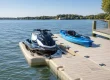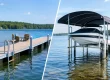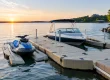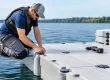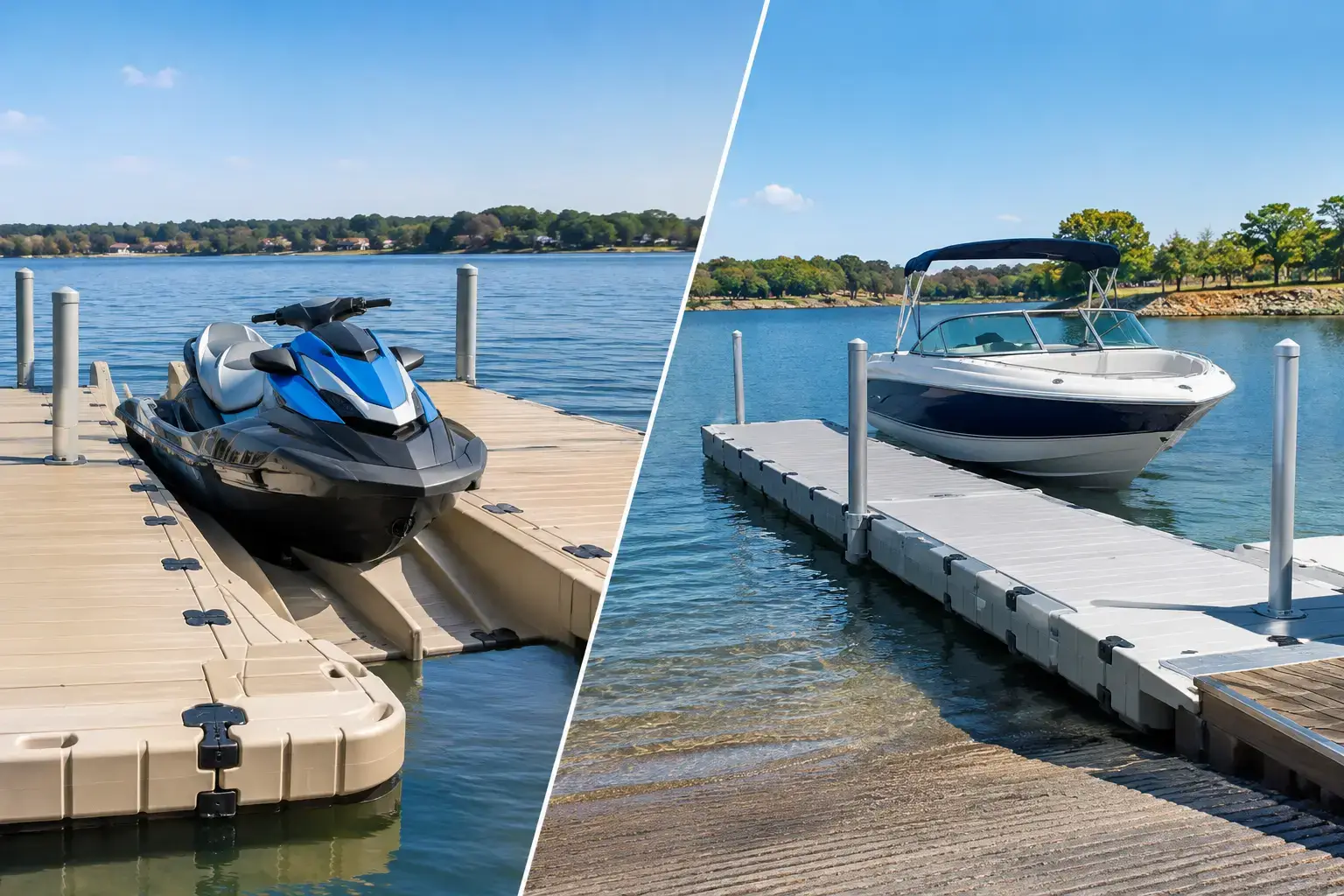
A launch dock versus boat ramp decision usually comes down to one question: are people launching a trailered boat, or are they getting in and out of a vessel already at the water’s edge? The distinction matters. A ramp is built for vehicles and trailers. A floating launch dock is built for people, paddlers, anglers, and boaters who need stable access alongside the water.
For a lake home, marina, campground, park, or public waterfront, the right answer may be one system, or a carefully planned combination of both. The best choice depends on the types of watercraft in use, water-level changes, shoreline conditions, accessibility goals, and the level of daily traffic the site must handle.
Launch Dock Versus Boat Ramp: The Core Difference
A boat ramp is an inclined, hard-surface path from land into the water. Drivers back a trailer down the ramp to launch or retrieve trailered boats. Concrete is common because it can handle vehicle weight, repeated tire traffic, and wet conditions when properly designed. Ramps are practical for bass boats, ski boats, pontoons, and other vessels that arrive on trailers.
A launch dock, often called a floating launch dock or transfer dock, provides an accessible platform at water level. It gives users a place to step into a kayak, canoe, rowing shell, fishing boat, or personal watercraft without balancing on an uneven bank or attempting to board from a submerged ramp edge. Because a floating dock rises and falls with the water, its deck stays closer to the vessel’s boarding height than a fixed platform.
These systems serve different jobs. A ramp gets a vessel from a trailer into the water. A dock helps people safely enter, exit, tie up, load gear, fish, or transfer between shore and boat.
When a Boat Ramp Is the Right Investment
A boat ramp is the logical starting point when trailer launching is central to how the property operates. This includes public lakes with frequent boat traffic, marinas that serve trailered powerboats, private communities with shared launch access, and rural properties where an owner needs to launch a boat from storage.
For trailer use, the ramp needs more than a slab of concrete sloping into the water. It must be designed for the anticipated boat sizes, trailer turning radius, shoreline grade, soil conditions, drainage, and water depth at the end of the ramp. A ramp that is too short can become unusable during low water. One that is too steep can create traction problems, especially with heavy trucks and wet tires.
A ramp also needs enough room around it. Congestion builds quickly when people are waiting to launch, park trailers, load passengers, or retrieve boats. In public settings, a designated staging area and clear traffic flow can be as important as the ramp itself.
Ramps work best where the shoreline can support vehicle access and where the owner is prepared for periodic maintenance. Sediment, algae, erosion, cracked pavement, and changing lake-bottom conditions can all affect performance over time.
When a Floating Launch Dock Makes More Sense
A floating launch dock is often the better fit when the priority is low-impact, person-centered access rather than trailer launching. It is particularly useful for kayaks, canoes, paddleboards, rowing programs, small fishing boats, and watercraft that users can carry, wheel, or launch by hand.
For homeowners, a dock can turn a steep or muddy shoreline into a usable waterfront area for everyday recreation. Instead of stepping down a rocky bank with a cooler, fishing gear, or a child’s life jacket in hand, users can walk down a gangway to a stable platform. The dock can also create a comfortable place to board a boat, swim, fish, or simply enjoy the water.
For parks, schools, camps, and public recreation departments, a purpose-designed launch dock helps organize access and reduce shoreline wear. Repeated launching from the same natural bank can damage vegetation and create erosion. A floating access point concentrates activity in a durable, planned area.
A modular floating system is especially valuable on reservoirs and lakes with changing water levels. In Texas, Oklahoma, Arkansas, and New Mexico, seasonal drawdowns and storm-driven fluctuations can make a fixed shoreline platform inconvenient or inaccessible. A properly anchored floating dock follows the water while the gangway maintains the connection to shore.
Better boarding for paddlers and small craft
Kayaks and canoes are difficult to enter from a high dock or a loose shoreline. A launch dock can be configured with a lower freeboard and launch edge that makes it easier to stabilize the craft while getting in or out. This is helpful for new paddlers, older users, children, and adaptive recreation programs.
The details matter. A good launch area provides a clear approach, usable handhold locations, room to manage paddles and gear, and a deck surface with dependable traction. Adding railings where appropriate, a gently sloped gangway, and adequate lighting can make the area more comfortable for early-morning anglers and evening waterfront use.
Comparing Cost, Maintenance, and Flexibility
A boat ramp may have a lower cost than a full dock system in some straightforward locations, but the total project cost can rise quickly when excavation, grading, concrete work, shoreline stabilization, permitting, drainage, and parking improvements are needed. Its long-term maintenance is tied closely to runoff, sediment, water movement, and the condition of the submerged ramp surface.
A floating launch dock requires an investment in dock sections, a gangway, anchoring, shore connection, and site-specific installation. It can be more flexible after installation, however. Modular sections can be expanded, reconfigured, or adapted as recreational needs change. A property that starts with a kayak launch may later add a boat slip, fishing platform, PWC port, swim area, or connecting walkway.
Low-maintenance polymer floating dock systems avoid many of the recurring issues associated with wood, including splinters, rot, staining, and frequent sealing. The right dock is not maintenance-free, but durable modular components can reduce the routine work required to keep the waterfront functional and presentable.
Accessibility and Safety Considerations
Neither a boat ramp nor a launch dock is automatically accessible just because it reaches the water. Safe, inclusive access depends on the complete path from parking or the residence to the launch point.
For public projects, consider the route width, slope, deck traction, transition points, handrails, edge protection, lighting, and available turning space. A gangway that becomes excessively steep at low water can be difficult for many users. Anchoring and gangway length should be planned around the site’s known water-level range, not just the level on installation day.
For residential properties, safety often comes down to practical use. Can someone carry a life jacket, tackle box, or paddle down to the water without navigating loose stone? Is there a stable place to tie up while loading passengers? Can children and guests get in and out of the boat without standing on a wet, sloped ramp?
A ramp can be slippery for pedestrians, particularly where algae develops near the waterline. A dock should have a slip-resistant surface and a layout that avoids pinch points, abrupt elevation changes, or unstable connections. If swimming occurs nearby, separate the swim area from boat traffic and provide a clear exit ladder.
The Case for Using Both
Many successful waterfronts need both a ramp and a dock. The ramp handles the vehicle and trailer. The adjacent floating dock handles boarding, waiting, loading, and tie-up. This arrangement keeps people out of the trailer path and makes launching more orderly.
At a busy public ramp, a courtesy dock gives boaters a place to move away from the ramp once their vessel is afloat. At a private lake property, a small ramp can support occasional launching while a floating dock becomes the daily access point for fishing, swimming, and family boating.
The layout needs careful planning. A dock placed too close to the ramp can interfere with backing trailers or create a collision risk. It should sit where it supports the launching process without narrowing the ramp approach or blocking maneuvering room. Wind direction, prevailing wave action, and seasonal water levels should guide the final placement.
Start With How the Waterfront Will Be Used
Before selecting equipment, define the traffic the site needs to support. Consider whether users will arrive with trailers, carry kayaks from parking, need fishing access, require ADA-conscious routes, or board boats during low-water periods. Also consider what the waterfront may need five or ten years from now.
EZ Dock Texas designs waterfront access around those real operating conditions, from private lake docks to public launch areas and commercial marina systems. A site visit and customized layout can identify the right mix of floating dock, gangway, anchoring, launch features, and shoreline access before construction decisions become expensive to change.
The best waterfront access is not the one that looks good on opening day. It is the one that still gives people a safe, practical way to reach the water after years of changing levels, changing users, and changing plans.