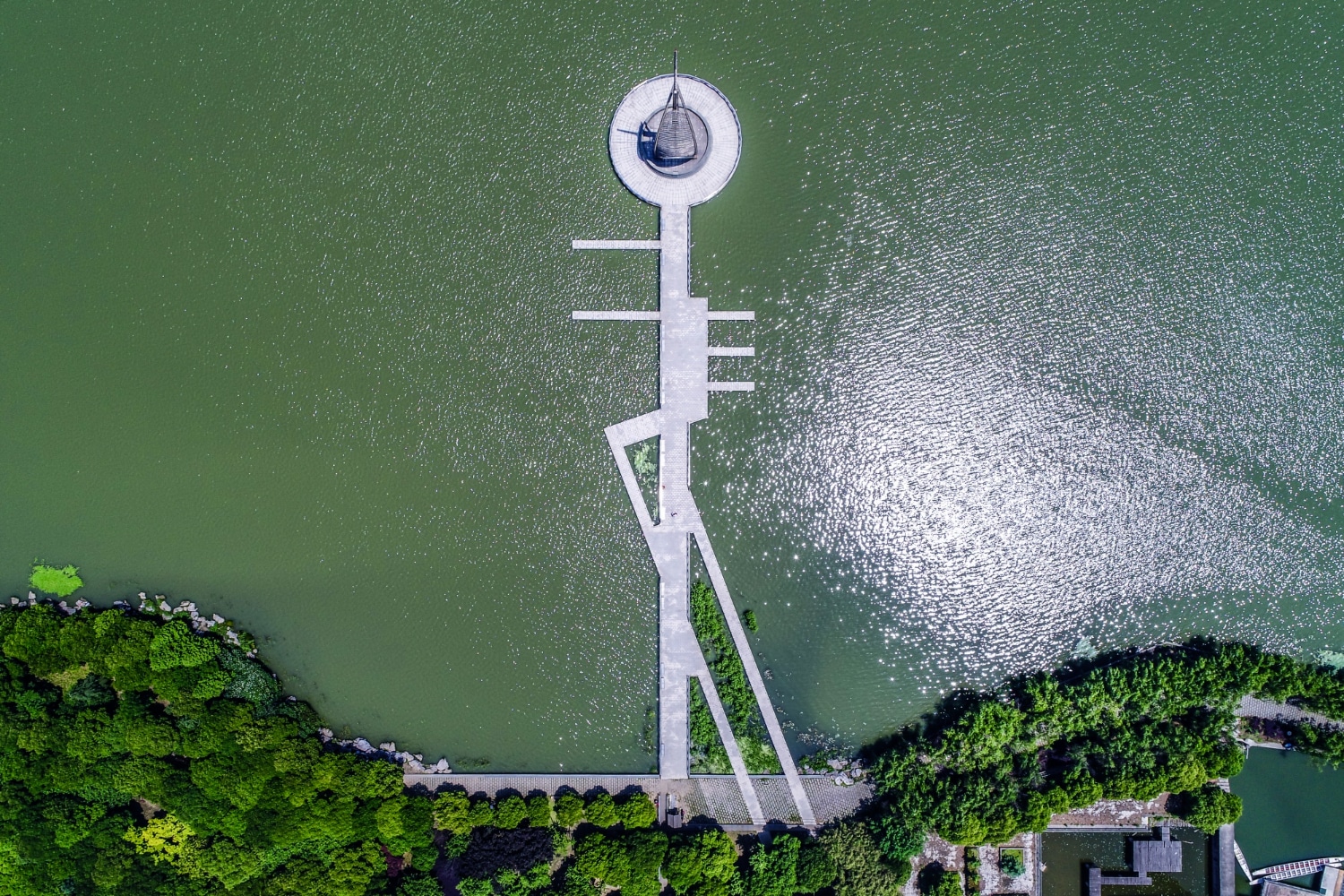
In modern waterfront planning, floating infrastructure serves as a resilient alternative to fixed piers, specifically designed to handle the 10-to-20-foot water level fluctuations common in Texas. These systems offer superior durability, easier ADA compliance, and modular scalability, allowing municipalities to expand recreational capacity without the environmental impact or high costs of traditional heavy construction.
Key Takeaways
- Floating systems maintain a constant “freeboard” height regardless of lake levels.
- Modular designs allow for “just-in-time” expansion as park demand grows.
- Floating docks have a lower environmental footprint than permanent pilings.
- Built-in flexibility reduces structural damage during Texas flood events.
- Advanced HDPE materials offer a 25+ year lifespan with minimal maintenance.
Why This Matters
Traditional waterfront planning often relied on “static” solutions—concrete piers and timber pilings driven deep into the lakebed. In the modern Texas context, these are increasingly becoming liabilities. As our climate cycles between extreme droughts and flash floods, fixed structures are frequently left either dangerously high above the water or completely submerged.
Floating infrastructure represents a shift toward “dynamic” planning. By decoupling the walking surface from the lakebed, planners create assets that are inherently resilient. Whether you are managing a municipal lake in the Hill Country or a coastal marina, floating systems provide a consistent, safe user experience 365 days a year, regardless of what the water is doing.
Common Mistakes to Avoid
- Designing for “Full Pool” Only: Failing to realize that a fixed dock is useless—and potentially a tripping hazard—during a standard Texas drought.
- Ignoring Lateral Loads: Underestimating the wind and wave pressure on floating systems in wide-open Texas reservoirs.
- Rigid Anchoring: Using anchoring methods that don’t allow the dock to “breath” or move vertically during a flood.
- Inconsistent Transitions: Using gangways that are too short, creating dangerously steep angles when water levels drop.
- Assuming “One Size Fits All”: Not accounting for the specific buoyancy needs of high-traffic public areas versus private slips.
- Neglecting Material Science: Choosing metals that corrode or woods that rot when HDPE (High-Density Polyethylene) provides a much longer lifecycle.
Best Practices
Modern planning requires a “systems” approach to the shoreline.
1. Adaptive Connectivity
The most critical part of floating infrastructure is the connection to land. Use long-span gangways (30-50 feet) to ensure that even at low water levels, the slope remains within ADA-compliant limits (1:12).
2. Modular Scalability
Plan your waterfront in “cells.” Start with a primary floating spine. As your census of boaters or kayakers increases, you can “plug in” new modules without needing to re-permit the entire site or bring in heavy construction barges.
3. Integrated Utility Channels
Modern floating docks should feature internal raceways for power, water, and data. This allows for “smart” upgrades like solar lighting, security cameras, and Wi-Fi hubs without having unsightly cables draped across the walking surface.
4. Environmental Stewardship
Floating systems typically require fewer “points of contact” with the lakebed. This preserves underwater habitats and minimizes the disruption of shoreline vegetation, which is a major advantage during the environmental review process.
Maintenance & Operations Plan
- Monthly: Inspect the “silent” rubber couplers that connect modular sections.
- Seasonally: Adjust “stiff-arm” or cable anchoring to ensure the dock is centered and secure.
- Annually: Conduct a “buoyancy check” to ensure the internal chambers are free of water and the dock is sitting level.
- 5-Year Cycle: Replace sacrificial anodes on any metallic anchoring components to prevent galvanic corrosion.
Budget & Planning Notes
- CAPEX Efficiency: Because floating infrastructure is often pre-fabricated, site prep costs are significantly lower than traditional construction.
- Asset Portability: Unlike a concrete pier, a floating dock is a “movable asset.” If a park location is decommissioned or redesigned, the infrastructure can be towed to a new site, preserving the municipality’s capital.
Safety & Liability Considerations
Safety is inherent in the design. Because the dock moves with the water, the “step-down” from the dock into a boat or kayak is always the same height. This consistency is the single best way to reduce “embarkation injuries,” which are the most common waterfront accident.
FAQ
Is floating infrastructure as stable as a fixed pier?
When properly engineered with high-density flotation, modern floating docks feel remarkably solid. They are designed to dampen wave energy rather than fight it.
How does floating infrastructure handle Texas floods?
Incredible well. While fixed docks can be ripped apart by rising water, floating docks simply rise on their pilings or cables, remaining safely above the surge.
Can floating docks handle heavy foot traffic?
Yes. Commercial-grade modular systems have very high “live load” ratings, making them suitable for festivals, fishing tournaments, and large public gatherings.
What is the role of floating infrastructure in urban revitalization?
It allows cities to turn “industrial” or “neglected” shorelines into recreational hubs quickly and with minimal permanent alteration to the landscape.
How long do these systems last?
High-quality HDPE systems are UV-stabilized and designed for a 20-30 year lifespan in harsh sun and freshwater environments.
Do floating docks get too hot in the Texas sun?
No. Most modern HDPE systems are designed with light-colored, heat-dissipating surfaces that are much cooler than wood or metal.
Is it hard to get permits for floating docks?
Actually, it’s often easier. Because they don’t involve “fill” or dredging, many regulatory agencies view them as a “Low Impact” development.
Can we attach a floating dock to an existing concrete seawall?
Absolutely. Specialized brackets allow floating systems to move vertically along a seawall while remaining securely fixed in place.
Checklist for Waterfront Planners
- [ ] Analyze historical lake level data (10-year high and low).
- [ ] Determine the “Peak Live Load” (number of people on the dock at once).
- [ ] Choose a modular system with integrated utility channels.
- [ ] Plan for gangways that maintain a 1:12 slope at the lowest water level.
- [ ] Select anchoring (piles vs. cables) based on lakebed soil type.
- [ ] Verify the “Freeboard” height needed for your specific user groups.
- [ ] Ensure all materials are non-toxic and “marine-safe.”
- [ ] Include “safe zones” with railings for children and seniors.
- [ ] Check for compatibility with future “add-on” accessories.
- [ ] Document the “low-impact” nature of the design for environmental permits.
- [ ] Identify a “local partner” for long-term parts and service support.
- [ ] Establish a sinking fund for lifecycle replacement in year 25.
The future of the Texas waterfront is flexible. By embracing floating infrastructure, park departments and municipalities can build recreation areas that are not only beautiful but also resilient to the environmental challenges of our state. At EZ Dock Texas, we specialize in helping planners transition from static designs to dynamic, modular solutions that maximize both budget and visitor safety. To see how floating systems can transform your next project, contact us today or explore our latest installations on Facebook.