A shoreline can look perfectly calm from the house and still be difficult to use. A steep bank, changing water level, muddy footing, or an awkward step into a boat can turn a lake day into a balancing act. That is where a beginner’s guide to floating docks for lake homes starts: not with a dock size, but with how you want your family and guests to use the water.
A floating dock rises and falls with the lake, keeping the deck closer to a consistent height above the water than a fixed structure. For many lakefront properties, that makes boarding a boat, launching a kayak, fishing with kids, or stepping off a personal watercraft easier across changing conditions. The right system, however, depends on the shoreline, water depth, expected traffic, local rules, and a practical anchoring plan.
A beginner’s guide to floating docks for lake homes
Floating docks are buoyant platforms connected to shore by a gangway or ramp and held in position with an anchoring system. Rather than relying on permanent pilings alone, the dock moves vertically as the water rises or recedes. That adaptability is especially valuable on reservoirs and lakes with seasonal or operational water-level changes.
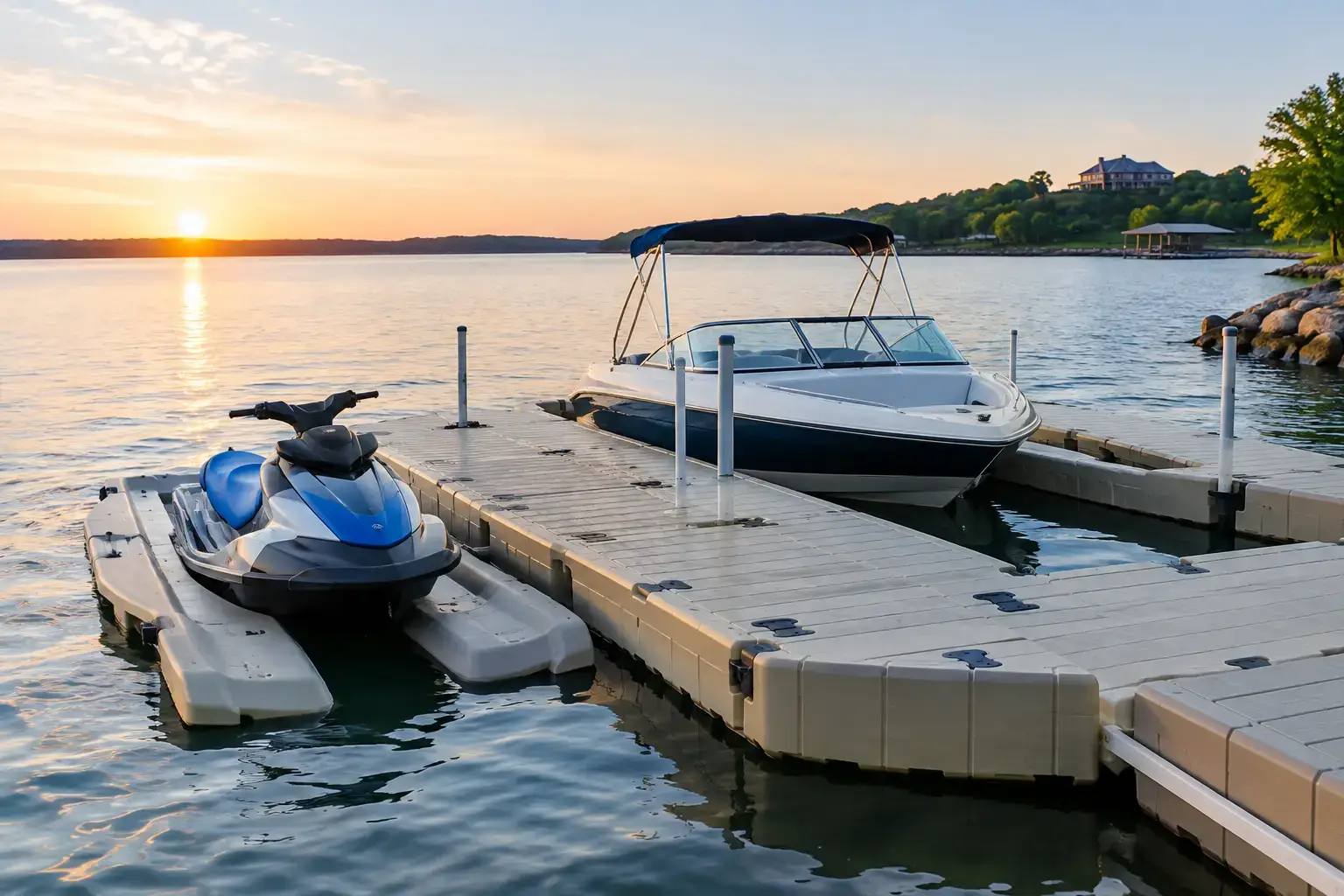
For a lake homeowner, the main benefit is usable access. A properly designed floating dock can create a stable place to board boats, fish, swim, load coolers, and stage water gear. Modular dock systems add another advantage: the layout can be expanded or reconfigured as your needs change. A simple walkway and platform today may later become a boat slip, kayak launch, swim area, or personal watercraft port.
Floating does not mean maintenance-free or one-size-fits-all. Waves, wind, boat wakes, fluctuating water, and shoreline conditions all affect the design. A dock that works well in a protected cove may need more stabilization in open water or deep-water conditions.
Start with how you use the lake
Before comparing dock materials or shapes, picture a typical weekend at the property. If the dock is mainly for fishing and swimming, an open platform with a ladder and a clear approach from shore may be enough. If boating is the priority, the layout should allow safe boarding, tie-up points, and enough space to walk around the vessel. Kayaks, canoes, paddleboards, and PWCs often benefit from purpose-built launches or ports that reduce lifting and protect equipment.
Traffic matters as much as recreation. A couple using the dock occasionally has different needs than a multigenerational family, an HOA, or a rental property with frequent guests. Think about whether children, older adults, or people with limited mobility will use the dock. Wider walking surfaces, railings, transition plates, and a properly sloped gangway can make a meaningful difference in everyday safety.
Also consider the future. A modular system is a practical choice when you may add another boat, purchase a PWC, or create a dedicated swim area later. Designing a layout with expansion in mind can avoid replacing a dock that is otherwise in good condition.
Choose a layout that fits the shoreline
Most residential floating docks begin with a gangway leading from shore to a walkway or main platform. From there, the design may branch into a T, L, U, or straight configuration. There is no universally best shape. The best layout creates clear circulation, suits the available water, and leaves enough room to maneuver boats safely.
A straight dock is often efficient for fishing, swimming, or basic access. An L-shaped layout can provide a protected tie-up area while giving users more deck space. A U-shaped configuration may help define a slip, but it needs adequate width and depth for the boat to enter and exit without tight turns. On narrow coves, a layout that looks ideal on paper can become inconvenient once the boat is in place.
Water depth should be measured at more than one point and considered at both typical and low-water levels. A floating dock may still float in shallow water, but your boat needs enough draft clearance to reach it. Shoreline slope also affects gangway length. When the water drops, a short gangway can become too steep for comfortable use.
Anchoring is what makes a dock dependable
A floating dock is only as reliable as its anchoring system. Anchors hold the dock where it belongs while allowing it to move vertically with changing water levels. The correct approach depends on water depth, bottom conditions, wind exposure, wave action, dock size, and whether the lake level changes dramatically.
Common solutions can include pipe guides in shallower water, cable systems, deadweight anchors, or combinations designed for specific conditions. Deep water, soft bottoms, high winds, and frequent wakes may call for a more engineered stabilization plan. Anchoring is not the place to guess or copy a neighbor’s setup, because two nearby properties can have very different exposure and depth conditions.
A professional site review looks at more than the dock itself. It considers the shoreline connection, gangway travel, prevailing wind, wake direction, seasonal water range, and the load created by boats and accessories. This planning helps prevent problems such as a dock drifting out of position, a gangway binding, or hardware being overstressed during changing conditions.
Think carefully about access and safety
The connection between land and dock is often the most overlooked part of the project. A gangway should provide a stable transition that accommodates water movement without becoming excessively steep. At some properties, the shore approach may need grading, steps, or a landing area to create a safer path from the home or parking area.
Once on the dock, keep the walking path clear. Dock boxes, fishing gear, hoses, and loose lines can create trip hazards, particularly after dark. Consider lighting for the shore approach and dock perimeter, along with clearly placed ladders for swimmers. Railings can be useful where they improve confidence and safety, though they should be planned so they do not interfere with boarding a boat or accessing the water.
If accessibility is a concern, discuss it early. Wider gangways, gentler slopes, handrails, and transition details are easier to incorporate into the original design than to retrofit after installation.
Select materials for long-term ownership
A dock is exposed to sun, water, changing temperatures, and regular use. Homeowners often choose modular polyethylene floating dock systems because they are durable, low-maintenance, and resistant to common waterfront wear. Textured surfaces can also provide better footing than slick, weathered deck materials.
Material selection should match the setting and the level of use. A dock at a quiet private lake may have different needs than one serving a busy family property, vacation rental, or community waterfront. American-made modular systems can offer consistent components and the flexibility to replace or add sections as needs evolve.
Low maintenance does not mean no attention. Inspect connections, anchors, gangway hardware, ladders, and tie-off points regularly. Remove debris after storms, keep the walking surface clean, and watch for changes in shoreline erosion or water depth. Small adjustments made early are easier and less expensive than correcting a neglected issue later.
Plan for permits, rules, and installation conditions
Lakefront projects may be subject to rules from a lake authority, utility district, HOA, municipality, or state agency. Requirements can address dock size, placement, setbacks, lighting, materials, shoreline work, or how far the structure may extend into the water. Start the approval conversation before ordering equipment or finalizing a layout.
Installation logistics also deserve attention. Can equipment reach the shoreline? Is there a steep path, narrow gate, or limited staging area? Does the dock need to be assembled from the water, shore, or both? These details affect the installation plan and help set realistic expectations for timing and cost.
For lake homes in Texas, Oklahoma, Arkansas, and New Mexico, water levels and shoreline conditions can vary widely from one property to the next. A custom site assessment is more useful than selecting a dock solely from a standard diagram.
Build a dock around real life on the water
The best first dock is not necessarily the largest one. It is the one that gives you dependable access, supports the activities you enjoy most, and can adapt as your waterfront plans grow. Start with a thoughtful layout, stable anchoring, safe shore access, and durable components, then add features where they genuinely improve the experience.
EZ Dock Texas can help property owners turn shoreline conditions and day-to-day needs into a practical floating dock design that is built to last. A well-planned dock makes the water easier to reach, easier to enjoy, and far more likely to become part of everyday lake life.