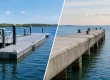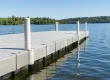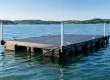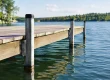
A dock can float exactly as designed and still feel unreliable at the shoreline. The usual problem is not the dock surface. It is the connection between land, water, and the anchoring system. To stabilize shoreline docks for long-term use, property owners need to account for water-level movement, bottom conditions, wind exposure, traffic, and the way people actually enter the system.
That is especially true on Texas, Oklahoma, Arkansas, and New Mexico reservoirs, where changing lake levels can turn a simple shoreline connection into the most demanding part of a waterfront project. A stable dock should move with the water where it needs to, remain secure under load, and provide a safe route from shore to boat, fishing pier, launch, or waterfront amenity.
Why shoreline stability is different from dock stability
Floating dock sections are designed to rise and fall with the water. That is one of their greatest advantages over fixed structures. But a floating dock still needs to be held in position. Without a well-planned anchoring approach, it can drift sideways, rotate, pull away from the shoreline, or put excessive force on the gangway and shore connection.
The shoreline is also where the system transitions from fixed ground to a moving platform. Soil can erode, banks can soften after heavy rain, and a steep shoreline can create a gangway angle that is uncomfortable or difficult to use. For public facilities, HOAs, marinas, and parks, that transition has additional accessibility and liability considerations.
A dock that looks stable on a calm day may behave very differently during high water, low water, wave action, or a busy holiday weekend. The right solution begins with the conditions at the site, not with a one-size-fits-all anchor package.
Start with the shoreline and water conditions
Before selecting anchors, evaluate the shoreline itself. A gradual, firm bank offers different possibilities than a steep riprap slope, retaining wall, earthen pond bank, or concrete boat ramp. The preferred approach depends on how much the water fluctuates and whether the shore is expected to remain stable over time.
Water depth matters just as much. A shallow cove may support one type of anchoring in spring but leave a dock sitting near the bottom during a dry season. Deep-water locations can require different anchor lines, heavier anchoring, or a layout that keeps the dock positioned in usable water as levels change.
Wind and boat wake should not be overlooked. Open-water shorelines, marina entrances, and high-traffic recreation areas experience more lateral force than protected coves. A dock used for fishing and kayaking may have modest loading needs, while a commercial slip system, boat rental operation, or public launch requires a more substantial stabilization plan.
Questions that shape the design
A professional site review should answer a few practical questions: How far do water levels rise and fall? What is the lake or pond bottom made of? Is the shoreline protected from wind and wake? Will boats be moored at the dock? Does the system need to support public access, mobility devices, or emergency use?
These answers determine more than the anchor type. They affect dock size, gangway length, attachment points, freeboard, access route, and whether the system should be designed for future expansion.
Choose the right method to stabilize shoreline docks
There is no single best anchoring method for every waterfront. The goal is to control movement without preventing a floating dock from responding naturally to changing water levels.
Deadweight anchoring uses heavy anchors placed on the lake bottom and connected to the dock with chains or lines. This method can work well in deeper water or locations where driven piles are not practical. The trade-off is that anchor size, placement, and line length must be calculated correctly. Undersized or poorly positioned deadweights can allow excessive movement, especially in wind or wake.
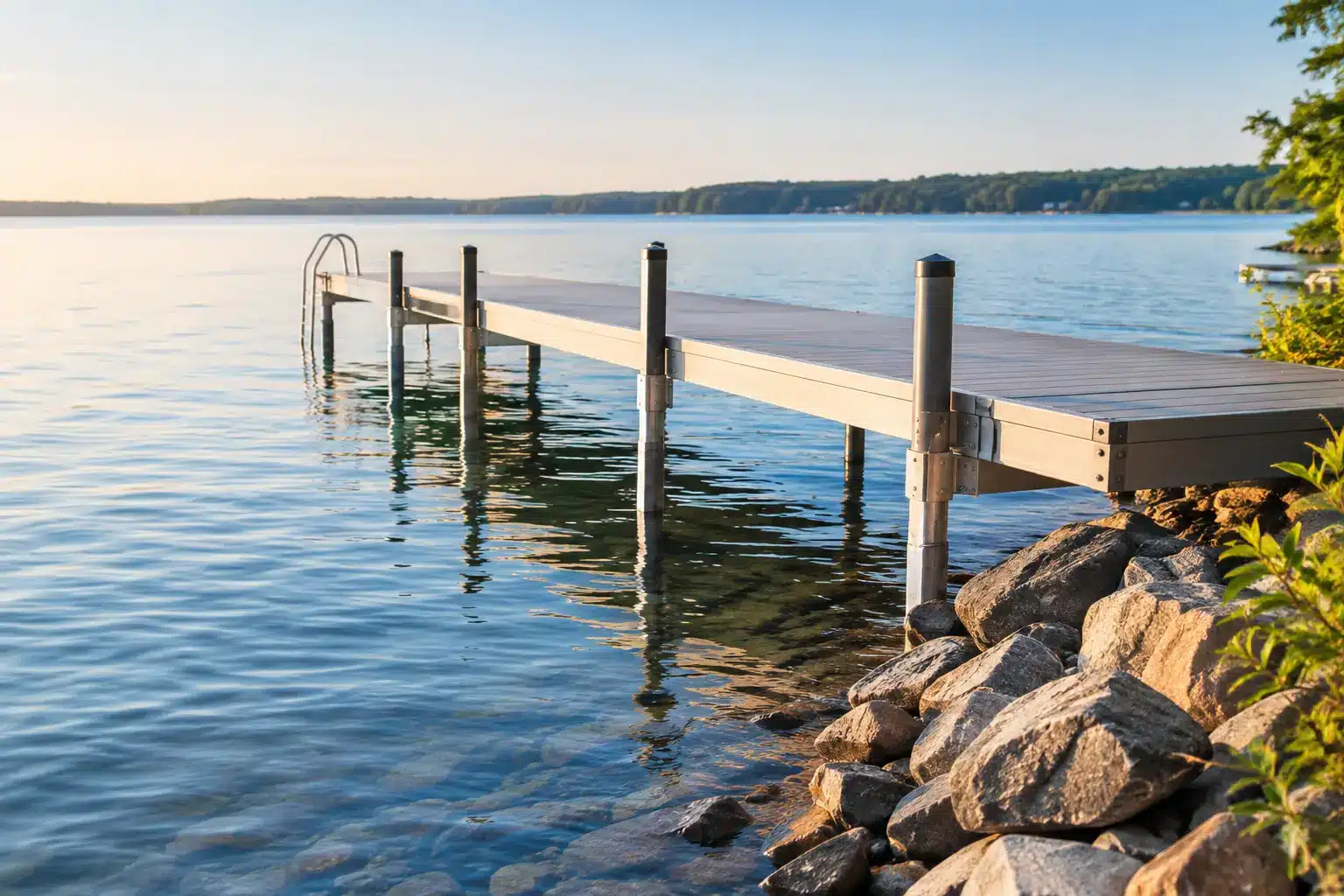
Pile anchoring guides the dock along fixed vertical piles. It can provide excellent lateral control while allowing the dock to rise and fall. Piles are often a strong option for marinas, public docks, and locations with predictable depth ranges, but installation conditions, permits, soil characteristics, and water-level variation all matter. If water levels exceed the usable pile height, the system can no longer perform as intended.
Shore-mounted connections use the bank, retaining wall, or a fixed shore structure as part of the stabilization system. They are commonly combined with a gangway and supplemental anchoring. This approach can create a clean, organized entry point, but the shore attachment must be engineered for real loads rather than treated as a simple hinge connection.
Stiff-arm systems use rigid members between shore and dock to control lateral movement. They are useful in certain protected locations, particularly where the dock needs to stay aligned with a fixed shore point. However, they are not the right answer for every steep bank or extreme water-level change. The system needs adequate range of motion and properly designed attachment hardware.
Many successful projects use a combination of these methods. For example, a floating dock may have a shore-mounted gangway, pile guides near shore, and deadweight anchors farther out. The best configuration is the one that fits the site and expected use.
Do not let the gangway become the weak point
A gangway is more than a walkway. It is the moving bridge between dry land and a floating structure. Its length, width, slope, handrails, transition plates, and shore landing all influence safety.
Short gangways can work when water levels stay relatively consistent. On reservoirs with substantial fluctuation, a longer gangway may be necessary to keep the slope manageable. This is particularly valuable for older users, children, fishing guests carrying gear, and facilities that need to provide accessible waterfront routes.
The shore landing deserves equal attention. A gangway attached to loose soil, shifting rock, or an eroding bank can lose alignment even when the floating dock and anchors are sound. A stable landing area may require grading, a concrete pad, a retaining solution, or another durable shore connection designed around the property’s conditions.
Match dock layout to real traffic and use
A narrow straight dock may be enough for a private fishing spot, but it may not be the most stable or useful layout for a boat slip, swimming area, or public launch. Wider sections, T-configurations, L-shapes, and finger piers can improve circulation and distribute activity across the system.
Modular floating dock systems offer an advantage here. A property owner can begin with a practical shoreline entry and a simple platform, then add a boat port, personal watercraft port, kayak launch, railing, ladder, lighting, or additional dock sections as needs change. That flexibility is useful for growing families, evolving marina operations, and public facilities that need to phase improvements over multiple budget cycles.
Layout also affects forces on the anchoring system. A larger dock with several moored boats creates more wind load and more pull on anchors than a small swim platform. Adding accessories later is often possible, but the initial design should anticipate likely expansion so the anchoring and access plan are not undersized from the start.
Protect the bank while protecting the dock
Shoreline erosion can gradually undermine an otherwise well-designed dock entrance. Water moving around a gangway landing, repeated foot traffic, storm runoff, and boat wake can wear away exposed soil. If the bank begins to slump, the dock connection may shift, and the access route can become unsafe.
Signs of trouble include exposed roots, gullies after rain, leaning shore posts, cracked landing pads, and a gangway that no longer sits squarely on its support. Addressing those issues early is typically less disruptive than waiting until the shoreline needs major repair.
Vegetation, grading, retaining features, riprap, and drainage improvements may all play a role, depending on the site. These are not interchangeable solutions. A steep, actively eroding bank may need a more involved approach than a gently sloped residential shoreline with minor surface runoff.
Plan for inspection and seasonal adjustment
Even durable, low-maintenance dock systems need periodic attention. Inspect anchor lines, chains, connectors, pile guides, gangway hardware, shore attachments, and deck surfaces after major storms and before peak-use seasons. Look for corrosion, wear, loose hardware, unusual dock movement, or changes to the shoreline.
For water bodies with large seasonal changes, inspect the dock at both high and low water. A configuration that looks ideal at one elevation may reveal a steep gangway, slack anchor lines, shallow-water interference, or limited access at another. Adjustments are part of responsible waterfront ownership, not a sign that the system has failed.
A properly designed floating dock should give people confidence as they step from shore to water. With the right anchoring, shoreline support, and access layout, it can remain secure through changing conditions while preserving the flexibility that makes floating systems so practical. EZ Dock Texas can help turn those site-specific details into a dock design built for the way your waterfront is used.