To support kayak and paddleboard growth safely, Texas state parks should invest in dedicated “soft launch” modular docks that separate paddlers from motorized boat traffic. Implementation should include standardized safety signage, life jacket loaner stations at entry points, and clear water-trail markers to guide novice users away from high-traffic vessel channels.
Key Takeaways:
- Separate non-motorized launches from motorized boat ramps to reduce conflict.
- Use low-profile floating docks for easier and safer craft entry/exit.
- Implement life jacket (PFD) loaner programs at every paddling put-in.
- Mark “paddling trails” to keep visitors in safe, low-current areas.
- Educate visitors on “No-Wake” zones through clear, icon-based signage.
Why This Matters
Paddlesports have transitioned from a niche hobby to a primary driver of state park visitation in Texas. However, many parks are still using infrastructure designed 30 years ago for motorized boats. This mismatch creates safety hazards, as kayaks are low-profile and difficult for powerboaters to see, especially near crowded ramps.
To support kayak and paddleboard growth safely, park leaders must adapt their shorelines. By providing specialized launch points and clear zoning, parks can reduce “near-miss” incidents, protect sensitive shoreline ecosystems from erosion caused by “scrambling” entries, and ensure that the water remains a welcoming place for a new generation of Texas outdoor enthusiasts.
Common Mistakes to Avoid
- Mixing User Flows: Forcing kayakers to launch in the middle of a busy three-lane boat ramp.
- Using High-Profile Docks: Standard docks are often 15-20 inches above the water, making it dangerous for a paddler to climb in or out of a low-sitting kayak.
- Neglecting “Float Plan” Education: Failing to provide kiosks that teach new paddlers about wind, weather, and the importance of staying near the shore.
- Ignoring Shoreline Erosion: Allowing paddlers to “drag” boats over natural banks, which destroys vegetation and causes siltation.
- Lack of Visible Safety Gear: Assuming every visitor brings their own whistle or PFD, which is often not the case with casual renters or beginners.
- Underestimating Wind Impact: Placing launches in areas exposed to heavy crosswinds, making it difficult for beginners to leave the dock.
Best Practices
A safe paddling ecosystem is built on the “Three E’s”: Engineering, Education, and Enforcement.
1. The “Soft Launch” Infrastructure
Install modular floating launches specifically designed for paddlesports. These sit lower to the water and often feature “V-shaped” cradles and overhead grab-bars. This stability is critical for preventing “capsizing at the dock” incidents, which are the most common cause of injuries and lost gear.
2. Physical and Visual Zoning
Use “Paddlers Only” signage at dedicated launches. On the water, use buoy lines to create a “safe corridor” for non-motorized craft to move away from the dock without entering the path of incoming motorboats.
3. Integrated Safety Hubs
Every launch site should serve as a safety checkpoint. To support kayak and paddleboard growth safely, include:
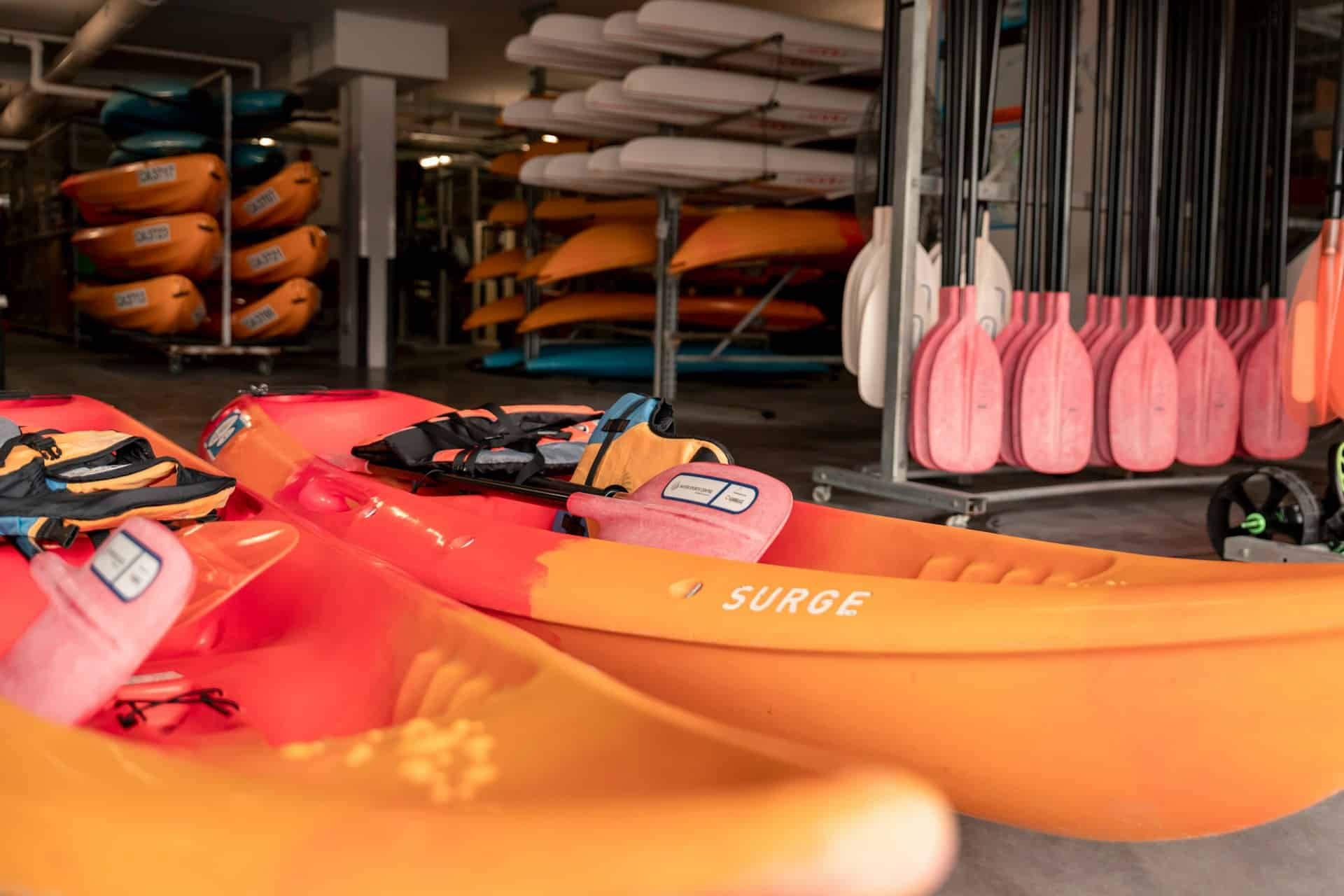
- A life jacket loaner rack with multiple sizes.
- A “Check the Weather” kiosk with a QR code for real-time lake conditions.
- Standardized “Paddling Trail” maps showing safe routes and “Take-out” points.
4. ADA-Compliant Paddling
Paddlesports are uniquely suited for individuals with limited lower-body mobility. By installing a launch with a transfer bench and slide-in system, a park can become a regional destination for “adaptive paddling,” broadening the park’s community impact.
Maintenance & Operations Plan
- Daily: Check the launch rollers and grab-bars for any debris or damage.
- Weekly: Ensure the PFD loaner rack is tidy and jackets are in good repair.
- Monthly: Inspect the anchoring of the “paddling corridor” buoys.
- Seasonally: Update trail maps and signage to reflect changing water levels or seasonal hazards (like nesting birds or submerged stumps).
Budget & Planning Notes
- Low Impact, Low Cost: Compared to a new concrete boat ramp, a modular kayak launch is a fraction of the cost and can be installed by park staff in a single day.
- Grant Alignment: TPWD “Paddling Trail” grants are specifically designed to fund these types of infrastructure improvements.
Safety & Liability Considerations
Paddlers are considered “vulnerable users” on the water.
- Visibility: Encourage (or require) the use of safety flags or bright PFDs in high-traffic areas.
- Whistle Requirements: Remind visitors through signage that Texas law requires a sound-signaling device (whistle) on all kayaks and paddleboards.
- Clear Transitions: Ensure the path from the launch to the shore is slip-resistant and well-maintained to prevent falls while carrying heavy gear.
FAQ
Why should we separate kayaks from motorboats?
Safety and efficiency. Motorboats need deep water and wide turning radiuses; kayaks are small and easily swamped by wakes. Separating them reduces the risk of collisions and speeds up the launch process for everyone.
What is the best way to support kayak and paddleboard growth safely?
The most effective strategy is providing a dedicated, stable floating launch that allows users to enter and exit their craft without stepping into deep or muddy water.
How do we handle the “trash” issue with more paddlers?
Place “Paddlers’ Trash” stations—small bins specifically for fishing lines and snack wrappers—directly on or near the launch dock.
Are paddleboards allowed in “No-Swim” zones?
Generally, yes, as they are considered “vessels” under Texas law. However, they should still be kept away from dedicated swimming beaches for safety.
What is an ADA-accessible kayak launch?
It is a system that includes a transfer bench and integrated handrails, allowing a person to move from a wheelchair into a kayak at a stable, consistent height.
How do we prevent kayaks from being “blown away” from the dock?
Choose a launch site in a “lee” area (protected from prevailing winds) and use a dock system with integrated “staging” areas where boats can be safely tied up while the user prepares.
Is it expensive to maintain a kayak launch?
No. High-quality HDPE modular launches require almost no maintenance other than an occasional cleaning with water and a soft brush.
How do we mark a “Paddling Trail”?
Use small, numbered markers on trees or posts along the shoreline, coordinated with a map provided at the park’s entry kiosk.
Checklist for Park Superintendents
- [ ] Identify an underutilized shoreline area protected from heavy wind/waves.
- [ ] Ensure the launch site has 18–24 inches of water depth at the shore.
- [ ] Select a modular launch with integrated handrails and non-slip surfaces.
- [ ] Install a “Life Jacket Loaner” station at the entry point.
- [ ] Create a “Paddler’s Kiosk” with weather and trail information.
- [ ] Designate “No-Wake” zones within 100 feet of the launch.
- [ ] Verify the gangway slope is 1:12 for accessibility.
- [ ] Add a “Boat Wash” station to prevent the spread of invasive species (like Zebra Mussels).
- [ ] Ensure parking for “paddle-only” vehicles is available near the launch.
- [ ] Document the safety procedures in the park’s operational manual.
- [ ] Conduct a “soft opening” for local paddling clubs to get feedback.
- [ ] Schedule a monthly safety audit of all launch hardware.
The growth of paddlesports is a tremendous opportunity for Texas state parks to connect with a new generation of conservationists. By choosing to support kayak and paddleboard growth safely, you are ensuring that your park remains a safe and sustainable destination for years to come. At EZ Dock Texas, we are proud to be a local partner for state and regional parks, providing the specialized infrastructure needed to make paddling accessible and safe for everyone. Ready to plan your park’s next paddling trail? Contact us today or join the community on Facebook.