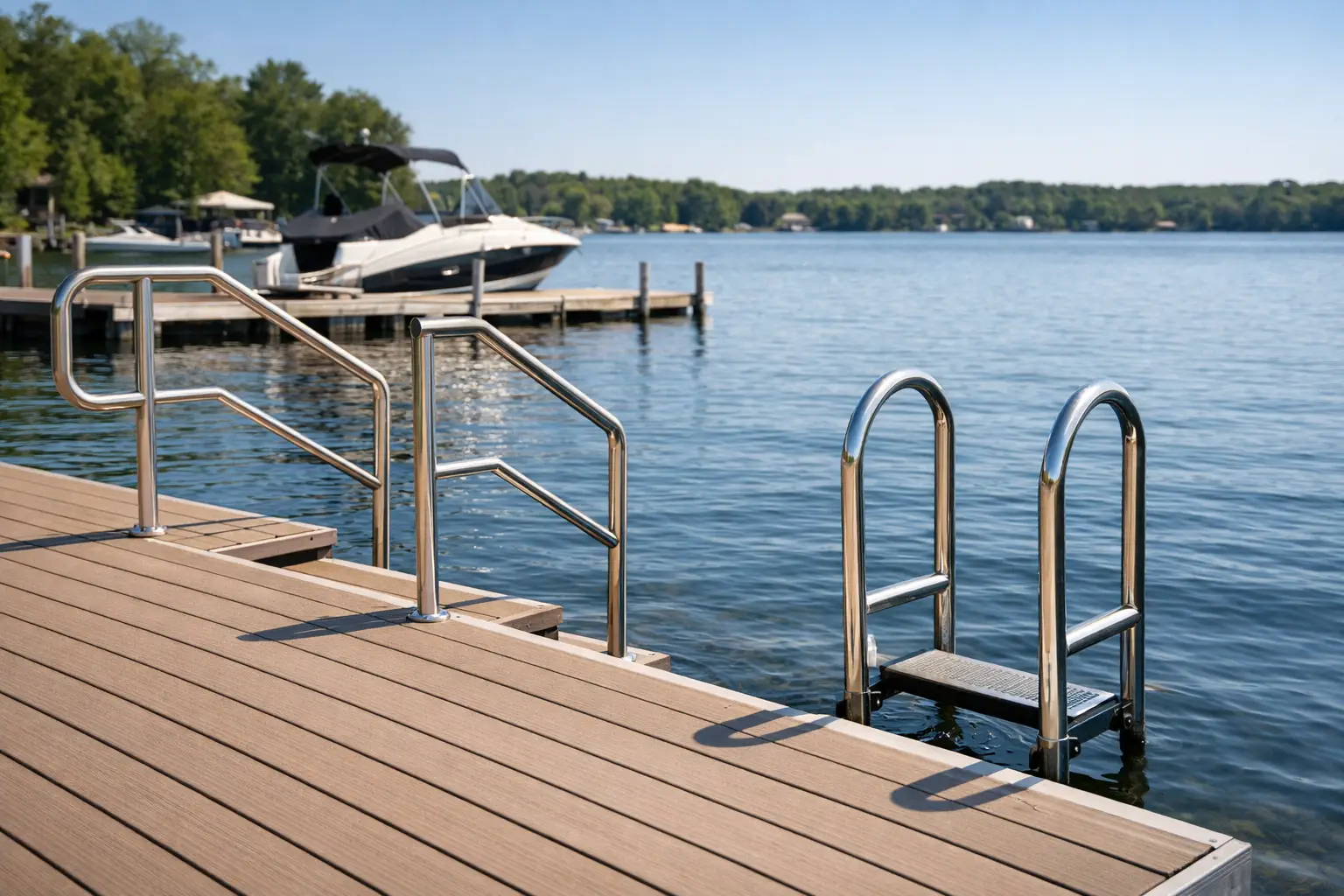
A dock can be wide, stable, and built for years of service, yet still feel uncomfortable to use if visitors have nothing to hold as they step from shore, board a boat, or move along an elevated section. Boat dock railings provide that missing point of confidence. For a lake home, marina, public fishing pier, campground, or park facility, the right railing layout can make waterfront access safer without getting in the way of the activities the dock was built to support.
The best solution is rarely a railing around every edge. Floating docks need to stay flexible, boat owners need clear access to slips, anglers need room to cast, and paddlers need unobstructed launches. A thoughtful design identifies the places where a handhold matters most and leaves the working waterfront open where it should be.
Where Boat Dock Railings Add the Most Value
Railings are most useful where people transition between surfaces or encounter a change in elevation. The shore end of a gangway is a common example. Users may be stepping from a fixed shoreline structure onto a floating system that moves with water levels, often while carrying coolers, fishing gear, or bags. A secure handhold helps make that change more controlled.
They also add value along access routes that lead to boat slips, fishing areas, kayak launches, and viewing spaces. On a larger dock system, a railing can visually define the primary walking path and discourage guests from taking shortcuts through areas intended for mooring or equipment. This is especially helpful at resorts, marinas, public parks, and HOA waterfronts where many users may be unfamiliar with the layout.
A railing may be worth considering on the sides of a gangway, near a dock-to-dock connection, around an elevated landing, or beside a ladder and other high-use entry point. On a fishing pier, perimeter railings can give children, older adults, and anyone with limited balance more assurance near open water. The details depend on the activity. A railing that makes a boarding route safer could interfere with a boat door, cleat location, or casting lane if it is placed without considering how the space is actually used.
Start With How People Use the Dock
Before choosing a railing style, consider who will use the dock and what they will carry. A private residential dock used by experienced boaters may need only targeted railings at the gangway and a small sitting or fishing area. A municipal dock serving families, school groups, anglers, and visitors may need clearer protected routes and more deliberate accessibility planning.
Think through the highest-risk moments rather than viewing railings as a decorative add-on. Does a visitor have to turn while stepping off a gangway? Will people carry paddles, tackle boxes, or supplies? Is the dock used after dark? Does a boat create wake that can make boarding feel less predictable? These questions reveal where support will make a practical difference.
For commercial and public-access projects, the expected user mix matters just as much as the dock footprint. A marina may need open edges at slips but railings along the route from shore to the office or fuel area. A camp may need protected access near supervised swimming or launch zones. A park may need a railing plan that works alongside accessible routes, local requirements, emergency access, and regular maintenance needs.
Railings Should Support, Not Restrict
More railing is not automatically better. Solid perimeter protection can reduce usable deck space, limit access to watercraft, create awkward turns, and make it harder to load gear. It can also obstruct the side access needed for kayaks, canoes, and certain personal watercraft configurations.
Instead, use railings to support movement along the intended route. Keep boat boarding areas, tie-up points, launch edges, and casting locations clear. On modular floating dock systems, this often means using railing sections strategically so the layout can evolve as recreational needs change. A dock may start as a fishing and swimming platform, then later add a boat port, PWC port, or a different slip arrangement. Modular accessories make it easier to adapt without replacing the entire dock.
Design Considerations for Floating Dock Railings
A railing on a floating dock has to work with a structure that rises and falls. That is one reason compatible components matter. The railing attachment, dock sections, gangway, anchoring system, and accessories should be considered as one waterfront system rather than assembled as unrelated parts.
Material selection affects both ownership effort and appearance over time. Low-maintenance, corrosion-resistant railing components are a practical choice in marine environments, where sun, moisture, changing water levels, and frequent use can quickly expose weak finishes or unsuitable hardware. American-made modular dock systems and purpose-built accessories are designed around these conditions, helping owners avoid the cycle of patching, repainting, and replacing components that were not intended for waterfront use.
Visibility is another design factor. Railings can help users recognize an edge, particularly in low light or changing weather. Lighting near access points may be appropriate for docks used in the evening, but it should be planned carefully. The goal is clear footing and orientation without creating glare on the water or disturbing nearby homes and wildlife.
The rail height, spacing, load expectations, and configuration may also be subject to local building, marina, park, insurance, or accessibility requirements. Public and commercial projects should not assume that one railing design fits every jurisdiction or application. A design consultation early in the process can identify applicable requirements before the layout is finalized and equipment is ordered.
Do Not Forget the Shore Connection
The transition from land to dock deserves as much attention as the dock itself. Water levels on Texas reservoirs and throughout the region can change significantly, affecting gangway slope and the feel of the approach. A floating dock follows the water; the shore connection must accommodate that movement while providing practical access.
Handrails along a gangway can be particularly helpful where slopes become more noticeable at seasonal low water. The appropriate configuration depends on the elevation change, gangway length, anchoring approach, and the people using the dock. For public-facing facilities, this planning may also intersect with accessibility standards and the need for a predictable route from parking or shoreline amenities to the water.
Installation and Maintenance Matter
A railing is only as useful as its installation. Connections need to be secure, aligned with the dock system, and positioned so they do not become a snag point for lines, life jackets, or equipment. The dock must also be properly anchored for its water depth, exposure, and anticipated traffic. Railings improve a user’s sense of security, but they do not replace sound flotation, anchoring, and structural planning.
Routine care is straightforward when the system is designed for waterfront use. Inspect railing connections periodically, especially after major storms, flooding, unusual wake, or seasonal water-level changes. Check for loose hardware, damaged sections, sharp edges, and interference with gates, boat covers, or mooring lines. If a dock’s purpose has changed, reassess the railing layout instead of forcing new activities into an old configuration.
For facilities with staff, a simple inspection routine is valuable. Review the shore approach, gangway, primary walking route, high-traffic corners, and any area where guests board vessels or enter the water. Catching a loose connection or poorly positioned accessory early is far easier than responding after an incident.
A Better Railing Plan Starts With the Whole Waterfront
Boat dock railings work best when they are part of a complete access plan that includes the dock layout, gangway, anchoring, lighting, ladders, launch points, and intended activities. At EZ Dock Texas, that means looking beyond a single accessory and helping customers configure a system that fits their shoreline, water conditions, and long-term use.
Whether the goal is a safer path to a family boat, a more welcoming fishing platform, or dependable public waterfront access, place railings where they give people confidence and preserve the open water access that makes the dock useful in the first place.