A dock that has moved a few feet from its usual position can be unsettling. Maybe the gangway no longer lands squarely, a boat sits too close to a post, or the dock seems to wander after a storm. Why do docks shift? In most cases, movement is the natural result of changing water levels, wind, waves, currents, and an anchoring system that was not designed for the site.
Some movement is expected, especially with a floating dock. The goal is not to eliminate every inch of motion. It is to control that motion so the dock remains safe, accessible, and properly positioned through changing conditions.
Why Do Docks Shift on Lakes and Ponds?
A dock is exposed to forces that change by the hour and season. A calm shoreline may look simple, but water level, bottom conditions, boat traffic, and weather can create a surprising amount of pressure on a dock system.
Floating docks are designed to rise and fall with the water. That flexibility is a major advantage on reservoirs and lakes with fluctuating levels. But a floating dock also needs a well-planned connection to shore and a stabilization method that keeps it from drifting sideways, rotating, or pulling out of alignment.
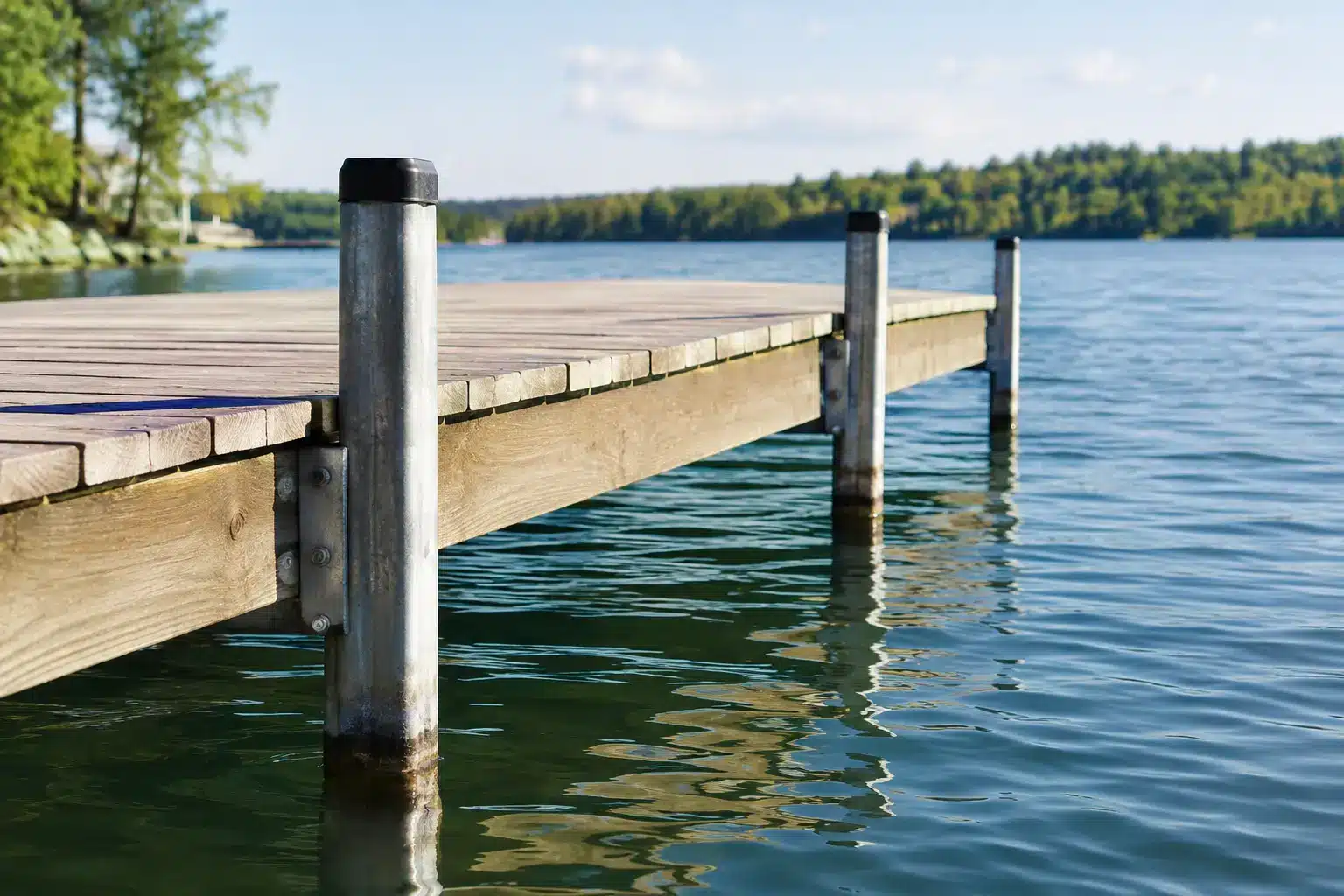
Fixed docks can shift, too. Posts may settle into soft lakebed material, loosen after repeated wave action, or be damaged by ice, floating debris, and unusually high water. The right solution depends on whether the dock is floating or fixed, the depth of the water, the lake bottom, and how the dock will be used.
Water-Level Changes Affect Dock Position
Water levels can rise quickly after heavy rainfall or fall significantly during drought and reservoir drawdowns. A floating dock should move vertically with those changes, but its gangway, chains, cables, pilings, or anchoring components must have enough range to accommodate them.
If water drops beyond the limits of an anchor line or a gangway becomes too steep, the dock can pull toward shore or become restricted in its movement. At high water, anchor lines that were once properly tensioned may become too loose, allowing the dock to drift farther than intended.
This is particularly relevant on Texas and Oklahoma reservoirs, where seasonal conditions and water-management practices can create major elevation changes. A dock layout that works at one water level may need a different anchoring approach to remain stable across the full expected range.
Wind, Waves, and Boat Wake Push Docks Sideways
Wind does not need to be extreme to move a dock. A steady wind across open water can create constant pressure on the dock surface, particularly on wide platforms, high-sided boat ports, railings, and covered structures. Repeated force can slowly reposition a dock or place added strain on its anchor connections.
Waves and boat wake add a different kind of movement. Instead of a steady push, they lift, drop, and rock the dock. Over time, that action can loosen hardware, shift anchors, wear through lines, or cause a dock section to work out of alignment.
A dock located in a protected cove will have different stabilization needs than one facing open water or a busy boating channel. The right design accounts for the direction of prevailing wind, exposure to wake, and the size of vessels using the area.
Current and Runoff Can Change the Bottom
Current is not limited to rivers. It can develop near dam-controlled reservoirs, narrow channels, drainage areas, and places where runoff enters a lake or pond. That moving water may push against the dock, but it can also change the lakebed beneath anchors or posts.
Soft mud, loose sand, and silty bottoms can allow anchors to creep over time. Strong runoff can scour material away from a shoreline or around fixed dock posts. If a dock that was once stable begins shifting without an obvious storm event, bottom changes may be part of the problem.
Anchoring Is Often the Deciding Factor
Anchoring does more than keep a dock from floating away. A properly designed anchoring system manages movement in the directions that matter most while still allowing a floating dock to rise and fall.
The best method depends on site conditions. Pile-guided systems can provide excellent lateral control where water depth, lakebed conditions, and permitting allow. Stiff-arm systems may work well in certain shallow-water applications. Cable, chain, and deadweight anchoring can be effective for deeper water or locations where pilings are not practical.
There is no single anchor setup that fits every waterfront. An approach that performs well on a protected private pond may not provide enough control for a long dock on a wind-exposed reservoir. Likewise, over-restricting a floating dock can create unnecessary stress when water levels change.
Common Anchoring Problems
When a dock shifts more than expected, the issue is often not the dock itself. It may be an anchor system that needs adjustment, repair, or redesign. Common causes include:
- Anchor lines that are too long, too short, worn, or improperly tensioned
- Deadweight anchors that are undersized for the dock size and wind exposure
- Hardware that has loosened, corroded, or been damaged by repeated motion
- Anchors placed in unstable bottom material or moved by current
- A dock layout that has expanded without upgrading the original anchoring plan
Adding a boat port, PWC port, fishing platform, or extra dock sections changes the surface area and weight of the system. It also changes how wind and waves act on it. A dock that stayed put for years may start moving after an expansion simply because the original anchors are no longer sized for the larger configuration.
Shore Connections Can Create Their Own Problems
The shoreline connection has to move with the dock, not fight it. A gangway should be sized for the expected water-level range and supported in a way that allows safe transition between land and dock. If it binds, bottoms out, or rests at an unsafe slope, it can push the dock away from shore or make access difficult.
A short gangway may seem adequate at normal pool, but it can become steep when water falls. A longer gangway can better manage elevation changes, although it requires more shoreline room. Accessibility requirements for public facilities, parks, marinas, and community waterfronts may also influence the gangway length, width, handrail design, and landing configuration.
Shoreline erosion deserves attention as well. If the bank is washing away or the transition area is settling, the dock may appear to have shifted when the real issue is that the shore anchor point has moved.
How to Keep a Dock Stable Without Preventing Natural Movement
The most reliable dock systems are designed around the site, not selected solely by dock length. Before choosing stabilization components, consider the highest and lowest expected water levels, typical wind exposure, wave conditions, water depth, bottom composition, shoreline grade, and intended use.
A private fishing dock may need modest stabilization and a simple gangway. A marina, public launch, or resort waterfront may require a more engineered layout that accounts for heavier traffic, ADA-oriented access, multiple slips, utility routing, and higher wake exposure.
Routine inspection is equally important. At least seasonally, and after major weather events, check anchor lines, chains, connectors, couplers, pile brackets, gangway rollers, shoreline attachments, and flotation. Look for rubbing, frayed lines, cracked hardware, excessive slack, shifting anchors, or a dock that no longer sits square to the shoreline.
Do not wait for a dock to move dramatically before addressing the issue. Small alignment changes are easier and less expensive to correct than a dock that has damaged its gangway, strained its connections, or drifted into a hazardous position.
When Dock Movement Calls for Professional Help
A dock should be evaluated when it repeatedly drifts out of position, changes orientation after ordinary wind, has loose or damaged anchoring hardware, or creates a steep or unstable path from shore. The same is true if you are adding dock sections, boat ports, railings, or other accessories to an existing system.
A site review can identify whether the answer is as simple as adjusting tension or whether the system needs additional anchors, a different stabilization method, a longer gangway, or a revised dock layout. For waterfronts with large seasonal water changes, it is especially valuable to plan for conditions beyond the water level visible on the day of installation.
A dock is supposed to adapt to the water, not surrender to it. With the right floating dock configuration, shore connection, and anchoring strategy, movement becomes controlled, predictable, and safe for the people who use the waterfront every day.