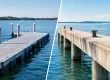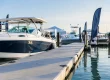
A deep lake dock can put great paddling water within reach, but getting into a kayak from a high, shifting dock edge is another matter. The best kayak launch for deep lake docks creates a stable, low-transfer point that helps users enter and exit confidently, even as reservoir levels, wind, and daily dock traffic change.
For a lake home, marina, park, or campground, a purpose-built launch is more than a convenience. It reduces awkward transfers, keeps paddlers away from boat slips and propeller traffic, and makes a dock system more useful for guests, families, rental fleets, and organized programs. The right solution depends on who will use it, the lake’s water-level range, and how the dock is anchored.
What Makes a Kayak Launch Work on a Deep Lake?
Deep water itself is not the problem. In fact, it often eliminates concerns about a kayak scraping bottom during launch. The challenge is the distance between the dock deck and the water, particularly at fixed docks or floating docks connected to shore by a steep gangway. A paddler needs to step down into a narrow, often unsteady boat while keeping the kayak from drifting away.
A good launch addresses that transfer with three basic advantages: a low water-level entry, a stable surface alongside the kayak, and handholds that give the user control without forcing them to pull on the paddle or dock edge. Those details matter for experienced paddlers and matter even more for children, older adults, first-time guests, and people recovering from injuries.
A floating dock system is often the strongest foundation for deep lake access because it rises and falls with the water. Rather than creating a larger step down as the lake drops, the launch stays close to the water surface. Proper anchoring and a correctly designed gangway remain essential, especially on Texas, Oklahoma, Arkansas, and New Mexico reservoirs where water levels can shift substantially over the year.
The Best Kayak Launch for Deep Lake Docks Is Usually Modular
For most waterfront properties, the best approach is a modular floating kayak launch integrated into the main dock layout. A modular design can include a lower-entry section, side rails, and a defined launch pocket that holds the kayak in position while the paddler gets seated. It can also be added beside a fishing platform, swim area, or dock walkway instead of consuming valuable boat-slip space.
The benefit is not only comfort. A designated launch area gives people a clear place to stage their kayak, adjust a life jacket, and enter the boat without blocking others. At a busy marina, park, or rental operation, that separation can improve traffic flow and reduce the chance of a paddler drifting into areas used by motorized boats.
Modularity also gives a property owner room to change the configuration later. A homeowner may begin with two recreational kayaks and later add paddleboards or a personal watercraft port. A park may need a small launch now but expand it after a paddling program grows. Instead of replacing the entire waterfront structure, the dock can be reconfigured around changing needs.
Look for a low, controlled transfer
The goal is not simply to get the kayak near the dock. The user needs to move from a stable platform into the seat with as little vertical drop and side-to-side movement as possible. A low freeboard launch section makes this easier, while a shaped entry area helps prevent the hull from floating out of reach.
For deep lake docks, avoid treating a standard ladder as a kayak launch. A ladder may help a swimmer leave the water, but it does not stabilize a kayak during entry. Similarly, a bare floating dock edge can work for a confident paddler on a calm day, yet it offers little assistance when wind, wakes, or limited mobility are part of the equation.
Give paddlers useful hand support
Handrails or strategically positioned grab points should support the natural motion of sitting down and standing up. They should be easy to reach from the dock and from the kayak without obstructing paddle strokes or trapping the boat in the launch area.
The exact rail configuration depends on the launch model and user group. Public-facing sites may need a more deliberate accessibility review than a private lake house. The key is to design for the people who will actually use the system, not only the strongest or most experienced paddler in the group.
Protect the kayak and the dock
A launch should guide the kayak without creating sharp contact points that wear on the hull. Durable dock surfaces with good traction are equally important. Wet feet, sunscreen, fishing gear, and lake spray can make any platform slick, so a slip-resistant walking surface should be part of the decision rather than an afterthought.
Floating Dock Stability and Anchoring Matter
A kayak launch is only as dependable as the dock beneath it. A floating dock naturally moves somewhat with waves and wakes, but excessive motion makes entry harder and can discourage less-confident users. The dock layout, flotation, connection points, and anchoring system all affect how the launch feels underfoot.
On a protected private cove, a straightforward layout may perform very well. On an exposed shoreline with regular boat traffic or wind fetch, the dock may need a more substantial anchoring plan and a configuration that limits movement at the launch. Deep water can require different anchoring strategies than a shallow shoreline, and lake-bottom conditions also influence the right solution.
This is where site-specific planning pays off. Water depth, seasonal drawdown, shoreline grade, prevailing wind, wave exposure, and intended dock use should be evaluated together. A launch that looks right on a product diagram can become frustrating if the gangway is too steep at low water or the dock is positioned where wakes regularly hit broadside.
Plan the Launch Around Your Real Users
Residential buyers often prioritize an easy entry point for family members and visiting friends. In that setting, placing the kayak launch near the shore-side end of the dock may simplify carrying boats and equipment from land. If the dock includes a swim zone, keep enough separation that paddlers can launch without crossing through swimmers.
Commercial and public facilities have additional considerations. A rental operator may need staging room for several kayaks, durable handrails, clear circulation paths, and a launch location staff can supervise. A park or campus waterfront may need to accommodate group instruction, rescue access, and a wide range of user abilities. These projects benefit from a dock plan that considers how people arrive, wait, carry equipment, launch, return, and exit the water.
For rowing programs and outfitter operations, the launch may need to support specific hull lengths and loading patterns. For a fishing lodge, a smaller launch can be paired with a broader dock layout that keeps anglers, kayakers, and boat passengers from competing for the same edge. There is no single best configuration for every deep lake dock, but there is a best configuration for the way a particular property operates.
Installation Details That Affect Long-Term Use
A quality launch should be installed as part of a complete waterfront access system, not treated as an accessory added wherever space happens to be available. Dock orientation, utility routes, gangway connection, anchor placement, and access from shore all influence the final result.
Consider how users will move a kayak to the dock. A long carry over uneven ground can undermine an otherwise excellent launch. Where the shore allows it, a practical path, cart-friendly route, or storage area near the gangway makes the system far easier to use. At facilities with rental equipment, plan space for returns so wet boats are not stacked across the walking path.
Maintenance should also be simple. Durable, low-maintenance floating dock materials are especially valuable on lakes where seasonal weather, UV exposure, and frequent wet use take a toll on wood surfaces and hardware. Routine inspections should still check rails, connection points, anchoring components, and walking surfaces. Catching a loose fitting or worn component early helps preserve safe access for years.
Questions to Ask Before Choosing a Deep Lake Kayak Launch
Before selecting a launch, determine the expected high and low water levels, how exposed the site is to wind and wakes, and whether the dock floats throughout its full operating range. Identify the user mix as well. A launch for two experienced adults will not necessarily serve a multigenerational family, a resort guest population, or a public recreation program.
It is also worth considering whether the dock will change over time. A modular system can make future additions more practical, whether that means adding another kayak position, a canoe launch, a boardwalk connection, or other waterfront amenities. Planning for flexibility now can prevent a costly redesign later.
For deep-water properties, the most successful kayak access systems feel simple because the design work has already accounted for changing conditions. EZ Dock Texas can help evaluate the shoreline, dock layout, anchoring needs, and expected users to create a launch that fits the property rather than forcing the property to fit a standard layout. A well-planned launch gives more people a comfortable reason to get on the water, and that is the kind of dock improvement that keeps earning its place season after season.