A shallow shoreline can look simple until you try to build a dock on it. The water may be only a few inches deep near shore, the bottom may be soft, and a drop in lake level can leave a conventional dock high and dry. The best docks for shallow lakes are designed around those conditions from the beginning, not adapted after installation.
For many property owners, a modular floating dock with the right gangway and anchoring plan provides the most practical answer. It rises and falls with the water, can extend access across a gradual shoreline, and can be configured for fishing, swimming, kayaks, boats, or personal watercraft. Still, floating is not automatically the right answer for every lake. Bottom conditions, water-level changes, intended use, wind exposure, and local requirements all deserve a close look before selecting a system.
Why shallow lakes require a different dock plan
Shallow water creates two separate challenges: reaching usable water and keeping the dock stable along the way. A shoreline that slopes gently may require a longer dock than expected before a boat can float safely or swimmers can enter water with adequate depth. In a stock pond, private lake, or reservoir cove, the bottom may also be silty, rocky, uneven, or prone to seasonal change.
Water levels matter just as much. Texas, Oklahoma, Arkansas, and New Mexico waterfronts can see significant changes from drought, rainfall, reservoir operations, or irrigation demand. A fixed dock set at one elevation may become too high above the water or partially submerged when conditions shift. A floating system follows the water, preserving a more consistent step from the deck to a boat, kayak, or swim area.
The goal is not simply to place decking over water. It is to create dependable access that remains safe and useful through the conditions your shoreline actually experiences.
Best docks for shallow lakes: floating systems lead for flexibility
A modular floating dock is often the strongest long-term choice for shallow lakes with changing water levels. Individual sections connect to create a layout that fits the shoreline and intended use. The configuration can begin with a shore connection, extend over shallow water, and add a wider platform, T-end, fishing area, boat slip, or launch zone where depth permits.
Unlike traditional wood docks, quality floating systems do not depend on exposed lumber, annual staining, or hardware that is difficult to inspect beneath the deck. Molded polyethylene dock sections are built to handle regular waterfront use while providing a slip-resistant walking surface. The enclosed flotation eliminates the concern of waterlogged foam beneath the dock, and modular components make later changes far more manageable.
That flexibility is especially valuable when a property’s needs change. A family may start with a swim platform and add a kayak launch later. A campground may expand its rental fleet and need more boarding space. A marina operator may adjust a layout around new slips or changing water depths. A modular system makes those upgrades possible without replacing the entire dock.
When a floating dock is the better fit
Floating docks are particularly well suited to shorelines with noticeable seasonal fluctuation, gradual slopes, and soft lake bottoms where driving piles can be difficult or expensive. They also work well where accessibility and a consistent boarding height are priorities. Because the deck moves with the water, the transition to a boat or personal watercraft stays more predictable than it would with a fixed structure.
A floating dock does need a sound access and anchoring plan. If water levels fall substantially, a gangway may become too steep unless it is sized and positioned for the expected range. In wind-exposed areas, anchoring must control movement without preventing the dock from rising and falling. These details are what turn a floating dock into a dependable waterfront system rather than a collection of sections on the water.
Fixed docks can work, but conditions must be right
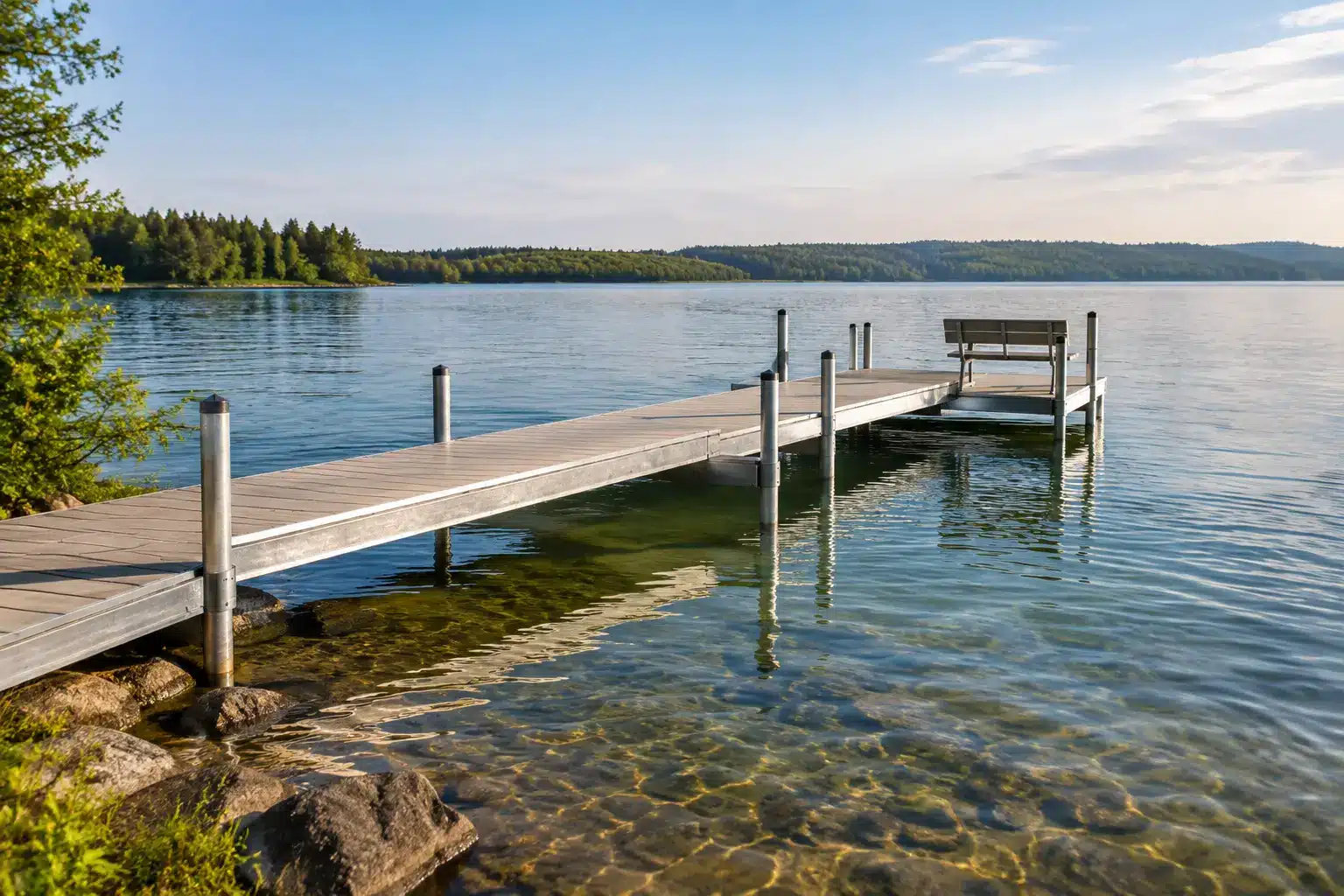
A fixed dock can be a sensible option in a shallow lake with stable water levels, a firm bottom, and a predictable waterline. It provides a solid, stationary feel and may suit a fishing platform, observation deck, or low-use shoreline access point. In some cases, a fixed walkway paired with a floating end section gives a property the best balance of stability near shore and flexibility farther out.
The trade-off is that fixed docks do not adjust. If the lake rises, the deck-to-water distance decreases. If the lake drops, users may face a large step down to a boat or may lose water access entirely. Piles and supports also need to be engineered for the lake bottom, ice where applicable, wave action, and long-term exposure.
For a lake that routinely changes elevation, a fixed dock often becomes a compromise that owners notice most when they need it most. It can make sense, but it should be chosen because the site supports it, not because it is the familiar option.
Start with the shoreline, not the dock style
The right dock layout begins with a site review. Measure the distance from shore to usable water at normal, low, and high lake levels if that information is available. Identify the lake bottom material, the slope of the bank, and any obstructions such as rock shelves, stumps, vegetation, or buried utilities.
Next, define how people will use the dock. A dock for fishing and swimming can be fairly different from one intended for a wake boat, pontoon boat, rental kayaks, or emergency response access. Boat draft and beam affect how far the dock must reach and how wide the slip should be. Public-facing projects may require accessible routes, railings, boarding considerations, and code review that go beyond a residential installation.
It also helps to plan for the way people move on the property. A long dock should not feel like a narrow, unstable passage. A wider transition platform can give families a place to stage coolers and life jackets, let anglers pass comfortably, and create room for a bench, dock box, or ladder without blocking circulation.
Anchoring is what keeps a shallow-water dock useful
Dock anchoring is not an accessory decision. It determines how the system handles wind, waves, changing water levels, and day-to-day traffic. The right choice depends on the bottom, depth, fetch, dock size, and shoreline configuration.
Pile guides can provide controlled vertical movement where piles can be installed and conditions allow. Cable or deadweight anchoring may be used where piles are impractical or water levels vary over a broad range. Shore connections and gangway hardware also need to allow movement without creating binding points or unsafe gaps.
A shallow lake can be deceptively demanding because the dock may sit close to the bottom during low water. An anchoring design should account for that possibility, along with the chance that the system could touch down temporarily. Professional planning helps prevent issues such as twisted dock sections, overloaded connections, and gangways that become unusable at low water.
Build the layout around real activities
The most successful shallow-lake docks do more than solve access. They make time on the water easier. A fishing-focused layout may benefit from a wider end platform, perimeter rails in selected areas, and convenient rod storage. A family swim dock may need ladders, a clear jump zone, and durable seating space. Kayak and canoe users benefit from a low, stable launch that reduces the awkward step from shore or dock into the vessel.
Boat and personal watercraft owners should consider dedicated ports instead of tying up at the dock full-time. A drive-on PWC port can keep a watercraft out of the water when not in use and simplify launching. Boat ports can protect the vessel while keeping the main dock walkway clear. These additions are often easier to incorporate when they are part of the original layout rather than an afterthought.
Lighting, railings, dock boxes, cleats, and ladders should be selected for the people who will use them most. A rental operation and a private ranch pond have different risk profiles, but both benefit from clear circulation, visible edges, and equipment that is built for repeated use.
Think in decades, not seasons
The lowest initial price is rarely the best measure of dock value. Shallow water puts more strain on poor planning, and wood docks can require regular repairs as boards weather, fasteners loosen, and supports shift. A durable modular floating dock system costs more than a temporary fix, but it can reduce maintenance demands and adapt as water levels and recreation needs change.
American-made EZ Dock systems are designed for long-term waterfront use, with modular components that can be reconfigured, expanded, or repaired without treating the whole dock as disposable. For homeowners, parks, marinas, and public agencies, that adaptability can protect the investment when conditions change.
Before committing to a layout, ask for a design that reflects low water, high water, access needs, anchoring, and future additions. A dock should meet you where the lake is now, but it should also be ready for where the water and your plans may be next season.