A modular dock for rowing has one job that matters more than almost any other: give athletes a predictable, stable place to carry, launch, and recover long rowing shells. When crews are moving an eight, coaches are managing a busy practice, and water levels are changing by the season, a basic recreational dock can quickly become a weak point in the program.
Rowing facilities need more than a place to tie up a boat. They need reliable water access that supports efficient practices, protects valuable equipment, and helps athletes of varying experience levels enter and exit shells with confidence. A floating modular system can be configured around those needs, then expanded or adjusted as the program grows.
What Makes a Dock Suitable for Rowing?
Rowing shells are long, narrow, and sensitive to unnecessary contact. A launch dock should provide a level, open edge where athletes can set a shell gently on the water without climbing over railings, stepping across large gaps, or working around permanent obstacles. Stability is equally important. Excessive movement at the dock can make boarding difficult, especially for novice rowers or crews handling a boat in wind.
A floating dock rises and falls with the water, keeping the dock surface closer to the shell as reservoir or lake levels change. That is a practical advantage across Texas, Oklahoma, Arkansas, and New Mexico, where waterfront conditions can look very different from one season to the next. The right anchoring and gangway design are what keep that floating platform positioned correctly and accessible from shore.
For most rowing applications, the dock layout should also create clear traffic flow. Crews need room to carry shells down from storage, place them at the launch edge, board in an organized sequence, and return without colliding with the next group headed out. The design must account for people, oars, coxswains, safety launches, and sometimes multiple teams practicing at once.
Why Modular Design Works for Rowing Programs
A fixed dock can make sense in a highly consistent, protected water environment. But rowing programs often have changing needs. A school may begin with a small learn-to-row group and later add competitive teams. A city recreation department may host summer camps, regattas, or adaptive rowing sessions. A university may need separate launching areas for sculls, sweep boats, and coaching launches.
A modular system makes it possible to start with the footprint the program needs now and add sections later. Rather than replacing the entire dock when enrollment increases or operations change, the layout can be reconfigured with additional dock sections, a wider staging platform, an extended launch line, or dedicated access for support boats.
That flexibility is especially valuable at public facilities. Parks, municipal waterfronts, and campuses often need infrastructure that serves more than one user group. A rowing launch may share a shoreline with paddlers, anglers, swimmers, or general public visitors. Modular dock sections can help create distinct areas for different activities while preserving a clear and manageable waterfront layout.
A Layout Should Follow the Program’s Daily Routine
The best dock configuration is rarely the largest one. It is the one that matches how people actually use the site. Before selecting dock sections, consider how boats reach the water, where crews gather, how many shells launch during the busiest hour, and whether safety boats need their own berth.
A smaller club that launches a few singles and doubles may need a straightforward, open-sided platform and a safe gangway connection. A larger scholastic or collegiate program may need a longer launch face, wider staging areas, and enough circulation space for several crews. If the program hosts races or events, the dock may also need designated boarding zones for officials, coaches, volunteers, and emergency personnel.
Planning for the busiest day, rather than a quiet weekday practice, prevents bottlenecks later. It also helps avoid a common mistake: building a dock that technically reaches the water but does not provide enough clear working space for a rowing shell and the people carrying it.
Key Design Decisions for a Modular Dock for Rowing
The dock itself is only one part of the system. Successful rowing access depends on the relationship between the dock, shoreline, anchoring, gangway, water depth, and operating conditions.
Choose a Stable Floating Platform
A rowing dock should feel secure under foot when athletes step in and out of a shell. Dock width, flotation, connection points, and anchoring all affect stability. A professional dock designer can evaluate expected traffic, exposure to wind and boat wake, water depth, and the number of people using the dock at one time.
A heavier, more stable configuration may be the right choice for a high-use public program. On a private lake with limited rowing activity, a simpler layout may be sufficient. The trade-off is straightforward: designing only for the minimum use case can reduce initial cost, but it may limit safety and expandability when the program gains momentum.
Plan the Gangway and Shore Connection
A gangway is the transition between shore and floating dock, and it can determine whether the system remains usable at changing water elevations. Its length and slope should be selected for the site’s anticipated water-level range, local conditions, and accessibility needs.
For rowing, the shore-side approach should also provide enough room to carry long shells safely. Tight turns, steep grades, loose surfaces, and narrow paths can create more operational trouble than the launch dock itself. A well-designed approach keeps crews moving in one direction where possible and separates foot traffic from boat-carrying routes.
Match Anchoring to the Waterbody
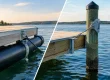
Anchoring is not an accessory. It is the foundation of how a floating dock performs. Depending on the site, a system may use piling, cable, stiff-arm, or other anchoring approaches suited to the shoreline, lakebed, water depth, and expected water-level movement.
The right solution depends on the property. Deep water, significant drawdown, soft lake bottoms, protected coves, and open-water exposure each call for different planning. An installation team should evaluate the entire site rather than recommend a one-size-fits-all anchor method.
Keep Launch Edges Clear and Intentional
Rowers need a clean edge for handling boats. Railings can improve safety in areas where the public gathers, but they should not interfere with the active launch face. This is one reason zoning the dock matters. Railings, gates, lighting, dock boxes, and other accessories can be placed where they support the operation without blocking shell movement.
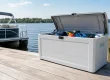
Lighting can be useful for early-morning practices, but it should be selected and positioned carefully. The goal is safe footing and clear access, not glare on the water. Storage is also worth planning early. A dock box near the right location can keep safety equipment, throw rings, and small operational items accessible without cluttering the launch area.
Safety and Accessibility Need a Place in the Plan
A well-designed rowing dock supports safer habits without slowing down the program. Non-slip surfaces, consistent walking paths, secure shore connections, and a stable boarding area all help reduce avoidable slips and missteps. For public or institutional facilities, access requirements and local permitting considerations should be addressed early in the design process.
Accessibility can take several forms. It may mean a gangway and platform arrangement that accommodates a broader range of users, space for instructors to assist participants, or a layout that supports adaptive rowing activities. The specific solution depends on the program, but designing with inclusive access in mind often makes the facility better for everyone.
Emergency response should also be considered. Programs need a clear route for staff and first responders, visible safety equipment, and dock space that does not become congested when help is needed. For busy facilities, a separate area for safety launches can keep powerboat traffic away from active rowing launches.
Build for Long-Term Use, Not Constant Repair
Rowing programs put docks through regular use. Oars bump edges, crews move quickly during practice transitions, and weather works on every waterfront structure. Low-maintenance materials and durable components matter because time spent repairing a dock is time taken away from the water.
American-made EZ Dock systems are designed for long-term waterfront use, with modular polyethylene dock sections that do not require the routine staining, splinter repair, or board replacement associated with many wood docks. That does not mean every dock needs no attention. Anchoring, connections, gangways, and accessories should still be inspected as part of normal facility maintenance. It does mean operators can spend less time managing surface upkeep and more time running their program.
A dock should also be designed with future changes in mind. Adding a launch section, creating a separate kayak area, or accommodating additional support boats is easier when the original layout leaves room for expansion and the anchoring plan anticipates it.
For schools, clubs, parks, and waterfront operators, the right rowing dock is not just a platform at the edge of the water. It is part of the daily rhythm of the program. A customized design consultation can turn a difficult shoreline into dependable access that keeps crews focused on the next stroke.