A concrete pier can look permanent on the day it is built. But on a Texas reservoir that rises after spring storms and drops through a dry summer, permanence can become a problem. The decision between modular docks versus concrete piers is less about appearance and more about how your waterfront needs to perform through changing conditions, daily use, and years of ownership.
For some sites, a fixed concrete structure remains the right fit. For many lake homes, marinas, parks, and public-access projects, a floating modular dock provides better access, lower ongoing upkeep, and more room to adapt. The right answer starts with the shoreline, water-level range, intended users, and the activities the structure must support.
Modular Docks Versus Concrete Piers: The Core Difference
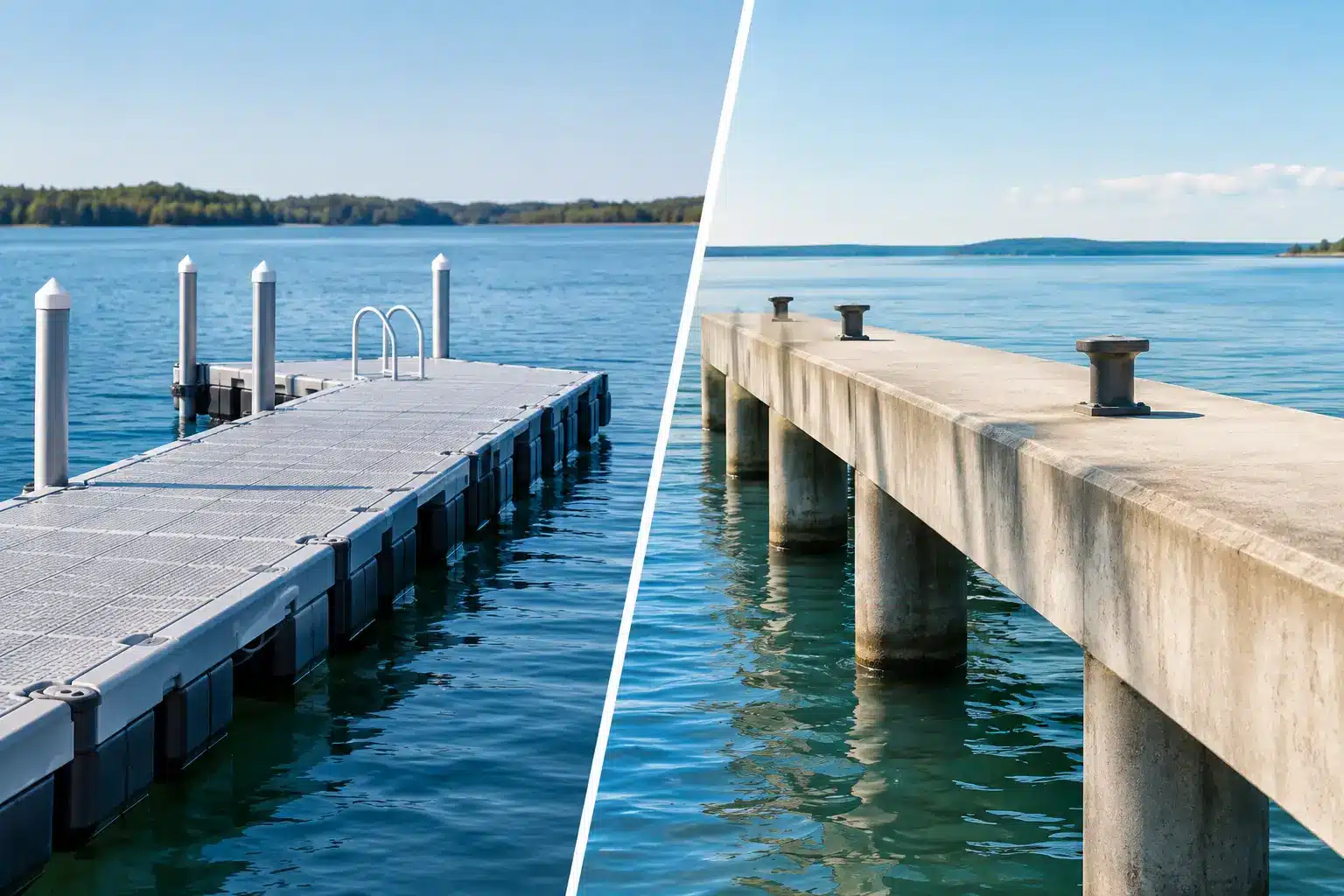
A concrete pier is a fixed structure supported by pilings, columns, or a solid foundation extending from shore into the water. Its deck stays at a set elevation, regardless of whether the water is high, low, or somewhere in between. It can provide a stable walkway and may work well where water levels are highly consistent and local conditions support permanent construction.
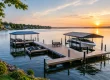
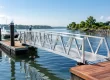
A modular floating dock rests on the water and moves with it. Individual dock sections connect to form a layout designed around the property and its uses. The system reaches shore with a gangway or transition section and is held in place with appropriate anchoring, such as pilings, cables, or weighted anchors.
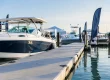
That floating movement is not a minor feature. It changes how people board boats, launch kayaks, step onto personal watercraft, fish, swim, and use the waterfront. A boat tied to a floating dock rises and falls with the dock, helping maintain a more consistent step between the vessel and the walking surface.
Changing Water Levels Often Decide the Issue
Water-level fluctuation is one of the most important considerations across Texas, Oklahoma, Arkansas, and New Mexico. Reservoirs can change dramatically with rainfall, drought, water releases, and seasonal demand. Private lakes and stock ponds may also rise or recede considerably.
When water drops below the elevation of a concrete pier, the deck can be left high above the water. Boarding a boat may require a steep ladder, a temporary ramp, or an awkward step down. When water rises, a fixed pier may sit uncomfortably close to the surface or become partially submerged, depending on its original design elevation.
A properly anchored modular dock rises and falls with the water. The gangway angle still needs to be evaluated at high and low water, but the dock deck remains close to the waterline. That can make a major difference for boaters, children, older adults, anglers, renters, and visitors who are less confident around the water.
A fixed pier can still make sense on a protected waterfront with limited water-level change or as part of a shore-based gathering area. But if reliable boat access is central to the project, floating access deserves serious consideration.
Maintenance Is More Than Surface Cleaning
Concrete is often viewed as maintenance-free, but waterfront concrete works in a demanding environment. It can crack, settle, stain, spall, and deteriorate over time. Reinforcing steel can corrode when moisture reaches it. Piles, footings, and connections may require inspection after severe weather, shoreline movement, or years of wave action.
Repairs to a fixed concrete structure are rarely simple. Access for equipment can be limited, and repairing supports in or near water may involve specialized work and additional permitting considerations. A repair that begins with a small crack can become a much larger structural project.
Modular dock systems have their own maintenance needs. Hardware, anchoring components, flotation, and connections should be inspected regularly. Leaves, mud, and storm debris should be removed. However, high-quality polyethylene dock sections do not require painting, staining, or replacing rotted boards. Their textured surfaces are designed for traction, and their components can often be reconfigured or replaced without rebuilding the entire waterfront structure.
For owners who want more time on the water and less time maintaining it, that distinction matters. Low maintenance does not mean no maintenance. It means the routine work is typically more manageable and predictable.
Flexibility Matters When Your Needs Change
A concrete pier is built to one layout. If you decide later that you need another boat slip, a fishing platform, a kayak launch, a wider gathering area, or a protected swimming zone, expanding the structure may require new engineering, construction, and approvals.
Modular docks are designed to evolve. A simple straight dock can become an L-shape, T-shape, U-shape, slip layout, fishing pier, or floating boardwalk as needs change. Accessories can be added for specific users, including railings, ladders, lighting, dock boxes, benching, kayak and canoe launches, boat ports, and personal watercraft ports.
This is especially valuable for marinas, parks, campgrounds, HOAs, and waterfront rental operations. Usage patterns change. Fleet sizes change. Accessibility expectations change. A dock system that can be adjusted in sections gives property managers more options than a structure permanently locked into its original footprint.
Safety and Accessibility Require Site-Specific Planning
Neither concrete nor floating systems are automatically safer. Good waterfront safety comes from a layout that matches the site and its users.
Concrete piers may feel solid underfoot, but fixed elevation can create larger steps to boats as water levels shift. Surfaces can also become slick with algae, moisture, or debris. Railings, edge protection, lighting, and clear circulation paths may be needed depending on the setting.
A floating modular dock maintains a closer relationship to the water and vessels, which can improve boarding comfort. Textured surfaces, properly designed gangways, stable anchoring, handrails, and well-placed ladders all contribute to safer use. For public projects, accessibility requirements and local regulations should be addressed early, not added after the dock layout has been selected.
The shoreline approach deserves equal attention. A well-designed dock cannot overcome a steep, unstable, or poorly drained path from parking or the property to the water. The full route from land to vessel should guide the design.
Upfront Cost Is Only Part of the Investment
A concrete pier may appear straightforward: build it once and leave it in place. Yet site preparation, excavation, forms, reinforcement, foundations, pile work, mobilization, and construction access can make the project expensive. Difficult soils, deeper water, steep banks, and environmental restrictions can add further cost.
A modular floating dock has its own cost drivers, including dock size, anchoring, gangway length, water depth, accessories, delivery, and installation. The comparison should not be reduced to price per square foot. It should account for the structure’s useful life, required maintenance, ability to accommodate fluctuating water, and cost of future changes.
For example, a smaller floating system that can expand later may be a more practical investment than overbuilding a fixed concrete pier for needs that may never materialize. Conversely, a substantial land-based concrete observation platform may be appropriate where it is intended primarily for viewing, gathering, or shore fishing rather than vessel access.
Permitting, Shoreline Conditions, and Installation
Both options can involve permits, utility considerations, easements, homeowner association rules, lake authority requirements, and environmental review. Requirements vary widely by lake, municipality, utility district, and governing agency. Starting with the desired dock size before understanding those limits can lead to delays and redesigns.
Site conditions also shape the best choice. Consider water depth at normal and low pool, expected fluctuation, wave exposure, wind direction, bottom conditions, shoreline slope, boat traffic, and the potential for debris during storms. Anchoring is not an afterthought for a floating dock. It is central to how the system performs.
An experienced waterfront partner can assess these variables and build a layout around real conditions rather than a generic dock plan. EZ Dock Texas helps customers evaluate access, anchoring, dock configuration, accessories, and installation so the completed system works as intended from shore to water.
Which Structure Fits Your Waterfront?
Choose a concrete pier when fixed elevation is acceptable, water levels remain relatively stable, and the primary purpose is a permanent shore-connected platform rather than flexible vessel access. It may also complement a waterfront project that already includes a separate floating dock for boating.
Choose a modular floating dock when water levels fluctuate, boating access matters, maintenance needs to stay manageable, or the layout may need to grow with the property. It is often a strong fit for lake homes, ranches, marinas, public parks, fishing areas, resorts, and institutional waterfronts.
The best waterfront projects begin with a clear picture of how people will use the water next season and ten years from now. Measure the conditions, plan for change, and select a system that keeps access safe and useful long after the first launch.