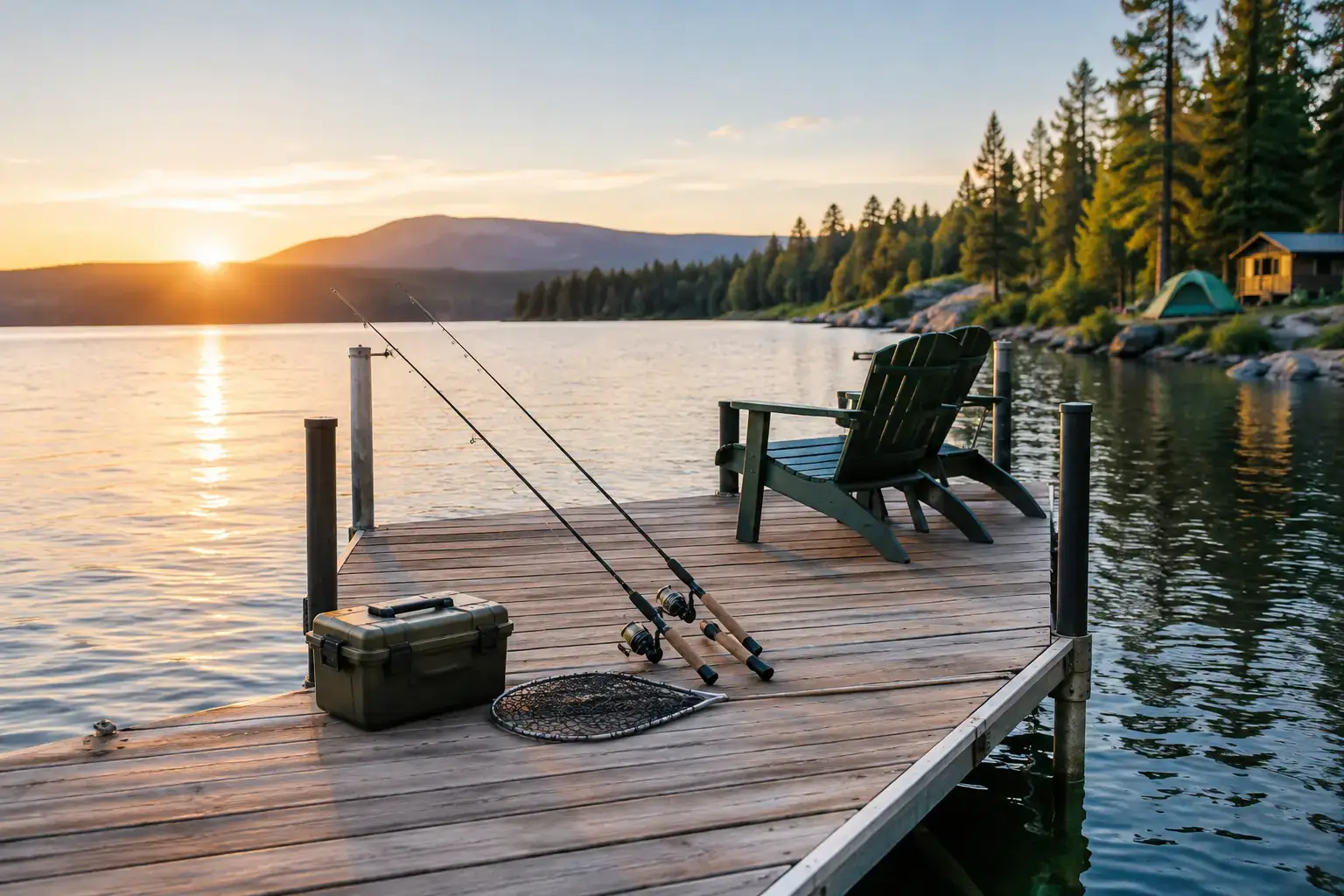
A fishing camp dock does much more than give anglers a place to tie up. It is where guests cast before sunrise, clean up after a long day on the water, load coolers, launch kayaks, and gather to swap stories. The best docks for fishing camps make all of those moments safer and easier while holding up to wet boots, heavy use, changing water levels, and years of weather.
For camp owners, lodge operators, park managers, and private landowners, the right answer is rarely a standard rectangular dock. A successful dock system starts with how people fish, how boats arrive and depart, and how the shoreline changes through the season. A modular floating dock often gives fishing camps the greatest long-term flexibility because it can be configured around the site and adapted as needs change.
What Makes a Dock Right for a Fishing Camp?
Fishing camps put different demands on waterfront infrastructure than a typical weekend lake house. The dock may serve dozens of guests, multiple boats, guides, maintenance crews, and people carrying rods, tackle, bait, ice chests, and catch bags. It needs enough usable space to prevent congestion without becoming difficult to access or maintain.
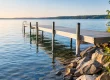
Stability is the first priority. Anglers need a platform that feels secure when someone moves to net a fish, steps aboard from a boat, or walks past with gear. Floating systems move with the water rather than becoming too high above the surface during a drawdown or too close to the water during high water. That characteristic is especially valuable on reservoirs and lakes across Texas, Oklahoma, Arkansas, and New Mexico where water levels can shift substantially.
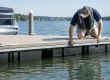
Durability matters just as much. Wood decks can look appealing at first, but they often require recurring staining, repairs, splinter management, and replacement in a high-use camp setting. Rotomolded polyethylene dock sections offer a low-maintenance alternative that resists rot, corrosion, insects, and many of the problems associated with traditional construction. For a camp operator, fewer dock repairs mean less downtime during the season.
The Best Dock Types for Fishing Camps
Modular floating docks for changing water
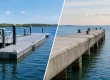
For most fishing camps, a modular floating dock system is the most practical choice. Individual sections can form straight walkways, L-shapes, T-shapes, wider fishing platforms, and protected slips. They can also be expanded later if the camp adds cabins, guide boats, rental vessels, or a dedicated kayak program.
This flexibility is useful when a camp’s waterfront plan develops over time. A property may begin with a simple boarding dock and later need more fishing space, boat ports, lighting, or a larger gathering platform. With compatible modular components, owners can add to the dock rather than starting over.
The key is proper anchoring. A floating dock is only as dependable as its anchoring system. Depending on water depth, bottom conditions, shoreline grade, and expected water-level movement, the design may use piling, cable anchors, deadweight anchors, or other engineered approaches. The best solution is site-specific, not a one-size-fits-all hardware package.
Wide fishing platforms for comfort and safety
A narrow walkway can get people from shore to boat, but it is not the best place for several guests to fish at once. A wider platform at the end or along one side of the dock creates room for casting, landing fish, placing chairs, and passing safely behind other anglers.
For family-oriented camps, this extra width can make the dock more welcoming for children, older adults, and first-time anglers. It also provides a better area for guides to demonstrate casting, knot tying, or fish handling. The trade-off is that wider platforms create more surface area for wind and wave action, so anchoring and the connection layout must be designed accordingly.
A T-shaped or L-shaped configuration often works well because it separates through traffic from fishing activity. Guests headed to a boat can use the main walkway while anglers have a defined space that does not turn into a bottleneck.
Boat-access docks for guides and guest vessels
If the camp operates guide boats, rental boats, or shuttle vessels, the dock needs clear boarding zones. A finger pier or side-tie area can create defined locations for loading passengers and gear, while leaving the fishing platform open for anglers.
Consider the boat types that actually use the property. A dock designed around bass boats may not work as well for pontoon boats, jon boats, shallow-draft skiffs, or larger guide vessels. Freeboard, cleat placement, slip width, and the approach path all affect how easily guests can board.
Boat ports can be a worthwhile addition for camps that keep equipment at the water year-round. By protecting a vessel from sun, water exposure, and repeated impacts against the dock, a port can reduce maintenance and speed up the start of each fishing day. Personal watercraft ports may also make sense when a camp uses PWCs for support, patrol, or recreation, but they should be positioned away from primary fishing areas.
Accessible docks for public-facing camps
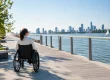
Fishing camps that serve the public, host organized groups, or operate within parks should think carefully about accessibility from the beginning. A properly planned gangway, gradual approach, handrails where appropriate, and a stable dock surface improve access for guests with limited mobility as well as anyone carrying gear.
Accessibility is not only a code question. It is a guest-experience decision. A parent managing a child and a tackle bag, an older guest stepping from shore, and a person using a mobility device all benefit from predictable transitions and clear circulation paths. Requirements vary by project and jurisdiction, particularly for public facilities, so accessibility features should be evaluated during design rather than treated as an add-on after installation.
Design Details That Improve the Fishing Experience
The most effective fishing camp docks anticipate the small things that frustrate guests. Good lighting extends safe use into early mornings and evenings without creating harsh glare on the water. Low-profile, durable fixtures can help define walking routes, boarding areas, and steps.
Railings deserve a balanced approach. They increase safety in transition areas and on elevated access routes, but too much railing can interfere with casting and landing fish. Many camps use railings along shore connections and selected edges while keeping the primary fishing face open.
Ladders are another practical feature. They provide a way back onto the dock after an accidental fall and support swimming where it is permitted. Dock boxes keep life jackets, cleaning supplies, rope, and frequently used equipment organized instead of scattered across the platform.
Do not overlook fish-cleaning operations. If guests regularly clean their catch on site, locate that function away from primary boarding areas and plan for water, drainage, waste handling, and cleanable work surfaces. Keeping scales, bait residue, and wet cleaning tools away from the main dock improves both safety and appearance.
Plan for Conditions, Not Just the View
A dock layout that looks good on a calm summer day may perform poorly during wind, wake, drought, high water, or a busy holiday weekend. Before selecting components, assess prevailing wind direction, wave exposure, shoreline depth, bottom composition, seasonal water variation, and the largest vessels expected at the camp.
Remote camps also need to consider delivery and installation access. Can equipment reach the shoreline? Is there a steep bank, limited turnaround area, or protected landscape to work around? These details affect the installation approach and can influence whether certain dock sections are assembled on shore, delivered by water, or staged in phases.
Maintenance expectations should be realistic. No dock is completely maintenance-free, but a well-designed floating system reduces recurring work. Regular inspections of anchors, connections, gangways, cleats, lighting, and safety equipment help identify minor issues before they interrupt operations or create a hazard.
Build a Dock That Can Grow With the Camp
The best dock design is one that fits the camp’s current operation while leaving room for the next phase. That may mean installing a fishing platform now with connections ready for future boat slips, adding a kayak launch as demand grows, or reserving space for an accessible route before expanding guest capacity.
EZ Dock Texas helps property owners and operators translate those needs into custom waterfront layouts, from private fishing retreats to active resorts, campgrounds, and public facilities. The goal is not to sell a standard platform. It is to create a durable access system that supports the way the property is actually used.
Start with the daily routine at your camp: where guests arrive, where they board, where they fish, and where gear tends to collect. A dock designed around those real movements will feel safer, work harder, and keep the focus where it belongs – on a good day of fishing.