A dock that works beautifully at spring pool can become a steep step, a tripping hazard, or completely unusable when summer water levels fall. That is why the choice between modular docks versus concrete is about more than appearance. It affects daily access, safety, maintenance demands, future expansion, and how well your waterfront investment performs over time.
For a fixed shoreline, concrete can make sense in the right setting. But for many lakefront homes, ranches, marinas, parks, and public-access sites, a modular floating dock provides a more adaptable answer to changing conditions. The best choice depends on the waterbody, intended use, site access, budget, and how you expect the property to evolve.
Modular docks versus concrete at a glance
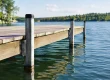
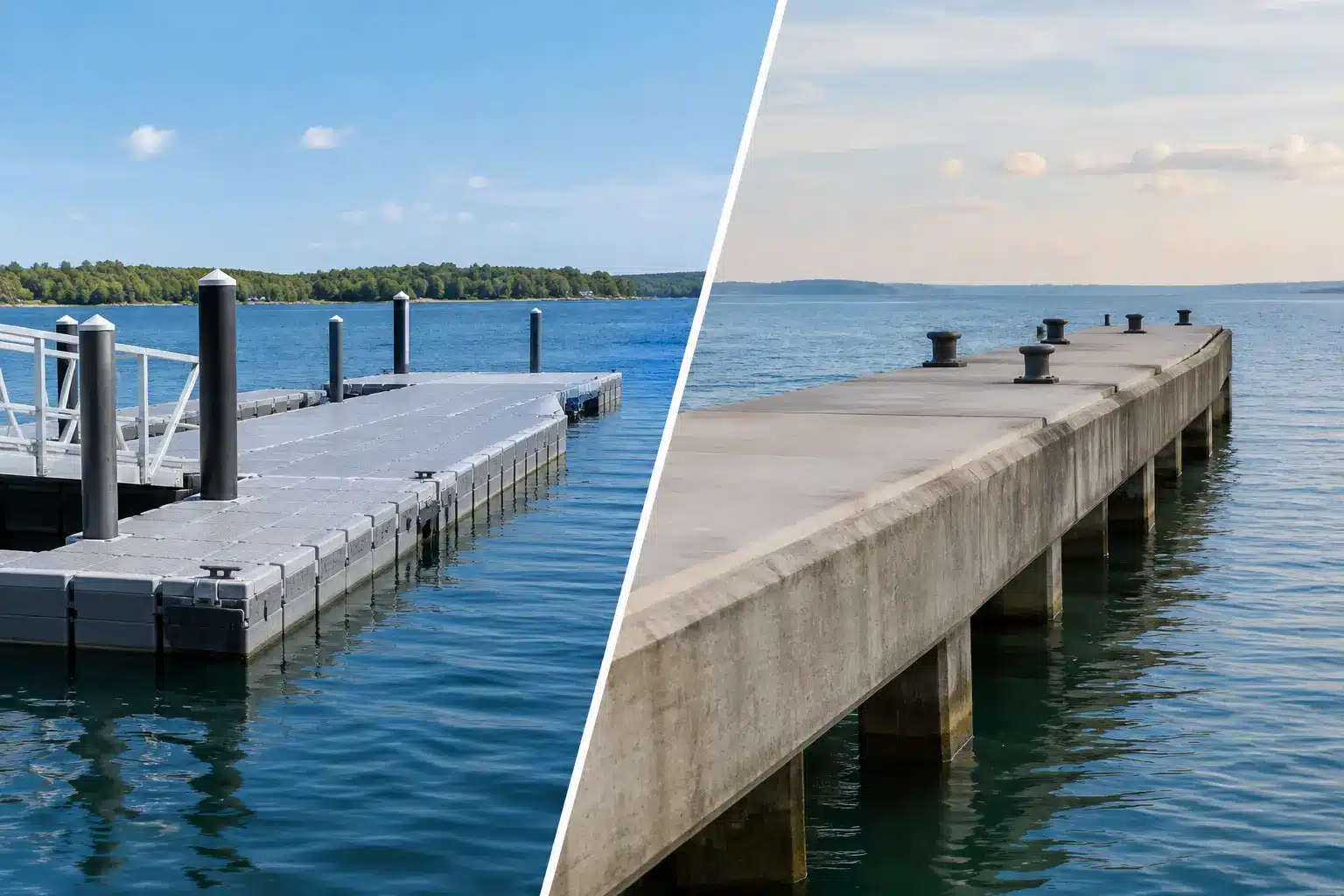
Concrete is generally associated with fixed piers, shore-connected walkways, and permanent structures supported by pilings or footings. It can create a substantial, familiar-looking waterfront feature, particularly where water levels are stable and the structure is intended to remain in one location for decades.
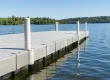
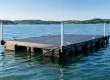
A modular floating dock is made from connected sections that float with the water. The system is secured with properly engineered anchoring, such as pilings, cables, or other site-specific methods, while a gangway provides access from shore. Individual sections can be configured into boat slips, fishing platforms, swim areas, kayak launches, personal watercraft ports, or wider public-access routes.
The practical difference is simple: concrete stays where it is built, while a floating system follows the water. On reservoirs and lakes that experience seasonal drawdowns, storm-related fluctuations, or changing shoreline conditions, that distinction can shape every day of use.
Water-level changes are usually the deciding factor
Across Texas, Oklahoma, Arkansas, and New Mexico, many waterfront properties experience water changes that are not minor. Drought, releases, rainfall, irrigation demands, and reservoir operations can move the shoreline substantially over the course of a year. A fixed concrete dock does not adjust to those shifts.
When water drops below a fixed dock, boats may no longer reach it safely. A once-convenient deck can sit far above the water, and the path from shore may become awkward or inaccessible. When water rises, clearance beneath a fixed structure can become a concern, especially where debris, waves, or flood conditions are possible.
A modular floating dock rises and falls with the water, keeping the deck at a more consistent relationship to boats and users. That makes boarding easier for boaters, creates a more dependable launching point for kayaks and paddleboards, and helps maintain usable water access through normal seasonal changes.
This does not mean floating docks solve every high-water challenge automatically. The anchoring system, gangway length, shore connection, and local wave exposure must all be planned correctly. A floating dock is only as capable as the design behind it.
Access and safety favor a well-designed floating system
A fixed concrete structure can provide a stable walking surface, but its access route can become difficult as the distance between the deck and water changes. That may be manageable for an occasional fishing pier. It is less ideal for a busy marina, a family dock used by children and grandparents, or a public facility serving visitors with different mobility needs.
With a modular system, the floating deck remains near boat level. A properly sized gangway manages the transition from shore to dock, helping users move safely even as the water rises or falls. Railings, lighting, slip-resistant surfaces, ladders, and accessible launch features can be incorporated where they are needed rather than treated as afterthoughts.
For public parks, camps, schools, and municipal sites, accessibility deserves early attention. The grade and width of the gangway, turning areas, handrails, edge protection, and connection points all affect the final experience. A custom layout can support fishing, paddling, boating, and waterfront programs without forcing every user onto the same narrow path.
Maintenance looks different for each option
Concrete has a reputation for permanence, but permanent does not mean maintenance-free. Cracking, spalling, erosion around supports, settling, and damage from water movement can require expensive repairs. Repairs can also be disruptive because fixed concrete structures are difficult to move, reconfigure, or access from the water.
Modular floating docks require regular inspection as well. Owners should check anchoring, connection hardware, gangway components, safety accessories, and the surrounding shoreline. The advantage is that a modular system is built from serviceable components. If an area is damaged or a use changes, the dock can often be repaired, adjusted, or expanded without rebuilding the entire waterfront structure.
High-quality polyethylene modular dock systems are designed to resist rot, splinters, corrosion, and the annual staining and sealing associated with many traditional dock materials. For owners who would rather spend weekends on the water than maintaining a dock, that lower routine upkeep can be a meaningful long-term benefit.
Concrete may cost less in one situation and more in another
Upfront cost comparisons can be misleading because waterfront construction is rarely a simple material-to-material decision. A concrete dock may appear straightforward until the project requires excavation, footings, pilings, reinforcement, engineering, equipment access, or repairs to an unstable shoreline. Those site conditions can change the budget quickly.
A modular dock system also varies by size, anchoring method, gangway, accessories, delivery access, and installation requirements. A basic swim platform has very different needs from a multi-slip marina or a public fishing pier. Still, modular construction can reduce the cost and disruption of future changes because owners can add sections, ports, railings, or launch equipment as needs grow.
Think beyond the original installation. If a family adds a pontoon boat, buys personal watercraft, starts using kayaks, or wants a larger gathering area, a fixed concrete structure may need major reconstruction. A modular layout can be reconfigured around the new use. For commercial and public operators, that flexibility can protect the original investment as programming, demand, or regulations change.
When concrete is the better fit
Concrete is not automatically the wrong answer. It can be a practical choice for stable shorelines, fixed waterfront promenades, retaining structures, or locations where a permanent land-based deck is the primary goal. It may also complement a floating dock by providing a shore landing, approach path, or structural transition area.
The key question is whether the waterfront feature needs to meet the water or simply overlook it. If regular boat access, swimming, fishing, paddling, or public boarding is central to the project, a floating platform usually deserves serious consideration. If the goal is a fixed scenic terrace above a consistently stable shoreline, concrete may be appropriate.
It is also worth distinguishing a fixed concrete pier from a concrete floating dock. Some marinas use floating dock systems with concrete flotation or concrete deck elements. Those systems still move with the water, but they have different weight, installation, maintenance, and site requirements than a modular polyethylene floating dock.
Design for the way people will actually use the waterfront
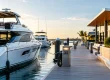
The strongest dock plans begin with real use patterns, not a standard rectangle on paper. A lake homeowner may need an easy path from shore to a boat lift area, a swim ladder, and a protected place to launch kayaks. A marina may need defined slips, utility access, durable walkways, and room for guests to move safely. A park may prioritize fishing positions, accessible routes, canoe launches, and high-visibility railings.
Modular systems are especially useful when one waterfront must serve several activities. A straight dock can become an L-shaped layout, a T configuration, a wider gathering platform, or a connected system with dedicated boat and personal watercraft ports. The ability to add or relocate sections is valuable when the shoreline, fleet, or user group changes.
Anchoring should never be treated as a generic add-on. Wind exposure, water depth, bottom conditions, fetch, wake activity, anticipated water variation, and local permitting requirements all influence the right approach. A dock that is properly matched to its environment will perform better and require fewer corrections later.
Get the layout right before construction begins
Before committing to concrete or a modular floating system, document the normal and extreme water levels, shoreline slope, bank condition, likely watercraft, and the people who will use the dock. Consider how equipment will reach the site and whether the project may need to grow in the next five to ten years.
EZ Dock Texas helps property owners and organizations turn those practical questions into customized waterfront layouts, including dock configuration, anchoring, gangways, ports, safety features, delivery, and installation. That planning step is often where a dock project becomes easier to use, safer to operate, and better prepared for changing water.
A waterfront should invite people closer to the water, not make them work around a structure that no longer fits. Choose the system that will continue serving your property when the lake level, equipment, and expectations change.