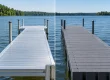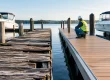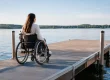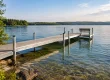
Achieving the balance of ADA compliance and guest comfort requires more than just ramps; it necessitates a “universal design” approach where every amenity is accessible by default. In Texas, this means ensuring gangways never exceed a $1:12$ slope, installing transfer benches for adaptive paddling, and placing shaded resting zones at regular intervals. By prioritizing accessibility and thermal comfort (shade), parks can increase dwell time and attract a broader demographic of families and seniors.
Key Takeaways:
- ADA compliance is a legal baseline; universal design is the community goal.
- The $1:12$ slope rule is the “Golden Ratio” for gangways and ramps.
- Transfer systems and low-profile docks make water sports accessible for all abilities.
- Strategic shade is the single most effective way to increase visitor comfort in Texas.
- Inclusive parks see higher return rates and lower “dwell time” frustration.
Suggested Featured Image: A wide, ADA-compliant floating boardwalk featuring a family with a stroller and a senior using a walker, all comfortably enjoying the lake view.
Search Phrases: inclusive park design, ADA waterfront ramp Texas, accessible lakefront amenities.
Moving Beyond “Check-Box” Compliance
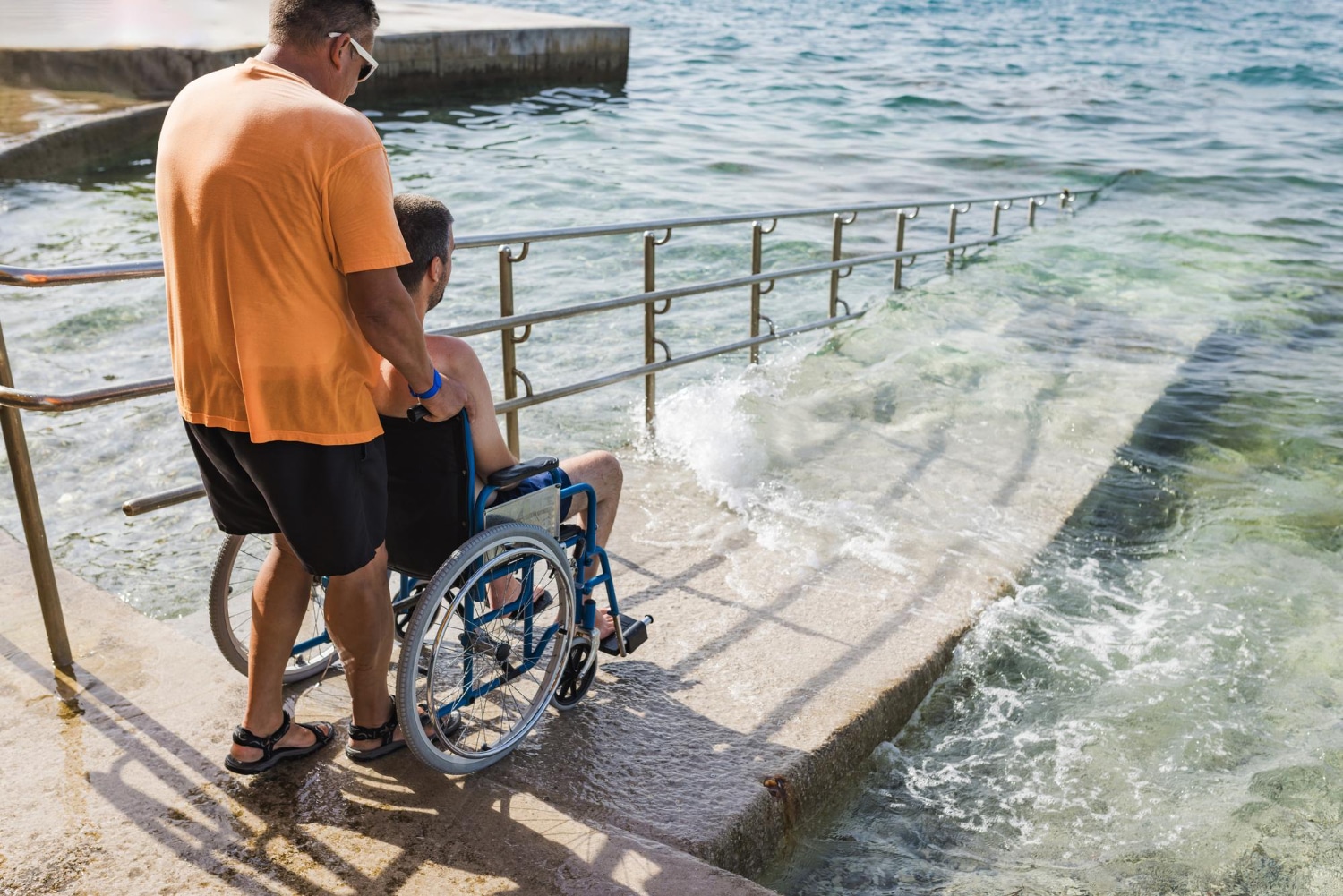
In many Texas parks, ADA accessibility is treated as a secondary “add-on” to existing infrastructure. However, modern ADA compliance and guest comfort are increasingly seen as inseparable. When a park is difficult to navigate for a person in a wheelchair, it is often also difficult for a parent with a double stroller or a senior citizen with limited mobility.
By adopting Universal Design, park managers create environments that are inherently accessible to everyone, regardless of age or ability. This approach reduces social stigmas, simplifies maintenance, and ensures that the park remains a truly public asset.
The Pillars of Accessible Waterfronts
1. The Gangway and Transition
The most common barrier to the water is the transition from land to dock.
- The 1:12 Slope: For every 1 inch of vertical rise, you must have 12 inches of horizontal run. In Texas, where lake levels can drop 10 feet or more, this may require “long-span” gangways or switchback ramp systems to maintain compliance.
- Transition Plates: Ensure that the “gap” between the land and the gangway (and the gangway and the dock) is covered by a smooth, non-slip transition plate to prevent wheels from getting stuck.
2. Adaptive Paddling & Water Entry
Paddlesports are for everyone. ADA compliance and guest comfort at the water’s edge should include:
- Transfer Benches: These allow users to move from a wheelchair to a stable bench and then slide into their kayak or canoe.
- Handrails & Rollers: Integrated grab-bars and rollers make it possible for users with limited upper-body strength to launch and retrieve their craft independently.
3. Inclusive Fishing and Viewing
- Low-Profile Railings: Incorporating sections of railing that are 30-34 inches high allows children and seated adults to fish or view the water without obstruction.
- Edge Protection: A 2-inch “toe-kick” or curb along the edge of all docks prevents mobility aids from slipping off the side.
The Texas Factor: Comfort is Temperature
In Texas, a park can be 100% ADA-compliant but still be “unusable” if it lacks shade.
- Thermal Comfort: Metal and dark wood docks can reach temperatures over 60°C in July. Using light-colored HDPE (High-Density Polyethylene) keeps surfaces significantly cooler for paws, feet, and hands.
- Shade “Islands”: Place shaded benches at least every 50-100 feet along long piers or trails to provide resting spots for those who tire easily or are sensitive to heat.
Maintenance & Operations Plan
- Daily: Clear any debris or silt from transition plates to ensure a smooth “roll.”
- Weekly: Check handrails and grab-bars for stability and “burrs” or sharp edges.
- Quarterly: Measure gangway slopes during low-water periods to ensure they haven’t become too steep.
- Seasonally: Audit shade structures for tears or damage and ensure PFD loaner racks have “adaptive” or extra-large sizes available.
FAQ
Is it expensive to make a dock ADA compliant?
While specialized gangways and transfer systems have a higher upfront cost, they are far cheaper than a liability lawsuit or the cost of retrofitting a “fixed” structure later.
Can we use gravel for ADA paths to the water?
Only if it is “stabilized” or resin-bound. Standard loose gravel is a major barrier for wheelchairs and strollers.
Does ADA require every boat slip to be accessible?
No. Usually, only a specific percentage of slips (typically 5-10% depending on the total count) must be fully accessible. However, all public “boarding piers” must be.
What is a “transfer system”?
It is a multi-level platform and bench system that allows a person to “step down” or slide into a boat at a controlled, stable height.
How do we protect against the Texas sun on our docks?
Choose light-colored, UV-stabilized materials. Adding permanent shade sails or pavilions over the dock itself is the best way to ensure ADA compliance and guest comfort.
Are “floating” docks better for ADA?
Yes. Because they move with the water, the distance between the dock and the boat is always the same, providing a consistent and safe entry point that fixed docks cannot match.
Checklist for Inclusive Design
- [ ] Measure all gangways to ensure a $1:12$ slope at the lake’s average low point.
- [ ] Verify that the “path of travel” from the parking lot to the water is paved or stabilized.
- [ ] Install a transfer bench on at least one kayak launch.
- [ ] Include a 2-inch curb on all dock edges without railings.
- [ ] Place a shaded bench within 50 feet of the water entry point.
- [ ] Use high-contrast signage for those with visual impairments.
- [ ] Ensure all gangway handrails have a diameter of 1.25 to 1.5 inches for a comfortable grip.
- [ ] Check that all “cleats” and hardware are flush-mount to prevent tripping.
- [ ] Provide accessible-height trash and recycling bins.
- [ ] Audit the dock surface for “heat-safety” during a typical 38°C Texas afternoon.
Creating an inclusive waterfront is one of the most rewarding investments a park can make. When you prioritize ADA compliance and guest comfort, you aren’t just following a rule—you’re opening up the beauty of Texas waters to your entire community. At EZ Dock Texas, we pride ourselves on being leaders in universal waterfront design, offering everything from ADA-compliant gangways to the industry-leading EZ Launch® Residential and Commercial systems. Ready to make your park a destination for everyone? Contact us today or join our community of inclusive park leaders on Facebook.