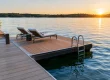
Retrofitting a stable, high-utility paddlecraft launch onto an existing fixed pier requires a transition from a rigid structural elevation to a dynamic, water-level interface. Implementing an easy-to-install kayak launch onto legacy timber or steel piling docks involves anchoring a heavy-duty, self-leveling floating platform to the existing structure using vertical slide mounts or internal piling brackets. This design resolves the critical elevation gap common with fixed piers, ensuring that launch and recovery sequences happen precisely at water level regardless of shifting tides or reservoir drawdowns. By utilizing modular, slip-resistant polyethylene components, estate managers can integrate a low-profile, highly stable launch system that enhances water accessibility while mitigating the structural strain and safety liabilities associated with launching from high, rigid decks.
The Physics of the Waterfront: Managing Site Conditions
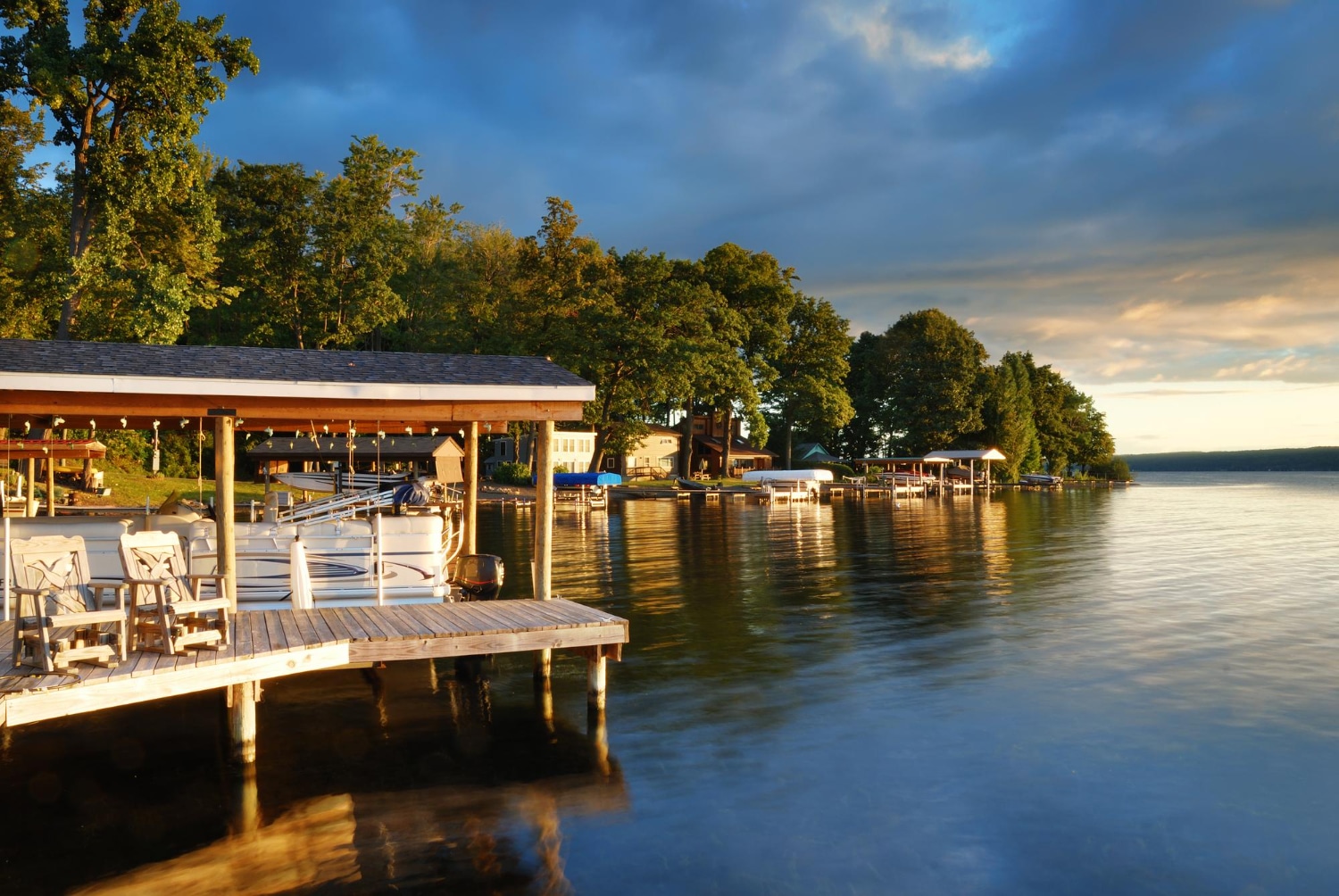
Fixed docks are engineered to remain static, a design philosophy that clashes directly with the fluid mechanics of dynamic aquatic environments. On the Texas coast and deep-water inland reservoirs, fixed structures frequently subject watercraft users to dangerous elevation differentials. During high-water events or tidal shifts, a fixed pier may sit mere inches above the surface, while low-water conditions can create a treacherous four-to-six-foot drop to the water.
Attempting to launch a kayak or paddleboard across this fluctuating gap compromises user balance and strains the watercraft hull. Furthermore, fixed timber and steel piles lack the capacity to absorb localized wake energy; instead, waves deflect off the vertical surfaces, creating chaotic, choppy water directly alongside the dock. A heavy-duty floating kayak launch retrofitted to the fixed structure adapts fluidly to these vertical movements. By riding the surface of the water, the floating launch neutralizes the impact of tidal fluctuation and heavy watercraft wake, converting a rigid, high-exposure impact zone into a stable, energy-dissipating launch pad.
Primary Risk and Operational Challenges
Structural Fatigue and Connection Stress
Integrating a moving, floating mass with an unyielding fixed pier introduces severe mechanical leverage at the connection points. When heavy wake or wind loads impact the floating launch, that kinetic energy is transferred directly to the fixed dock’s framework. If the retrofitting hardware utilizes rigid fasteners rather than flexible, heavy-duty engineering joints, the resulting shear stress can fracture timber headers, bend steel brackets, or strip structural bolts, compromising the integrity of both systems.
Guest Safety and Liability Management
For luxury hospitality operators and private waterfront estates, guest safety is paramount. Launching a paddlecraft from a high fixed deck requires awkward bending, reaching, and balancing, significantly increasing the risk of slips, falls, and immersion injuries. Without integrated handrails, launch channels, and stabilized transition platforms, less experienced paddlers struggle with watercraft stability, creating a distinct liability vector that property managers must proactively manage.
Saltwater Corrosion and Marine Growth
In the harsh environments of the Texas gulf coast and brackish coastal bays, traditional construction materials degrade rapidly. Saltwater acceleration destroys standard galvanized fasteners, while marine boring organisms compromise submerged timber. Furthermore, constant subjection to moisture encourages the growth of algae and barnacles on the launch surface, turning an un-engineered retrofit into a slick, hazardous liability within a single season of exposure.
Engineering and Design Evaluation Criteria
When retrofitting a floating system into a high-end private marina or estate waterfront, material science and structural engineering must take precedence over aesthetic mimicry. The retrofitted launch must feature high impact resistance to withstand debris and boat wake without cracking or puncturing. Property managers should prioritize heavy-duty, UV-stabilized linear low-density polyethylene (LLDPE) systems that feature a hollow, rotationally molded architecture. This material is completely saltwater-impermeable, eliminating the risks of rot, rust, and degradation caused by marine organisms while maintaining structural flexibility under load.
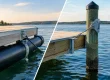
Furthermore, the anchoring hardware utilized to marry the floating launch to the fixed pier must handle depth adaptability without utilizing rigid underwater grout or permanent beds. Heavy-wall aluminum or stainless steel slide rails, paired with self-lubricating polymer rollers or slider blocks, allow the launch to track vertical water movements seamlessly. This modular scalability ensures that if the estate’s watercraft fleet expands to include larger tandem kayaks or prone paddleboards, the launching footprint can be augmented with additional specialized modules without requiring a complete redesign of the legacy pier.
Best Practices for Site Integration and Longevity
Successful installation begins with a comprehensive site assessment focused on the geometry of the existing fixed pier. Technicians must verify the structural soundness of the timber beams or steel joists chosen to support the retrofitted attachment brackets. The connection should never be fastened merely to deck boards; instead, through-bolts must secure heavy-duty backing plates directly to the primary load-bearing rim joists or pilings.
To optimize asset longevity and user ergonomics, the launch should be positioned on the leeward side of the fixed dock whenever possible to maximize wake mitigation. Once the structural slide rails are vertically aligned and anchored to the fixed pier, the floating launch is coupled to the track using flexible dual-component hinges. These hinges allow independent pitch and roll, preventing the twisting forces of the water from transferring destructive torque into the fixed pier’s framework. For seasonal preparation or severe weather deployment, these connection points should feature quick-release pins, enabling property managers to rapidly decouple and secure the floating asset prior to a storm surge.
Site Assessment Planning Checklist
Before executing an easy-to-install kayak launch retrofit, property managers should cross-reference the following engineering and environmental variables:
- [ ] Fixed Dock Structural Integrity: Verify that the existing rim joists, headers, and pilings are free of rot, structural cracks, or advanced corrosion.
- [ ] Water Depth at Low Pool: Confirm that a minimum depth of two feet is maintained during lowest seasonal drawdowns or low tides to prevent the launch from grounding.
- [ ] Tidal Range or Drawdown Depth: Measure the maximum vertical variance between high and low water levels to calculate the required length of the vertical slide rails.
- [ ] Substrate Composition: Identify if the shoreline bottom is mud, sand, or rock to determine if supplementary mud-anchoring weights are required.
- [ ] Fetch Distance and Wind Exposure: Calculate the maximum open-water distance facing the launch site to evaluate potential wind-wave heights.
- [ ] Wake Profiles: Assess the frequency and intensity of watercraft wake from adjacent navigation channels.
- [ ] Attachment Point Dimensions: Measure the thickness and height of the fixed dock’s structural framing to manufacture custom-fit backing plates.
- [ ] Permitting and Regulatory Clearances: Confirm compliance with local river authorities, the U.S. Army Corps of Engineers, or homeowner association environmental guidelines.
- [ ] Watercraft Specifications: Map out the weight, beam width, and hull design of the heaviest kayaks or boards intended for use.
- [ ] ADA or Ergonomic Access Needs: Determine if integrated overhead grab bars, transfer benches, or slide-assist steps are required for guest accessibility.
Frequently Asked Questions
Can an easy-to-install kayak launch be added to a dock with steel or concrete pilings?
Yes. Utilizing specialized heavy-duty piling hoops or adjustable bracket collars allows the floating launch to attach securely to square, round, steel, or concrete pilings without drilling directly into the structural columns.
How does a retrofitted floating launch handle heavy boat wake?
A heavy-duty polyethylene launch features a modular design that flexes under structural load. Rather than resisting wave energy like a rigid structure, it rises and dissipates the wake across its surface, protecting both the kayak and the main fixed dock from impact damage.
Will the floating launch require removal during freezing winter conditions?
In most deep-water Texas reservoirs, removal is unnecessary because the high-density polyethylene construction resists ice adhesion. However, if the waterway experiences shifting ice sheets, utilizing quick-release connection pins allows for simple extraction to protect the asset longevity.
What maintenance is required to prevent the launch from becoming slick with marine growth?
Because premium composite polyethylene is non-porous, algae and marine growth cannot root into the material. Simple routine maintenance involving an occasional pressure washing or a stiff-bristle sweep keeps the slip-resistant texture clean and performing optimally.
How much weight can a modular retrofitted kayak launch safely support?
Engineered modular launches feature exceptional depth adaptability and buoyancies tailored for heavy use, typically supporting upwards of 30 to 60 pounds of deadweight per square foot, ensuring stability even when multiple users are boarding simultaneously.
Modernizing Waterfront Assets with EZ Dock Texas
Optimizing a waterfront estate or private resort requires a seamless marriage of safety, structural durability, and high-end engineering. Incorporating an easy-to-install kayak launch onto an established fixed dock modernizes the property’s recreational capability while simultaneously protecting the core structural assets from dynamic environmental forces.
As a premier consultative planning and engineering partner for elite residential, commercial, and coastal developments across the state, EZ Dock Texas provides turnkey site assessments and advanced configuration layouts designed to survive the harshest aquatic conditions. Whether managing a deep-water reservoir development or a rugged gulf coast waterfront property, our team delivers high-density, low-maintenance floating dock infrastructure that stands the test of time. Discover our latest installation techniques and community updates by connecting with us on Facebook.