A kayak launch should not turn a calm morning on the lake into a balancing act. The best low-maintenance kayak launches for lake docks give paddlers a stable place to sit, load gear, and enter the water while keeping the dock system practical for the people responsible for it. For a lake home, resort, park, or marina, that means less time repairing waterfront equipment and more time using it.
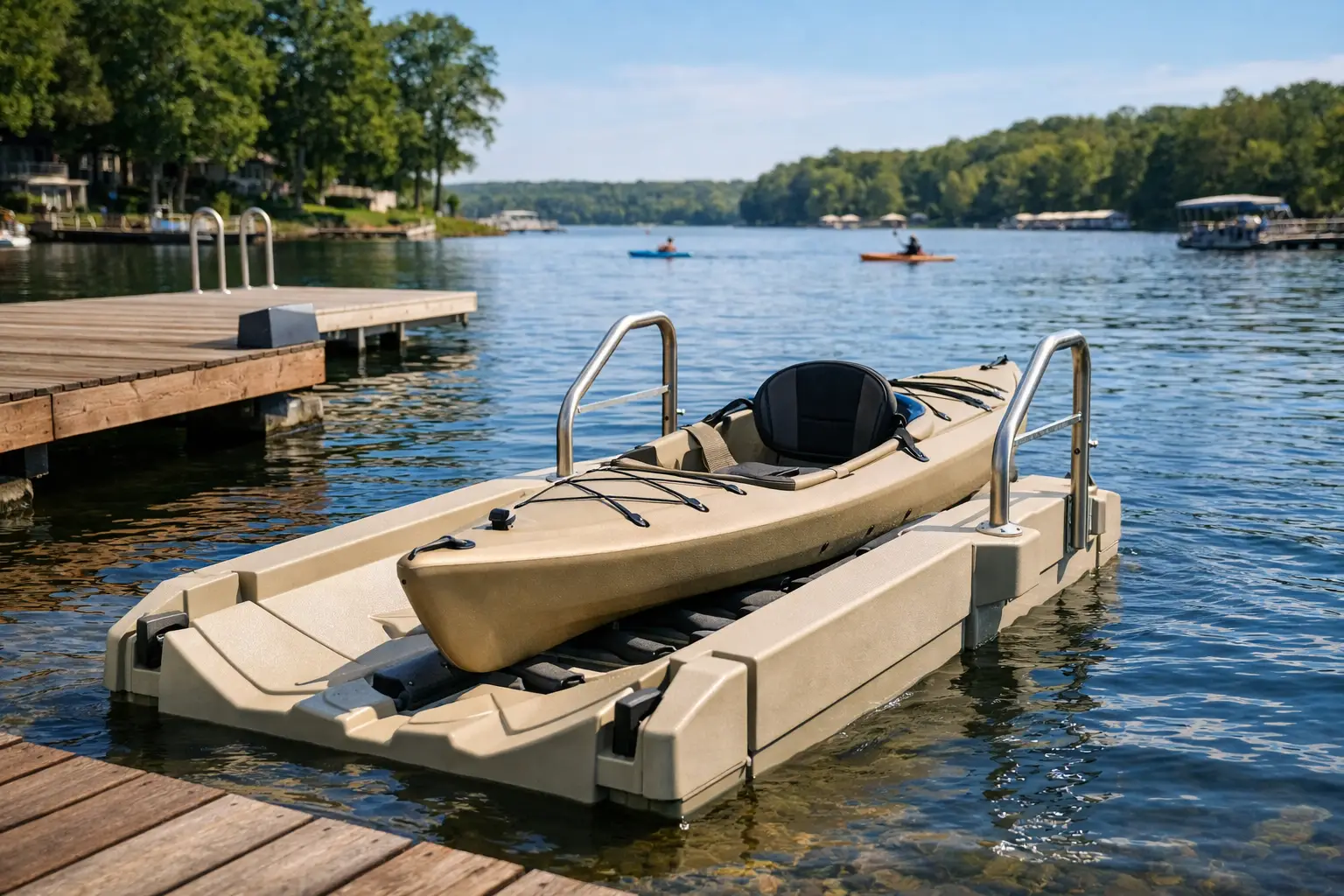
A purpose-built launch is different from simply tying a kayak to the side of a dock. It creates a defined, lower transfer area that helps users get into and out of a kayak with more control. When it is integrated into a floating dock layout, it can also move with changing water levels, reduce congestion at boat slips, and make paddlesports a more dependable part of the property.
What Makes a Kayak Launch Low Maintenance?
Low maintenance starts with materials that are made for the waterfront. Traditional wood structures can require ongoing staining, board replacement, fastener checks, and attention to splinters or slippery surfaces. A modular floating dock system built from durable, UV-resistant materials avoids much of that recurring work while providing a stable surface underfoot.
The launch itself should have a simple, open design with few components that can rust, rot, snag paddles, or collect debris. Textured walking surfaces help improve footing without creating a maintenance burden. In lake environments, where wind, wakes, sun exposure, and seasonal water fluctuations all affect the dock, fewer vulnerable parts generally means fewer service calls.
A floating system also matters. A fixed platform may sit too high above the water during a drawdown or become awkward when the lake rises. A floating kayak launch stays close to the water surface as conditions change, so the transfer height remains more consistent. That is especially valuable on Texas and regional reservoir lakes where water levels can vary substantially through the year.
Low maintenance does not mean no attention at all. Every waterfront system benefits from periodic inspection. Owners should check connectors, anchoring, gangways, and the launch area for storm debris, unusual movement, or damage after severe weather. The objective is to make routine care straightforward rather than turning it into a seasonal rebuilding project.
Why a Dedicated Launch Improves Lake Dock Access
Getting into a kayak from a standard dock edge often requires lowering the boat while trying to keep it from drifting away. The paddler may be standing on a higher platform, reaching down with one foot in the kayak, and relying on another person to hold the boat steady. That setup may work for an experienced paddler in calm water, but it is not ideal for children, older adults, guests, rental customers, or users carrying fishing gear.
A dedicated launch provides a more controlled sequence. The kayak can be positioned alongside the launch, the user can sit down before fully entering the boat, and handholds or a nearby dock edge can provide support during the transfer. The result is not a substitute for proper supervision or paddling safety, but it can reduce the awkwardness of one of the most common moments for a tip-over.
For commercial and public properties, the benefit extends beyond individual comfort. Clear launch locations help keep paddlers out of boat traffic and prevent kayaks from occupying fuel docks, slips, swim ladders, or boarding areas. At a busy campground, resort, municipal waterfront, or outfitter location, organizing where people enter and exit can improve the entire flow of the dock.
Choosing a Launch Configuration for Your Dock
The right configuration depends on who will use it and how the shoreline operates. A single lakefront home may need one launch attached to a swim platform or a quiet side section of the dock. A marina or park may need multiple launch points separated from motorized watercraft. The best layout is one that supports regular use without creating a pinch point.
Consider the Users First
Start with the least experienced likely user, not just the strongest paddler. If children, first-time kayakers, anglers, camp guests, or older family members will use the facility, prioritize a stable transfer area and easy approach from shore. A launch serving adaptive recreation or broad public access may also need additional planning around handrails, route widths, slopes, and local accessibility requirements.
For a rental operation, durability and reset time are major factors. Staff should be able to guide guests through entry and exit without constantly repositioning loose boats or making temporary adjustments. A consistent, intuitive launch setup helps reduce confusion during peak hours.
Match the Launch to Water Conditions
Protected coves and small private lakes usually have different conditions than open reservoirs. On a windy lake, the launch should be located where the dock and shoreline provide some shelter from prevailing wind and heavy boat wakes. A poorly placed launch can leave paddlers fighting the boat before they ever leave the dock.
Water depth matters, too. Kayaks need enough clearance to float without scraping the bottom, particularly during seasonal low water. At the same time, a launch does not need to be placed in the deepest part of the property if that creates an unnecessarily long or exposed access route. A site review can identify the best balance among depth, protection, shoreline access, and available dock space.
Plan the Route From Parking to Paddle
A well-designed launch starts before the dock. Think about where people park, carry kayaks, pick up life jackets, and wait their turn. Long stairs, uneven paths, narrow gangways, and abrupt transitions can make an otherwise good launch difficult to use.
For public facilities, it is often wise to create a staging area on shore where users can prepare gear before approaching the dock. This keeps dock traffic moving and gives staff a clear place to provide instructions. At residential properties, a small storage area near the water can save repeated trips up and down the shoreline.
Modular Floating Docks Offer Long-Term Flexibility
Kayak programs change. A homeowner may begin with two recreational kayaks and later add paddleboards. A resort may expand a rental fleet. A city park may add educational paddling events or guided outings. A modular dock system makes it easier to adapt the layout without starting over.
A launch can be added to a larger floating platform, connected to a walkway, placed near a fishing pier, or incorporated into a separate paddlesports zone. If usage patterns change, modular sections can often be reconfigured to improve traffic flow. This flexibility is one reason many waterfront owners view a quality floating dock as a long-term investment rather than a short-term structure.
Anchoring and shoreline connection should be planned with the same care as the launch itself. The dock must be able to respond appropriately to wind, wakes, and changing water levels while maintaining a safe route from land. Depending on the site, that may involve pilings, cable systems, stiff-arm connections, or other anchoring approaches. The correct choice depends on lakebed conditions, water depth, shoreline geometry, and the expected range of water movement.
Maintenance Practices That Protect the Investment
Even the most durable launch benefits from a simple inspection routine. Before the busiest paddling season, walk the route from shore to launch. Confirm that walking surfaces are clear, connectors are secure, and anchoring hardware is functioning as intended. Remove branches, fishing line, leaves, and other debris that could affect footing or interfere with boats.
After major storms or unusually high winds, inspect the dock before returning it to regular use. Look for shifted sections, damaged hardware, loose accessories, or signs that anchoring needs adjustment. Addressing a small issue early is usually easier and less expensive than waiting for it to affect the entire layout.
Avoid treating the launch as storage space. Coolers, unused kayaks, dock furniture, and loose equipment can block the transfer area and undermine the safety benefit of a dedicated access point. If the property needs storage, use a designated dock box or shore-based solution instead of crowding the launch.
A Better Fit for Homes, Parks, and Waterfront Businesses
The best kayak launch is not always the largest one. It is the one that fits the people, the site, and the daily demands of the property. A private dock may prioritize family-friendly access and a clean appearance. A public park may prioritize durability, user flow, and inclusive access. A marina or resort may need a configuration that supports rentals while separating paddlecraft from boat traffic.
EZ Dock Texas helps property owners and public agencies evaluate those details as part of a complete waterfront design, from floating dock layout and anchoring to gangways, accessories, and installation. A customized approach can account for water conditions, expected users, available shoreline space, and future expansion before equipment reaches the water.
When a kayak launch is designed as part of the dock rather than added as an afterthought, it becomes easier to use, easier to maintain, and more likely to earn its place in every season of lake life.