A boat left in the water can collect algae at the waterline, take on storm debris, and stay exposed to waves long after everyone has gone home. That is why the boat port versus boat lift decision is about more than convenience. It affects how you use your dock, how much maintenance you take on, and how well your waterfront system handles changing lake conditions.
For lake homes, marinas, resorts, and public facilities, the right answer depends on the boat, the water, the shoreline, and the level of daily use. A floating boat port and a mechanical boat lift both help protect an investment, but they do so in very different ways.
Boat Port Versus Boat Lift: The Basic Difference
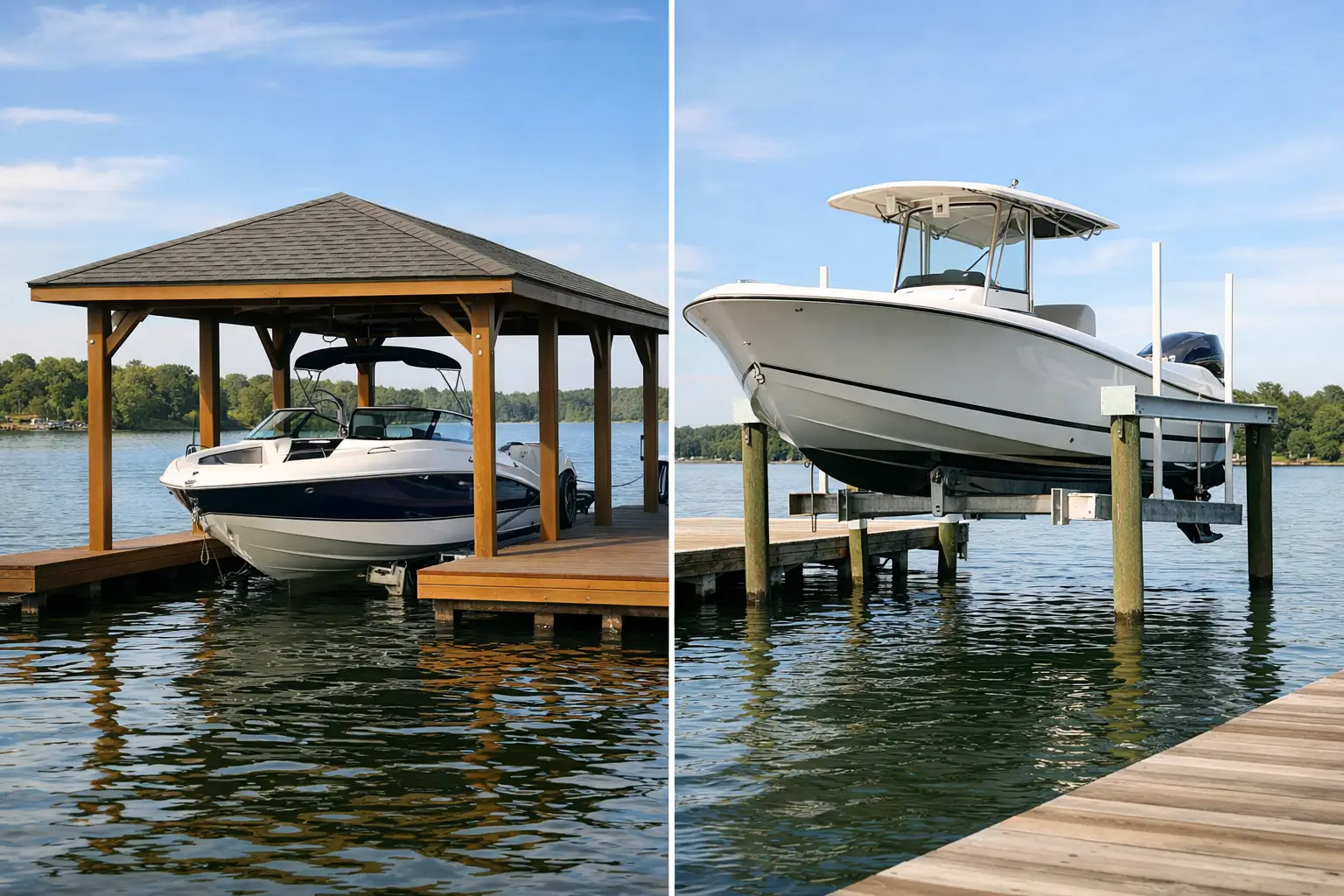
A boat lift uses a mechanical system to raise a boat above the water. Depending on the lift type, that can involve cables, cradles, bunks, motors, pulleys, and a fixed or floating support structure. When properly sized, installed, and operated, a lift can provide secure dry storage at the dock.
A boat port is a floating drive-on platform designed to carry a boat out of the water. The operator drives the boat onto the port, where the hull rests on an adjustable support system. Because the port floats with the dock, it remains connected to the same water level as the rest of the waterfront layout.
The distinction matters most on reservoirs and lakes with noticeable seasonal fluctuations. A fixed lift may require more planning around water depth, changing elevations, and structural support. A floating boat port is often a more adaptable choice when the dock itself needs to rise and fall with the water.
When a Boat Port Makes the Most Sense
A boat port is a practical fit for owners who want dry storage without adding motors, cables, or electrical components to their daily routine. Drive-on operation is straightforward once the port is configured for the boat. For many recreational boaters, that means less time preparing to launch and more time on the water.
It is especially valuable where water levels change. Across Texas, Oklahoma, Arkansas, and New Mexico, many waterfront properties experience drawdowns, storm-driven changes, and seasonal lake movement. A modular floating dock with a properly designed anchoring system can follow those conditions, and a floating boat port moves with it.
Boat ports also work well when a dock layout may need to evolve. A homeowner may begin with a single boat slip, then later add a personal watercraft port, a fishing platform, a kayak launch, or a larger gathering area. Modular floating components make those changes more manageable than rebuilding a fixed dock arrangement around a permanent lift.
For commercial and public-use settings, the operational simplicity can be just as appealing. Resorts, rental operations, campgrounds, and waterfront venues often need equipment that is durable and intuitive for trained staff. There are no lift controls to operate each time a boat is stored, although every user should still follow the recommended loading procedure and inspect the port regularly.
Boat Port Considerations
A boat port must be selected and adjusted for the actual boat, not simply its advertised length. Hull shape, beam, weight, outdrive or propeller clearance, and trailer-style hull supports all influence the configuration. The approach path matters as well. A shallow approach, an awkward slip angle, or regular crosswinds can make drive-on loading less convenient.
A floating port is also not a one-size-fits-all solution for every vessel. Larger, unusually shaped, high-performance, or specialty boats may require a lift or a custom storage approach. The best choice begins with accurate boat specifications and a site review rather than an assumption based on what a neighboring dock uses.
When a Boat Lift Is the Better Choice
A boat lift can be a strong option when a vessel needs a particular style of support or when the site is well suited to a fixed, mechanically operated system. Some owners prefer the familiar process of lifting a boat into a suspended position, particularly where water levels are relatively stable and the lift structure can be securely installed.
Lifts can also be appropriate for boats that are not a good match for a drive-on platform. Vessel weight, hull geometry, draft, and propulsion layout should all be considered. A properly engineered lift can be tailored to specific support points, but that customization comes with additional mechanical components and maintenance responsibilities.
For certain marina slips, protected coves, and fixed-pier environments, a lift may fit the available space better than a drive-on port. It can also keep the deck area around the boat more open, depending on the dock design. This is why a site-specific layout is more useful than a general product comparison.
Boat Lift Considerations
Mechanical systems need attention. Cables, pulleys, bunks, motors, switches, and electrical connections should be inspected and serviced on schedule. That does not make a boat lift a poor choice, but it does mean the owner or facility manager should account for long-term upkeep.
A lift also needs adequate water depth throughout its operating range. Low-water periods can limit use if the boat cannot safely enter the slip or if the lifting system cannot operate as intended. On fluctuating lakes, the structure and anchoring plan deserve careful evaluation before installation.
Protection, Maintenance, and Everyday Use
Both options reduce the time a boat spends sitting in the water, which can help limit hull fouling and make cleaning easier. Neither eliminates the need for routine care. Covers, drainage, weather exposure, and seasonal inspections still matter.
The day-to-day experience is different. With a boat port, the routine is generally drive on, secure the boat, and walk away. With a lift, the routine includes positioning the boat, operating the lift, and confirming that it is raised and supported correctly. For a family dock used every weekend, that difference may feel significant. For a facility with trained operators and a specialized vessel, it may not.
Safety should guide either choice. The dock needs safe access, reliable anchoring, appropriate freeboard, and enough room to move around the vessel. Railings, lighting, ladders, gangways, and non-slip walking surfaces can make the entire waterfront safer, especially for children, guests, older adults, and staff.
How Dock Design Changes the Decision
The boat storage system should not be treated as an add-on after the dock is built. Its footprint, loading direction, access route, and connection to shore should be part of the original design conversation.
A boat port generally integrates naturally with a modular floating dock. It can be placed beside a main walkway, at the end of a finger dock, or within a protected slip configuration. The final arrangement should leave room for boarding, tie-downs, and safe circulation without blocking access to other watercraft.
A lift may require more specific structural planning. The dock, pilings, lift frame, and electrical needs all have to work together. If the property has deep water, steep banks, severe wind exposure, or a long gangway, those conditions can influence both feasibility and cost.
For HOAs, parks, and commercial properties, accessibility and traffic flow deserve extra attention. Consider how users enter the dock, where they wait, how service crews reach the boat, and whether emergency access remains clear. The best waterfront layouts feel simple because the difficult planning happened before installation.
Questions to Ask Before You Choose
Start with the boat: What are its real weight, beam, hull shape, draft, and propulsion requirements? Then assess the water: How much does the level fluctuate, what is the minimum depth, and how exposed is the site to wind and wakes?
Next, think about how the property will be used over time. Is the dock serving one family boat, a growing collection of watercraft, rental guests, or a public waterfront program? Will you want to reconfigure the layout later? Finally, consider who will operate and maintain the system. The best equipment is equipment that fits the people using it.
A knowledgeable dock designer can turn those answers into a layout that protects the boat without compromising safe access or future flexibility. EZ Dock Texas helps waterfront owners and facilities plan modular systems around real site conditions, from anchoring and gangways to boat ports and dock accessories.
Before committing to either option, gather accurate boat information, take note of seasonal water levels, and walk the shoreline with the full dock layout in mind. A well-planned solution should make every trip to the water easier, not add another task to manage.