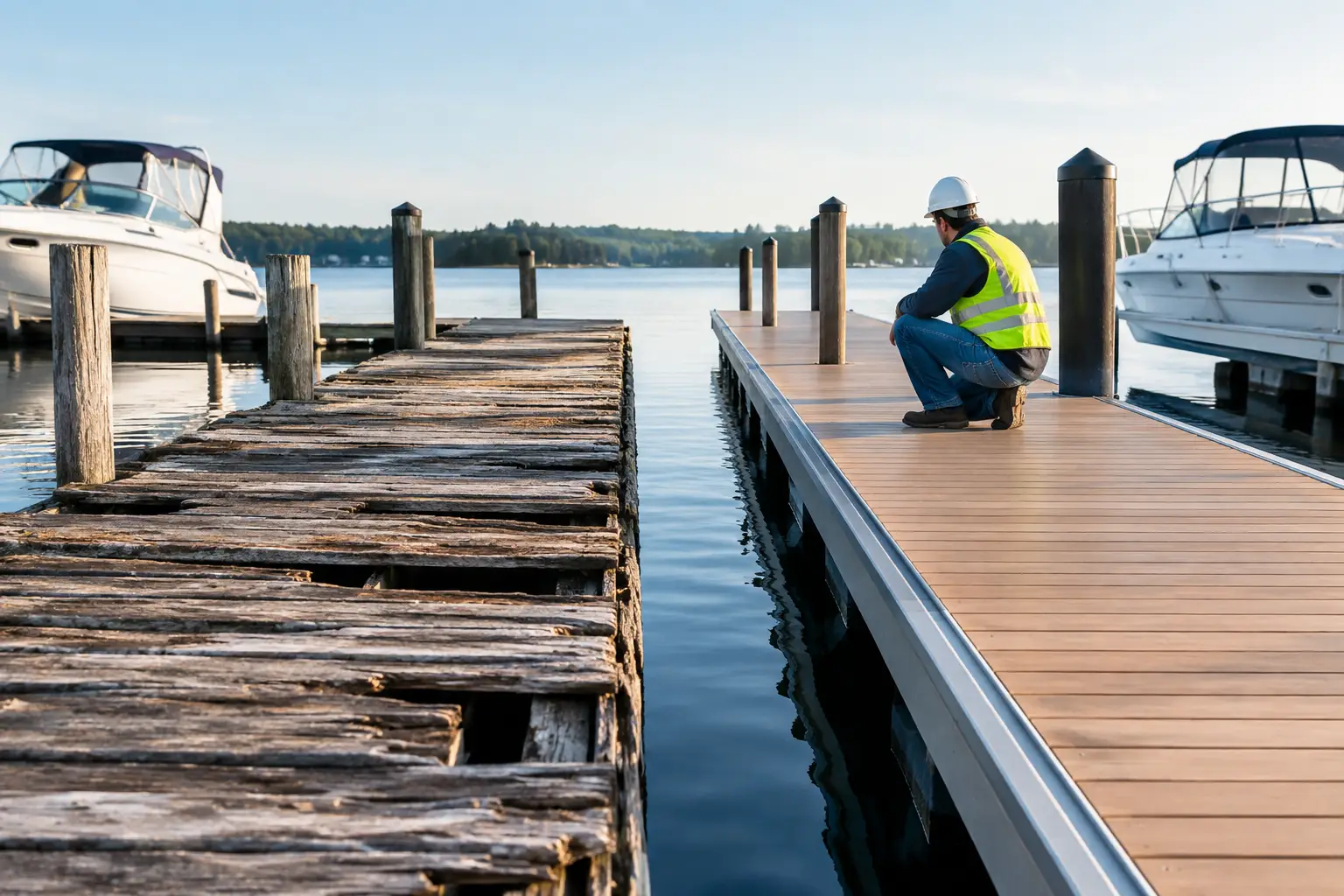
A dock can look serviceable from the parking lot and still create a serious problem at the waterline. Loose connections, uneven walking surfaces, failing flotation, corroded hardware, and undersized electrical systems often develop gradually. The question of when to replace aging marina docks is less about a dock’s birthday and more about whether it can still provide safe, dependable access through daily use, weather, changing water levels, and peak-season traffic.
For marina owners, resort operators, public facilities, and waterfront property managers, waiting for a complete failure is rarely the economical choice. A planned replacement protects guests, reduces emergency repairs, and creates an opportunity to improve slip layouts, accessibility, and long-term operating costs.
When to Replace Aging Marina Docks: Start With Safety
Safety is the clearest reason to move from repairs toward replacement. A marina dock should feel stable underfoot, provide predictable access from shore to vessel, and keep users away from obvious trip, pinch, and fall hazards. If staff members routinely warn visitors to avoid certain sections, place temporary cones around weak areas, or make frequent short-term fixes, the dock has already become an operational concern.
Pay close attention to structural movement that seems excessive for the dock type and conditions. Some motion is normal in a floating system, especially on busy lakes or open-water sites. The concern is motion caused by loose couplings, deteriorated frames, cracked flotation, failed anchoring components, or sections that no longer sit level with one another.
Deteriorated decking is another warning sign. Splintered wood, warped boards, slick surfaces, protruding fasteners, and soft spots can create immediate hazards. Replacing boards may be appropriate when the supporting structure, flotation, and connections remain sound. When the frame below the deck is corroded or compromised, new decking only improves the appearance of a larger issue.
Electrical safety deserves the same attention. Outdated shore-power pedestals, damaged conduit, exposed wiring, and recurring nuisance trips require review by qualified professionals. Water and electricity demand a conservative approach. A replacement project can be the right time to rework utilities, lighting, emergency access, and vessel-service locations rather than trying to fit modern needs into an aging layout.
Repair or Replacement? Look Beyond the Visible Damage
Not every aging dock needs to be removed. The right decision depends on the cause and extent of the damage, the dock’s construction, its expected use, and the cost of keeping it in service. A small number of damaged deck panels, a worn ladder, or isolated hardware issues can often be repaired efficiently.
Replacement becomes more practical when repairs repeat in the same areas or begin to spread across the system. For example, replacing a few floats can make sense. Replacing floats year after year while the frame, decking, and connectors also need attention is a different calculation. The labor, disruption, and uncertainty of piecemeal work can exceed the value it provides.
Consider the total cost of ownership, not only the next repair invoice. A marina may lose revenue when slips are closed for repairs, guests choose another facility, or staff spend too much time responding to maintenance calls. A dock that requires regular patchwork can also make insurance, risk management, and guest-service concerns more difficult to manage.
A qualified dock assessment should examine flotation, structural framing, connections, anchoring, gangways, decking, utilities, and the condition of the shoreline transition. It should also consider the dock’s actual traffic. A system that once served a handful of seasonal boaters may now support rental fleets, fishing tournaments, PWC users, paddlecraft, or public events.
Five Signs Your Marina Has Outgrown Its Dock System
Age alone does not determine a dock’s useful life. Materials, maintenance history, site exposure, and water conditions all matter. Still, these signs often indicate that replacement planning should begin:
- Flotation is failing or uneven. Low-riding sections, chronic listing, waterlogged floats, or modules that no longer maintain consistent freeboard affect both safety and usability.
- The structural system has widespread corrosion or deterioration. Rusted metal, rotted framing, cracked welds, and weakened connections can be difficult to evaluate from the surface and should not be covered up with cosmetic repairs.
- Anchoring no longer controls the dock properly. A dock that drifts out of position, binds during water changes, or puts stress on gangways and shore connections needs more than a quick adjustment.
- The layout no longer fits the users. Narrow walkways, insufficient slips, awkward boarding points, and a lack of accessible routes are signs that the facility needs a new plan, not just new parts.
- Maintenance interrupts normal operations. When staff are routinely tightening hardware, replacing boards, relocating vessels, or closing sections, the dock is demanding too much attention.
Water Levels and Site Conditions Can Change the Timeline
Across Texas, Oklahoma, Arkansas, and New Mexico, waterfront conditions can shift dramatically between seasons and years. Reservoir drawdowns, heavy rain, wind exposure, boat wakes, and changing shorelines all affect how a marina dock performs. A fixed dock that worked well at one water elevation may become difficult or unsafe to access when levels move beyond its practical range.
Floating dock systems are often a strong answer for sites with fluctuating water. They rise and fall with the water, helping maintain a more consistent boarding height and reducing the need for major adjustments during normal level changes. That does not eliminate the need for proper anchoring and gangway design. In fact, the anchoring system is central to long-term performance.
The best approach depends on water depth, bottom conditions, wave action, expected level variation, shoreline geometry, and local permitting requirements. Deep water may call for different stabilization methods than a protected pond or a marina basin. A facility with substantial boat traffic may need a layout and connection system designed for more dynamic loading than a quiet private lake.
Replacement Is a Chance to Improve the Marina
A dock replacement should solve the current problem while preparing the property for the next decade of use. That may mean adding wider walkways, improving ADA-conscious access where applicable, reconfiguring slips for today’s vessel sizes, or separating launch areas from boat traffic. It may also mean creating dedicated spaces for kayaks, canoes, paddleboards, and personal watercraft.
Modular floating docks offer flexibility that older one-piece systems often cannot. Sections can be configured around shoreline constraints, expanded as demand grows, and adapted when operations change. Boat ports, PWC ports, fishing platforms, railings, ladders, lighting, dock boxes, and floating walkways can be integrated into a unified system instead of added as mismatched afterthoughts.
Material selection matters as well. Wood can offer a traditional look but usually requires ongoing attention in wet, high-traffic conditions. Low-maintenance polyethylene modular dock systems avoid many common issues associated with splintering, rotting, and frequent surface refinishing. For public-facing and commercial sites, the reduced maintenance burden can make a meaningful difference over time.
Plan Before the Dock Reaches Failure
The most successful marina replacements are planned before the existing system becomes unusable. Begin with an inspection and an honest review of maintenance records, incident reports, customer feedback, and revenue impacts. Identify which issues are isolated and which reflect a system-wide limitation.
Next, define how the marina needs to function. Consider the number and type of vessels, pedestrian traffic, accessible routes, utility needs, fuel or service access, emergency response requirements, and seasonal uses. A campground marina, municipal park, fishing lodge, and private club may all need docks, but their priorities are not the same.
Construction timing also matters. Scheduling work around busy seasons, water conditions, and permit requirements can reduce disruption. A professional waterfront partner can help evaluate existing conditions, develop a workable layout, coordinate delivery and installation, and build a replacement plan that fits the site rather than forcing the site to fit a standard dock.
A dependable marina dock should support the way people use the water, not demand constant attention from the people running the facility. If repairs are becoming routine, access is becoming less predictable, or the layout no longer serves your guests, this is the right time to evaluate a replacement. EZ Dock Texas can help turn that evaluation into a practical, durable waterfront plan built for the years ahead.