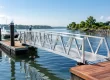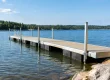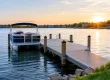
A floating dock is only as dependable as the system holding it in place. The right dock anchoring systems allow your dock to rise and fall with changing water levels while limiting unwanted movement from wind, boat wakes, current, and daily use. The wrong approach can leave a dock difficult to access, hard on connecting hardware, or out of position when you need it most.
For lake homes, marinas, public parks, and working waterfronts, anchoring is not an accessory decision. It is a core part of the dock design. A properly planned system protects the investment in the dock itself, supports safer access from shore, and helps the layout perform as intended over many seasons.
What Dock Anchoring Systems Are Designed to Do
Floating docks need controlled vertical movement. Water rises after rainfall, falls during seasonal drawdowns, and may change several feet over the course of a year. A fixed structure cannot follow those changes, but a floating dock can – provided its anchoring allows vertical travel while resisting lateral drift.
A good anchoring plan balances two needs that can seem opposed: the dock needs enough freedom to float with the water, but enough restraint to stay aligned with the shoreline, gangway, boat port, or slip configuration. That balance depends on the site. A quiet stock pond calls for a different approach than an exposed reservoir shoreline or a busy marina basin.
Anchoring also affects the way the dock feels underfoot. Some controlled movement is normal with a floating system. Excessive side-to-side travel, rotation, or shifting at the shore connection is a sign that the anchoring method, anchor placement, or dock layout may not match the conditions.
Start With the Conditions at Your Shoreline
The best anchor is not simply the strongest component available. It is the one that works with the bottom conditions, depth, water-level range, exposure, and intended use of the dock. Before choosing hardware, assess the complete waterfront setting.
Water depth matters at both normal pool and low-water conditions. An anchor system that performs well during the summer may become too short, too loose, or inaccessible during a major drawdown. In areas where reservoir levels fluctuate substantially, planning for the full expected vertical range is essential rather than designing around the water level on installation day.
The lake or pond bottom matters just as much. Firm soil, rock, clay, sand, and soft sediment each affect whether driven pipe, pilings, deadweight anchors, or shore-mounted connections are practical. A site with a steep drop-off may need a different solution from a gently sloping shoreline. The design team should also consider wind fetch – the uninterrupted distance wind travels across open water – because longer fetch can create larger waves and greater loads on the dock.
Usage adds another layer. A small residential swim dock has different demands than a public fishing pier, an ADA-oriented access route, or a marina with frequent boat traffic. The weight of people, gear, watercraft, and accessories is only part of the equation. Wake exposure, current, and the leverage created by a long dock run can all influence anchoring requirements.
Common Types of Dock Anchoring Systems
Pipe or Pile-Guided Anchoring
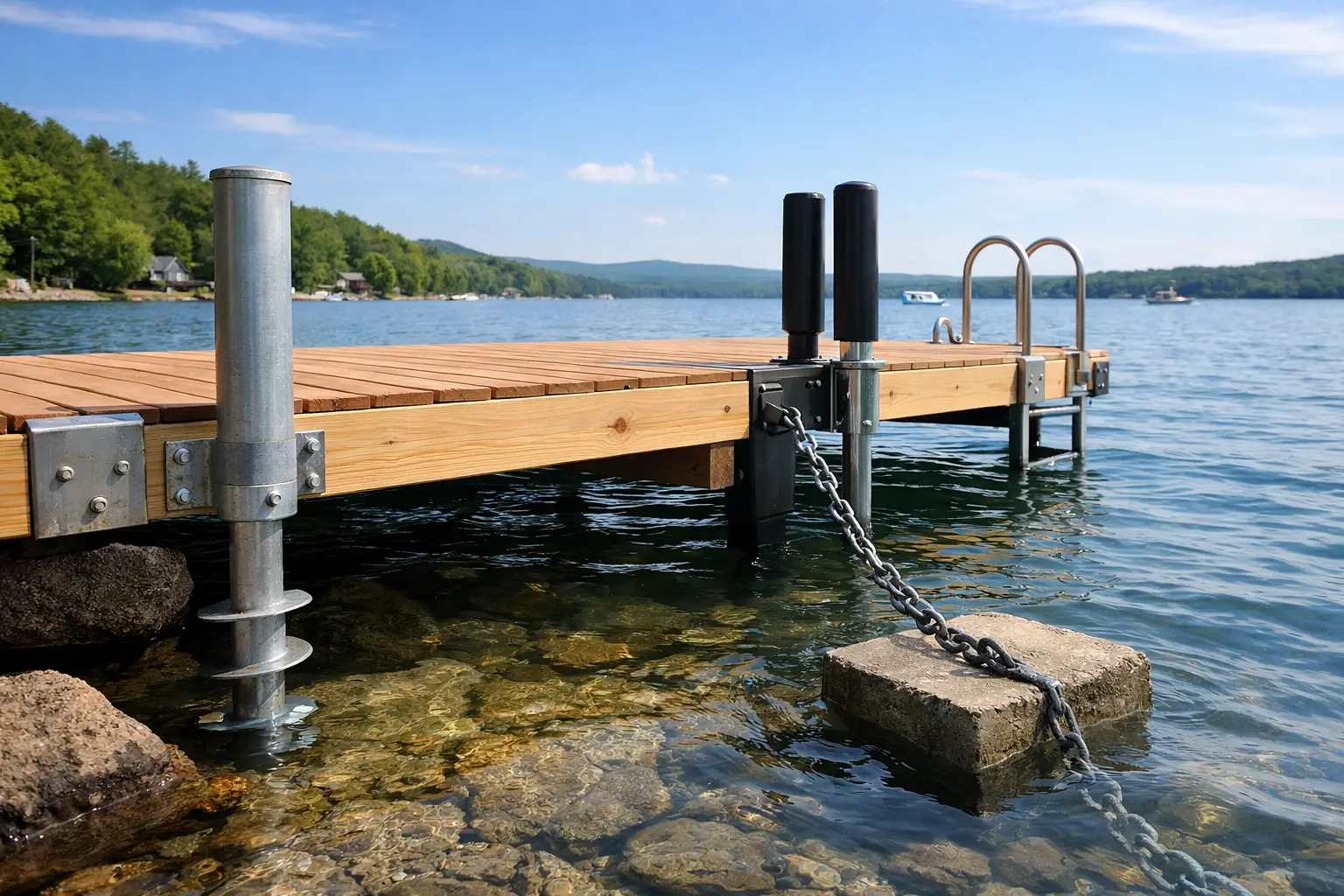
Pipe or pile-guided systems use vertical members installed into the lakebed, with guide hardware that allows the dock to move up and down along them. This approach is often a strong choice where the bottom can support the installation and the expected water-level change is within the usable length of the pipe or piling.
The main benefit is control. Properly placed guides limit lateral movement and help keep the dock aligned, even when people are boarding boats or wakes reach the shoreline. The trade-off is that installation can be more involved, and the available vertical travel must be planned carefully. If water levels may rise or fall beyond the guide range, the system needs adjustment or a different anchoring strategy.
Stiff-Arm Anchoring
A stiff-arm system uses rigid, articulated arms connected between the dock and a secure shore-side attachment point. The arms pivot as the dock rises and falls, helping hold the dock in position without placing vertical pipes in the water.
Stiff arms can be a practical option for protected sites with manageable water-level variation and a suitable shoreline structure. They can also maintain a clean appearance along the dock perimeter. However, they are not a universal answer for deep water, large vertical changes, or highly exposed locations. The condition of the shore attachment, the arm length, and the dock’s range of travel all need to be evaluated together.
Cable and Winch Anchoring
Cable anchoring connects the dock to shore-side anchors, often using adjustable winches or tensioning hardware. It can be useful when the shoreline configuration makes rigid arms or driven pipe impractical. Adjustment is a key advantage, especially for layouts that may need seasonal repositioning.
Cables generally allow more movement than pipe-guided or stiff-arm systems, so they work best when the dock layout and exposure support that flexibility. Cable tension should be inspected regularly. A line that is too loose may allow drift, while one that is over-tightened can limit the dock’s ability to follow water-level changes.
Deadweight and Underwater Anchoring
Deadweight systems use substantial underwater anchors, commonly connected by chain or cable to hold a dock in position. They are often considered where driving into the bottom is not feasible or where the dock is located away from shore.
This method can be effective, but it requires careful engineering around water depth, anchor weight, line scope, bottom conditions, and expected loads. As water levels change, the geometry of the anchor lines changes too. A system that holds well in one season may need adjustment in another. Underwater anchor placement also requires attention to navigation, fishing activity, and any local permitting requirements.
The Dock Layout and the Anchor Plan Work Together
Anchoring cannot be selected in isolation. Dock length, width, shape, flotation, gangway angle, and accessories all affect how forces move through the system. A long, narrow walkway may need more stabilization than a compact platform. A T-shaped layout, multiple boat slips, or several personal watercraft ports can change the load pattern significantly.
Gangway design deserves particular attention. The gangway is the transition between fixed land and a moving floating dock, so its length and slope must accommodate expected water-level changes. If the dock is allowed to drift too far laterally, the gangway can become misaligned or operate outside its intended range. For public access applications, this can directly affect safety and accessibility.
In many cases, the best solution combines methods. A shoreline connection may control the landward end while pipe guides or underwater anchors stabilize the outer sections. This is especially common on larger layouts where one anchor point alone would place too much stress on the dock or allow unwanted rotation.
Choose for Long-Term Ownership, Not Just Installation Day
A lower initial price can be tempting, particularly when a dock is installed during calm weather and normal water levels. But anchoring decisions should account for the conditions that challenge the system: high winds, low water, storm runoff, heavy weekend use, and long-term shoreline change.
Look for corrosion-resistant components suited to the freshwater environment, hardware that can be inspected and adjusted, and an anchoring layout that leaves room for future dock expansion. Modular floating docks make it possible to add a fishing platform, kayak launch, boat port, or additional slip later. The anchor plan should not prevent those upgrades.
Maintenance requirements should be realistic as well. Pipe guides may need periodic inspection for wear and alignment. Cables and chains need tension checks and visual inspection. Shore-side attachment points should be examined for movement, rot, erosion, or hardware loosening. A simple inspection routine is far less costly than repairing dock connections after a major weather event.
Work From a Site-Specific Design
There is no single “best” anchor system for every waterfront. A quiet cove, a wind-exposed lake, a municipal launch area, and a ranch pond each present different design questions. The most reliable path is to begin with a site review that considers the shoreline, water depth, bottom conditions, expected water-level range, dock use, and local requirements.
EZ Dock Texas has helped waterfront owners and public agencies plan floating dock systems since 2000, including anchoring solutions designed for changing conditions across Texas, Oklahoma, Arkansas, and New Mexico. Professional planning can help prevent common issues such as undersized anchors, inadequate vertical travel, poor gangway alignment, and dock movement that becomes worse over time.
Your dock should feel like a dependable extension of the shoreline, not a platform you have to constantly reposition or worry about after every storm. Start with the conditions your waterfront will face at its worst, then build an anchoring plan that gives the dock room to float and the strength to stay where it belongs.