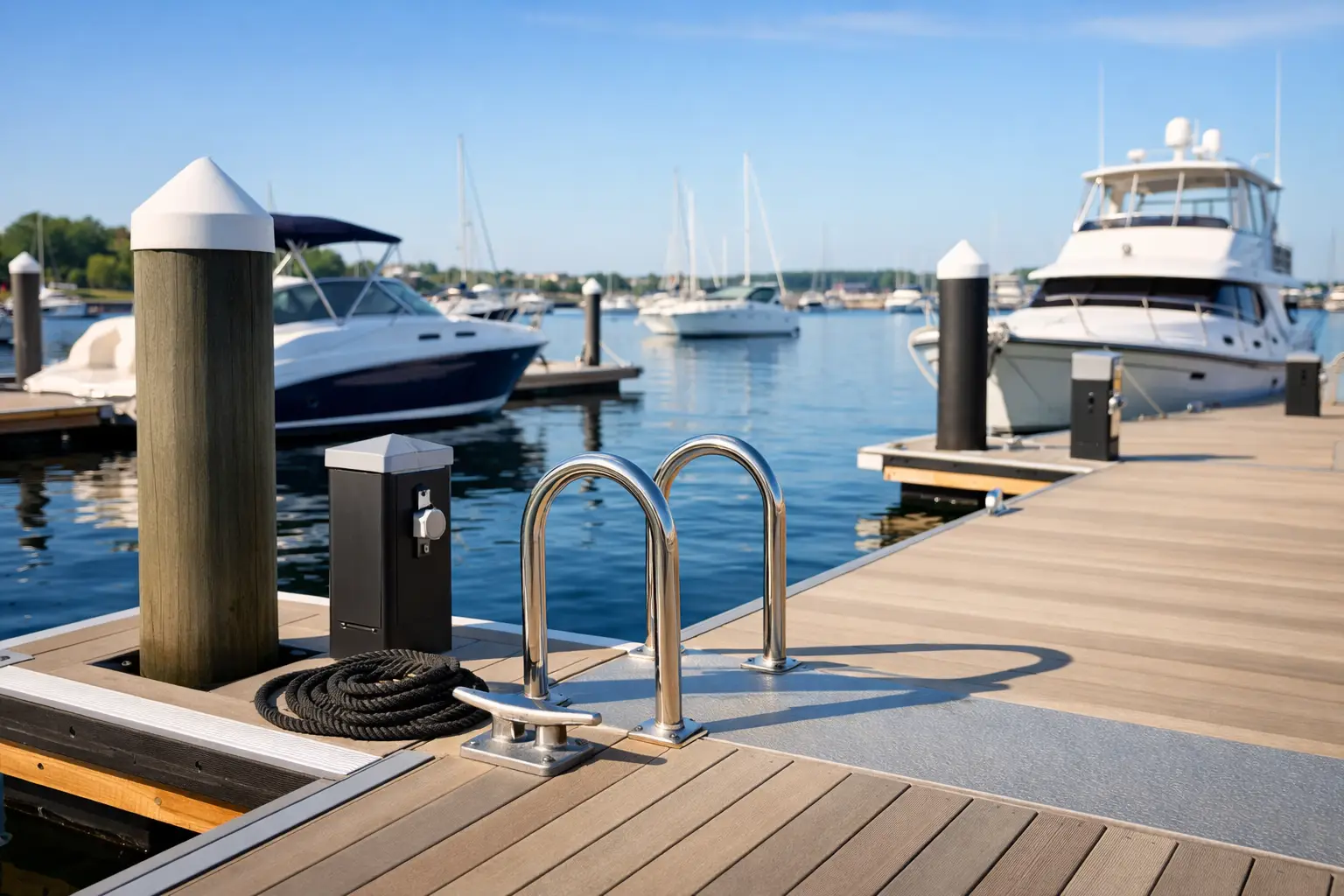
A marina dock has to perform long after the ribbon cutting. It handles wet shoes, rolling carts, boat traffic, changing lake levels, fuel deliveries, fishing gear, rental turnovers, and guests who may be unfamiliar with the waterfront. Commercial marina docks need more than an attractive layout. They need to support safe circulation, dependable access, and the day-to-day demands that keep a waterfront business operating.
For marina owners, resorts, campgrounds, rental operators, and public waterfront facilities, the best dock system begins with a clear understanding of how people and vessels will use it. A modular floating dock system can make that planning more flexible while reducing the maintenance burden associated with many traditional dock materials.
Start With How Your Marina Makes Money
A commercial dock layout should follow the operation, not the other way around. A fishing lodge with guided trips has different needs than a lakefront restaurant, a public marina, or a resort offering pontoon rentals. Before selecting dock sections or slip configurations, define the daily activity at the water’s edge.
Consider where guests arrive, where staff need room to work, how vessels enter and leave, and where congestion is most likely to happen. The path from parking to the gangway, from the gangway to a boat slip, and from the boat to a restroom or rental counter should feel clear and intentional. A dock that forces guests to cross behind loading areas or squeeze past moored boats creates frustration and unnecessary risk.
Match Slip Layouts to the Fleet
The right slip size depends on the boats you serve now and the boats you expect to serve in the future. Pontoon boats, wake boats, fishing boats, personal watercraft, and paddlecraft all require different docking arrangements. A marina focused on seasonal slips may prioritize protected finger piers and shore power access, while a rental operation may need wider walkways and quick, open boarding zones.
Leave enough room for tie-up, boarding, and staff movement. Tight layouts can increase the number of slips on paper, but they may slow turnover, complicate cleaning, and make docking stressful for less experienced customers. The most profitable configuration is not always the one with the highest possible slip count.
Plan for Guests Who Need Extra Help
Public-facing waterfronts should account for visitors of varied ages and abilities. Stable walking surfaces, handrails where appropriate, properly designed gangways, and clear transitions between shore and dock all contribute to a better experience. Accessible dock design is not a single feature. It is a connected system that considers slope, width, surface traction, landing areas, and the route people take to reach the water.
Commercial Marina Docks Must Adapt to Water Levels
Across Texas, Oklahoma, Arkansas, and New Mexico, lake levels can change quickly with weather, seasonal releases, and prolonged dry periods. Fixed dock elevations may work in limited conditions, but floating dock systems rise and fall with the water. That helps maintain a more consistent step from dock to boat when the shoreline changes.
The floating structure is only one part of the equation. The gangway and anchoring strategy determine whether the dock remains usable, stable, and properly positioned through those changes. A gangway must accommodate expected water fluctuations without becoming too steep for guests. Anchoring must suit the water depth, bottom conditions, exposure to wind, wave action, and the size of the dock system.
For deeper water or more exposed sites, a combination of engineered anchoring components may be needed to manage lateral movement. On protected coves, the approach may be simpler. There is no universal anchor plan, which is why site-specific design matters before materials are ordered.
Choose Materials for Ownership, Not Just Installation Day
Commercial dock owners should look beyond the initial purchase price. The dock will be exposed to sun, moisture, boat impact, foot traffic, and changing temperatures year after year. Materials that look economical at installation can demand frequent repairs, replacement decking, staining, splinter removal, or hardware attention later.
Modular polyethylene floating dock systems offer a practical alternative for many commercial applications. They are designed to resist rot, corrosion, and splintering, and their slip-resistant surfaces can provide dependable footing around water. American-made modular components also allow damaged or reconfigured sections to be addressed without necessarily rebuilding an entire dock.
That does not mean every commercial marina needs the same dock surface or configuration. Heavy traffic areas may need wider walkways, added railings, lighting, or more frequent inspection. Locations with large boats and high wake exposure may need more stabilization than a quiet paddlecraft launch. The key is selecting a system that fits the real operating environment rather than choosing by appearance alone.
Build Safety Into the Layout
Safety should be visible in the dock design, not treated as an accessory added at the end. Wide, uncluttered walkways give guests room to carry gear and allow staff to move efficiently. Clearly defined boarding areas reduce the chance that guests step into an active loading zone. Ladders, life ring stations, lighting, and railings should be placed where people will actually need them.
Lighting deserves particular attention. A marina may feel manageable in daylight but become difficult to navigate after sunset. Well-planned dock lighting helps guests see changes in elevation, cleats, tie-up points, and walkway edges without creating excessive glare across the water. It also supports staff during late check-ins, early departures, and emergency response.
Utility planning belongs in this stage as well. If shore power, water, lighting, security equipment, or other services are part of the operation, account for routing and access early. Retrofitting utilities after the dock is installed can be more complicated and disruptive than including them in the original plan.
Design for Maintenance and Future Changes
Marinas change. A facility may add rental boats, expand seasonal slips, introduce kayak programs, or create event space over time. A modular dock system allows owners to add sections, adjust configurations, and create new access points as the business evolves.
That flexibility is especially valuable when a marina wants to improve in phases. Instead of postponing the whole project until every upgrade is funded, an owner may start with the highest-traffic slips, a safer gangway connection, or a dedicated rental dock. Later phases can add more slips, boat ports, personal watercraft ports, fishing access, or floating boardwalk connections.
Regular inspections still matter, even with low-maintenance materials. Staff should periodically check connections, anchoring components, gangway hardware, cleats, lighting, ladders, and areas exposed to repeated boat contact. Small adjustments made early can prevent a minor issue from becoming a closure or a costly repair.
Work With a Dock Partner Who Understands the Site
A commercial marina project involves more than buying dock sections. Shoreline conditions, water depth, permitting requirements, boat mix, guest traffic, installation access, and future expansion all affect the final design. The most useful planning conversation happens at the start, before a layout is locked in.
EZ Dock Texas works with commercial operators and public waterfront facilities to configure floating dock systems around the way each property is used. From initial layout and product selection through delivery and installation, an experienced dock partner can help turn operational needs into a practical waterfront plan.
A well-designed marina dock should make the waterfront easier to run. When guests can board confidently, staff can work efficiently, and the system can adjust as conditions change, the dock becomes a dependable part of the business instead of a recurring problem waiting at the shoreline.