A boat left in the water full-time takes on more than weekend wear. Waves work against cleats and lines, wake can push the hull into the dock, and prolonged exposure encourages algae, marine growth, and avoidable maintenance. Boat ports give owners a practical alternative: drive the vessel onto a floating platform, secure it in place, and keep the hull out of the water between outings.
For lake homes, marinas, resorts, and public waterfront facilities, the right port can make docking easier while protecting a valuable asset. The best choice is not simply the largest platform available. It depends on the boat, the shoreline, typical water movement, changing water levels, and how the dock will be used by family members, guests, or customers.
What Boat Ports Do Differently
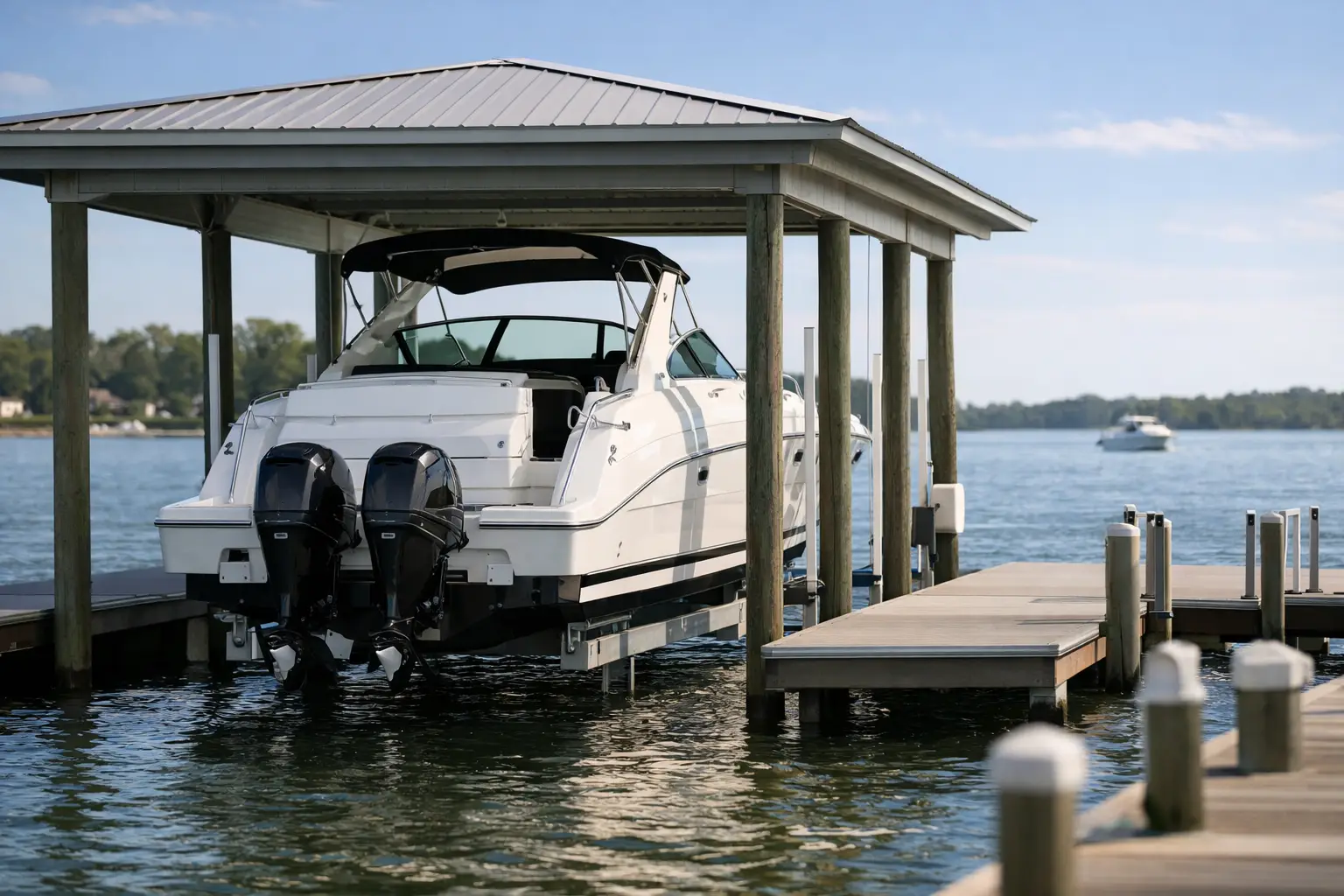
A boat port is a floating drive-on docking system designed to support a boat above the waterline. Rather than tying up beside a conventional slip, the operator guides the boat onto rollers, bunks, or another engineered support surface. The vessel stays accessible at dock level, but its hull is elevated out of the water.
That difference matters over the course of a season. Keeping a boat dry can reduce the need for bottom cleaning and help limit water-related buildup. It also removes the constant concern of a vessel rubbing against a dock during wind, waves, or heavy traffic. For owners who use their boat often, a drive-on port can be faster than preparing a trailer or dealing with multiple lines every time they leave the dock.
A port is not a replacement for every kind of boat storage. Large vessels, deep-V hulls, sailboats, and boats used in highly exposed water may require a conventional slip, lift, covered structure, or a more specialized approach. Still, for many runabouts, fishing boats, pontoons, and similar recreational vessels, a floating boat port creates a clean, efficient home base.
Start With the Boat, Not the Dock
Boat ports should be selected around actual vessel dimensions and operating weight, not just the model name. Manufacturers’ published dry weight often excludes fuel, batteries, safety equipment, electronics, coolers, fishing gear, and other items that stay onboard. A loaded boat can weigh substantially more than its listed dry specification.
Length and beam are equally important. The port needs enough usable length to support the hull correctly and enough width for safe approach and walking access. Hull shape matters, too. A flat-bottom utility boat, a pontoon boat, and a fiberglass V-hull each need different support geometry to load securely and distribute weight properly.
Consider how the boat approaches the dock on a typical afternoon, not just on a calm morning. If wind routinely pushes across the slip, the layout may need guide rails, an entry configuration that allows a straighter approach, or more room to correct course. A port that works beautifully in ideal conditions can be frustrating if it leaves no margin for normal wind or wake.
Think About Daily Use
A family that takes the boat out twice a month has different needs than a fishing guide or rental operation launching several times a day. Frequent users benefit from a layout that makes loading predictable and quick. Commercial operators may need clearer traffic flow, durable walking surfaces, and separation between customer access areas and boat movement.
The operator also matters. If children, older adults, or less experienced boaters will use the system, prioritize stable walking areas, handrails where appropriate, and a simple approach path. Convenience is a safety feature when it reduces rushed docking and awkward transfers between boat and dock.
Floating Systems Work With Changing Water Levels
Water levels in Texas, Oklahoma, Arkansas, and New Mexico can change dramatically through a year. Fixed structures can become too high, too low, or difficult to access when shorelines and reservoirs move. A properly anchored floating dock and port rise and fall with the water, keeping the relationship between the dock surface and boat more consistent.
That does not mean every floating system performs the same way. The anchoring method must match the site. Deep water, soft lake bottoms, fluctuating reservoirs, protected coves, and areas exposed to boat traffic can call for different combinations of piles, cables, stiff arms, deadweight anchors, or other stabilization methods. The port itself is only as dependable as the dock and anchoring system supporting it.
Gangway placement deserves the same attention. A gangway that feels comfortable at normal pool may become steep when the water drops. Shoreline conditions, elevation change, and accessibility expectations should be considered during layout planning, especially for community docks, parks, and commercial facilities.
Plan the Whole Waterfront Layout
A boat port should fit into a complete waterfront plan rather than being added as an afterthought. It needs a safe approach lane, enough turning space, a place for passengers to step off, and a dock connection that does not create a bottleneck. On a private dock, that may mean placing the port on the outer edge so the boat can enter without crossing a swimming or fishing area.
At a marina, resort, or public facility, circulation becomes even more important. Boat ports may need to coexist with transient slips, fueling areas, launch zones, kayak access, personal watercraft ports, or emergency access. A good design keeps different activities from competing for the same narrow stretch of dock.
Think about the equipment that belongs nearby as well. Dock boxes can keep lines, life jackets, and cleaning supplies organized. Lighting can improve visibility for early departures and evening returns. Ladders, railings, and non-slip walking surfaces may be appropriate depending on the users and the setting. These details turn a dock from a platform into a usable waterfront system.
Choose Durability Over Short-Term Convenience
A boat port is exposed to sun, heat, water, impact, and constant loading. Materials and connection systems should be chosen for the conditions they will face year after year. Low-maintenance, floating modular systems are especially useful where water levels change or future expansion is likely, but they still need sound installation and routine inspection.
Look closely at how the system handles UV exposure, buoyancy, connections, guide components, and repeated drive-on use. A lower upfront price can become expensive if the port is difficult to repair, poorly matched to the boat, or built around hardware that does not hold up in the local environment.
Maintenance is typically straightforward, but it should not be ignored. Inspect the dock connections, anchoring components, rollers or bunks, and walking surfaces regularly. Remove debris that could interfere with loading. After major storms or unusual water-level changes, check the system before putting it back into service. Small adjustments made early can prevent larger problems later.
Installation Is Part of Performance
Even a well-designed port can underperform when installed without careful site evaluation. Water depth at low pool, shoreline access, prevailing wind, exposure to wakes, bottom conditions, and local requirements all affect the final design. For public agencies and commercial properties, procurement requirements, accessibility goals, and operational policies may also guide the decision.
Working with a waterfront specialist can help identify these factors before equipment arrives onsite. EZ Dock Texas designs and installs customized floating dock systems for properties ranging from private lake homes to parks, marinas, and public-access facilities. That planning process helps ensure the port, dock, gangway, and anchoring all work as one system.
When a Boat Port Makes the Most Sense
Boat ports are especially useful for owners who want to keep a boat ready for use without leaving the hull in the water. They are a strong fit for frequently used recreational boats, protected waterfronts with a clear drive-on approach, and docks where low maintenance and a clean appearance matter.
They can also add value to commercial and institutional properties. A rental operation can organize its fleet more efficiently. A resort can provide a more polished guest experience. A marina can offer protected dry docking without building a large permanent lift structure. The right application depends on vessel types, turnover, staff operations, and available waterfront space.
Before choosing a port, measure the boat in its real operating condition, study the water and approach path, and consider how the dock needs to serve people as well as equipment. A well-planned boat port does more than store a vessel – it makes every departure easier and gives the waterfront a more orderly, dependable purpose.