A dock that looks good from shore can still be frustrating on the water. A gangway that is too steep, a slip that is too tight, or a swim area placed in the path of boat traffic can limit how a waterfront property is used from day one. To plan dock layout well, start with the people, watercraft, water conditions, and daily routines the system needs to support.
The right layout is not about adding the most sections or creating the biggest footprint. It is about creating dependable access that fits the shoreline, handles changing water levels, and leaves room for the way your needs may change over time.
Start With the Waterfront, Not the Dock
Every successful layout begins with a clear look at the site. Shoreline grade, typical and seasonal water levels, water depth, bottom conditions, wind exposure, and boat traffic all affect what will work. A protected private cove calls for different decisions than an open lakefront, a busy marina, or a public park launch.
Measure the distance from the shore connection to usable water at both normal and low-water conditions. If water levels fluctuate significantly, the gangway length and anchoring approach become especially important. A floating dock rises and falls with the water, but the path from land to the dock must remain practical and safe throughout the usable range.
Water depth also influences where boat slips, ports, and activity areas belong. A layout that works well for a fishing boat may not suit a wake boat, pontoon, or personal watercraft. If the bottom drops off quickly, a compact layout may be possible. If shallow water extends far from shore, the system may need a longer access run or a different configuration altogether.
For commercial and public projects, site planning should also account for traffic patterns beyond the dock itself. Consider parking, trailer access, emergency access, pedestrian circulation, and the route visitors take from the facility to the water.
Define What the Dock Must Do
Before choosing a shape, identify the dock’s primary jobs. A residential lake dock may need a boat slip, a place to tie up a personal watercraft, room for swimming, and a clear path for carrying coolers and fishing gear. A campground may need durable launch access for rented kayaks. A marina may need efficient slip circulation and reliable utility access. A municipal waterfront may need accessible entry points and space for groups.
It helps to separate must-haves from nice-to-haves. The must-haves determine the core layout. Nice-to-haves can often be added later when the dock system is designed with modular expansion in mind.
Ask practical questions early:
- How many boats or watercraft need dedicated space?
- Will people fish, swim, paddle, load passengers, or launch equipment from the dock?
- Is the dock used mostly on weekends, or does it see daily commercial or public use?
- Does the layout need to accommodate children, older adults, guests, or users with mobility limitations?
These answers affect dimensions, pathways, boarding areas, railings, ladders, lighting, and the placement of accessories. They also help prevent a common mistake: treating every open deck surface as interchangeable. The space beside a boat slip serves a different purpose than a quiet fishing corner or a swim platform.
Choose a Shape That Supports Safe Movement
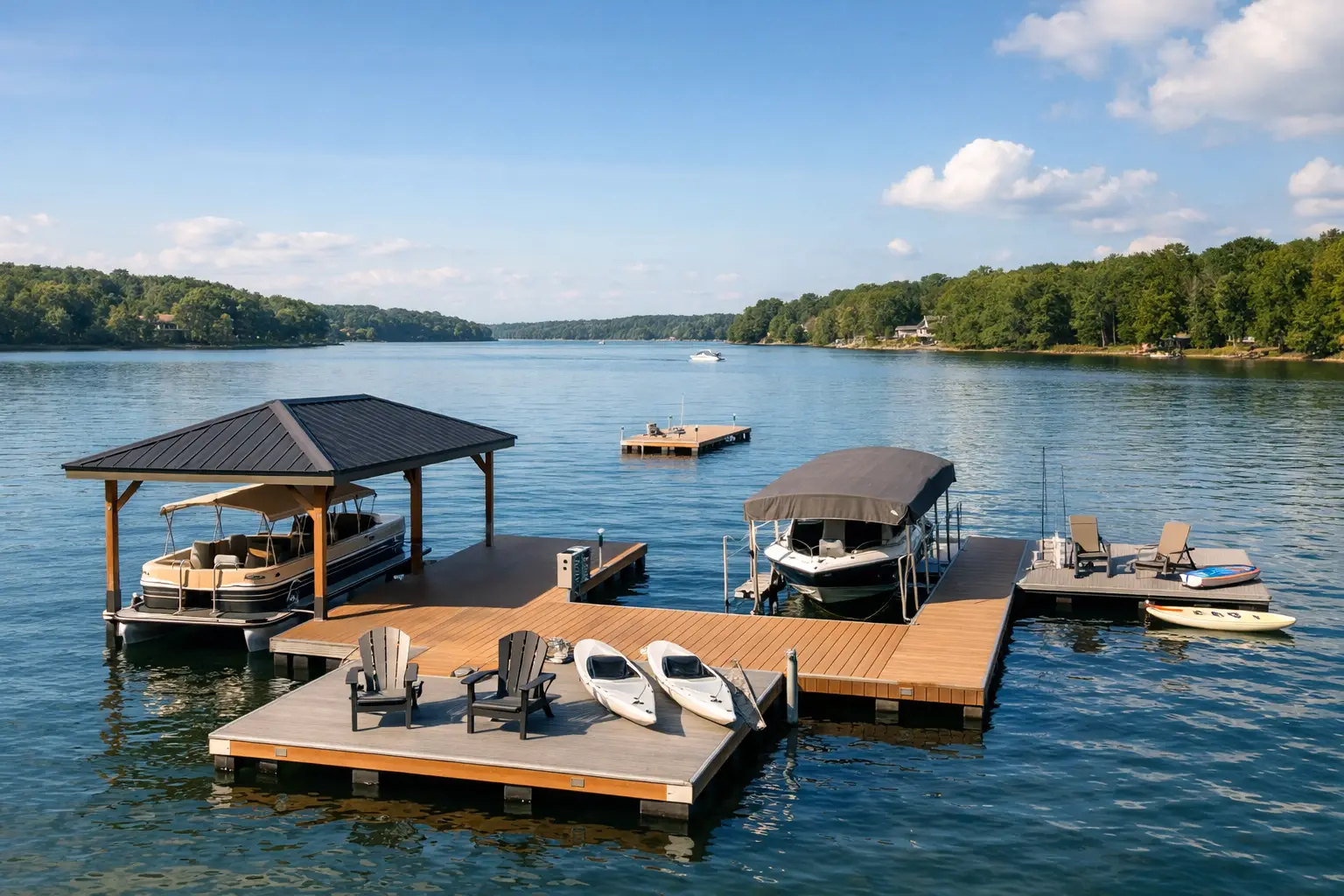
Straight docks, L-shaped docks, T-shaped docks, U-shaped layouts, and finger-pier configurations all have a place. The best choice depends on how people and vessels will move through the system.
A straight dock is often a practical starting point for smaller waterfronts, fishing access, or a simple route to deeper water. It can also provide a clean foundation for future expansion. An L-shape creates a useful turning point and can define a protected side for boarding or swimming. T-shapes can add usable dock edge and create separate activity zones, while U-shapes are often effective when a protected boat slip is the main goal.
For a dock serving several boats, circulation matters as much as capacity. Leave enough room for people to walk safely past mooring lines, gear, and passengers stepping on or off a vessel. Avoid forcing users to cross a swim area to reach a boat or to carry equipment through a congested boarding zone.
A good rule is to keep fast-moving activities apart from stationary ones. Put swimming and relaxing areas away from boat approach lanes. Place kayak or canoe launches where paddlers can enter calm water without crossing the path of larger boats. Locate fishing areas where casting lines will not interfere with boarding or slip access.
Plan Dock Layout Around Watercraft, Not Guesswork
Watercraft dimensions on paper do not tell the whole story. A boat needs room to approach, turn, tie off, open gates, load passengers, and be protected from wind or wave action. The layout should account for the boat’s full operating envelope, not just its beam and length.
For boat slips, consider the vessel’s widest point, the location of cleats, the boarding side, and whether the owner expects to change boats later. A slip sized tightly around one vessel may become a limitation after an upgrade. For pontoons and larger recreational boats, adequate side clearance and a clear approach path are often worth more than squeezing in an extra accessory.
Personal watercraft ports should be placed where riders can approach and launch without blocking boat traffic. They should also be accessible from the preferred boarding side of the dock. Kayak and canoe launches benefit from a lower, stable entry point that makes it easier to get in and out without damaging the craft or struggling with an uneven shoreline.
Commercial operators should think through turnaround times. Rental guests, fishing clients, resort visitors, and marina customers need obvious places to board, unload, and wait. A layout that reduces confusion also reduces congestion and helps staff manage the waterfront more effectively.
Do Not Treat the Gangway and Anchoring as Afterthoughts
The dock may be the visible centerpiece, but the gangway and anchoring system determine how it performs over time. They deserve early attention in the layout process.
Gangway length, width, slope, handrails, and landing areas should match the expected use. A short gangway may fit a high-water shoreline but become too steep when the lake drops. A wider gangway can make a meaningful difference for carts, maintenance equipment, groups, and accessible use. The transition from shore to gangway and gangway to dock should feel intentional, not improvised.
Anchoring must suit the water depth, bottom conditions, exposure, and expected water-level changes. In some locations, pipe anchoring may be appropriate. In deeper or more variable water, cable, deadweight, or other engineered approaches may be needed. The right solution depends on the site, and it should allow the dock to remain stable without restricting its ability to rise and fall.
This is where experienced regional planning matters. Reservoir levels, wind exposure, and lake-bottom conditions can vary widely across Texas, Oklahoma, Arkansas, and New Mexico. A layout should be designed for the real conditions of the property, not just a photo of the shoreline on a calm day.
Build in Safety, Accessibility, and Long-Term Flexibility
A durable floating dock system should make the waterfront easier to use, not create more maintenance and safety concerns. Include practical features where they make sense: railings near steep transitions or public-use areas, ladders for safe re-entry from the water, lighting for early mornings and evenings, and dock boxes that keep hoses, lines, and life jackets out of walkways.
Accessibility may be required for public facilities, but it also improves everyday use for many private and commercial properties. Wider travel paths, gentler gangway slopes, stable transfer areas, and well-considered handrails can benefit families, guests, anglers, and people carrying equipment.
Modularity is one of the strongest reasons to plan carefully rather than build only for the immediate need. A dock may begin as a simple fishing and swim platform, then add a boat port, PWC port, kayak launch, or extended walkway later. Planning attachment points, traffic flow, and open expansion areas now can protect the investment and avoid a full redesign later.
Turn the Plan Into a Working Waterfront
The best dock layout is one that feels natural after installation. People should know where to walk, where to board, where to fish, and where to relax without signs or constant instruction. Boats should have a clear approach. The shoreline connection should work through changing conditions. And the system should be built from materials ready for years of sun, water, and use.
EZ Dock Texas helps property owners, facility managers, and public agencies turn those requirements into custom floating dock systems built for the way each waterfront actually operates. Bring measurements, photos, water-level information, and a list of intended uses to the planning conversation. The clearer the picture of how the dock will be used, the more confidently the final layout can serve the property for years to come.