A floating dock can only work as well as the connection between land and water. The wrong gangway may feel too steep when lake levels drop, sit awkwardly at normal pool, or create an access point that is difficult for guests, residents, customers, or maintenance crews to use. When you choose dock gangways, the goal is not simply to bridge a gap. It is to create dependable access through the full range of water conditions your property experiences.
For lake homes, marinas, parks, camps, and public facilities, a gangway is a long-term safety and usability decision. Its length, width, surface, connection details, and placement all affect how comfortably people reach the dock – and how well the entire system performs over time.
Start with water-level change, not just shoreline distance
The most common gangway mistake is sizing for the water level visible on installation day. In Texas and surrounding states, reservoirs, private lakes, and ponds can change significantly with rainfall, drought, seasonal operations, and water releases. A gangway that feels comfortable at one elevation can become too steep when water drops.
Length is the primary factor controlling slope. In general, a longer gangway provides a gentler approach across a changing vertical distance. That can improve day-to-day comfort and make a substantial difference for children, older adults, people carrying fishing gear, and users moving carts or equipment. The trade-off is that a longer gangway needs more room on shore and may require a layout that accommodates its swing and landing area.
Measure from the anticipated shore connection to the floating dock attachment point, then consider the highest and lowest water elevations likely at the site. Historical lake-level data, local operating patterns, and firsthand observations are useful. For private ponds or stock tanks, account for the water range that occurs during both wet periods and extended dry weather.
A gangway cannot eliminate every steep-slope condition at an extreme low-water event. It can, however, be sized and positioned to remain practical across the range you use most often. This is where an experienced waterfront designer can help distinguish between a dock that merely fits and one that remains functional year after year.
Choose dock gangways by how people will use them
A gangway for a private fishing dock does not have the same requirements as one serving a marina, community dock, public launch, or waterfront rental operation. Start with the people and equipment that need to cross it.
For a residential dock, a standard walking surface may be the right balance of footprint, cost, and comfort. If the dock regularly serves a large family, frequent guests, coolers, paddleboards, or dock carts, additional width may make daily use noticeably easier. Homeowners should also consider whether the gangway will be used after dark, while wet, or by guests unfamiliar with the property.
Commercial and public-access sites often need to plan for higher traffic, more varied users, and operational equipment. A marina may need space for dock attendants and customers passing in opposite directions. A park or municipal facility may need to consider accessible-route requirements, handrail needs, and the practical realities of strollers, fishing equipment, maintenance carts, and emergency access.
There is no single width or configuration that fits every site. The right choice depends on traffic volume, user mobility, the shore approach, and applicable codes or accessibility standards. If accessibility is a project priority, address it at the planning stage rather than treating it as an accessory decision after the dock layout is set.
Select a walking surface built for wet conditions
A gangway is exposed to water, sun, mud, footwear, fishing gear, and changing weather. Its deck surface should offer reliable footing without creating unnecessary maintenance work.
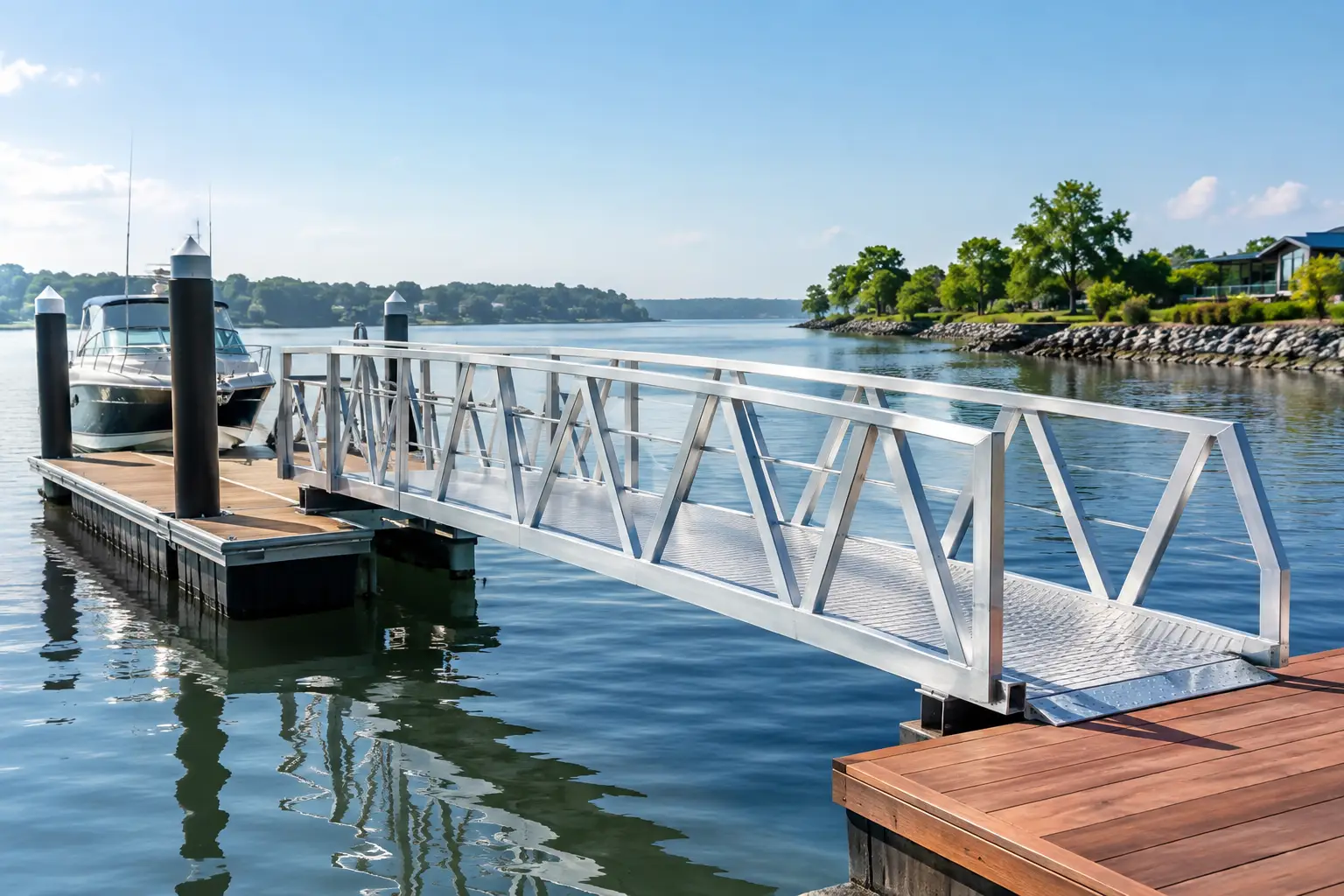
Aluminum-framed gangways with durable, slip-resistant deck panels are a practical choice for many floating dock systems. They are designed to manage the marine environment while keeping the structure manageable during installation and servicing. Materials that resist corrosion and do not require routine staining or sealing can reduce the ownership burden over the life of the dock.
Traction matters, but so does drainage. Water should not be allowed to collect on the walking surface, especially near the shore end where mud, leaves, and runoff can build up. For properties where people commonly walk barefoot, carry water toys, or step on the gangway after swimming, prioritize a surface that is comfortable underfoot and easy to rinse clean.
Handrails are worth considering when the gangway is long, steep during part of the year, heavily used, or open to the public. They provide confidence on wet days and add a defined edge for users carrying gear. Depending on the project, railings may also be needed to support accessibility goals or meet site-specific safety requirements.
Plan the shore landing as carefully as the gangway
A well-built gangway can still underperform if it leads to an unstable or poorly designed shore landing. The transition from land to gangway should be level, firm, and easy to approach. Loose soil, shifting riprap, severe erosion, and a narrow path can turn a convenient dock into a difficult walk.
The shore connection must also allow the gangway to move as the floating dock rises and falls. A properly designed hinge or landing connection accommodates that movement while keeping the access route secure. Do not assume a fixed deck, concrete pad, or retaining wall will automatically work with a floating system. The details depend on the shoreline grade, expected water range, and anchoring plan.
At a lake home, the landing may be integrated into a patio, path, or retaining-wall terrace. At a campground or public park, it may connect to a broader pedestrian route. In either case, drainage and erosion control deserve attention. Water flowing down the access path can undermine the approach and carry sediment toward the shoreline.
Match the gangway to the dock and anchoring system
A gangway is part of a complete floating-dock design. It needs to work with the dock’s freeboard, flotation, frame connections, and anchoring method. Adding a gangway to an existing dock without evaluating these relationships can create stress at connection points or lead to an awkward transition onto the dock.
Anchoring is especially relevant on deep-water properties and reservoirs with major water fluctuations. Cable, pile, stiff-arm, and other anchoring approaches each influence how the dock moves and where the gangway needs to travel. Wind exposure, wake, shoreline orientation, and the size of the dock system should also be considered. A large boat dock, a multi-slip marina, and a small kayak launch place very different demands on the overall layout.
If you expect the dock to grow, plan for it now. Modular floating dock systems make it possible to add slips, PWC ports, fishing platforms, kayak launches, or additional dock sections later. Leaving room for a future gangway adjustment, landing extension, or revised access route can prevent costly redesign work.
Do not overlook installation and maintenance access
Gangways are often selected for guests, but they also need to support the people who clean, inspect, service, and manage the waterfront. Consider how dock boxes, lighting components, ladders, rental equipment, and seasonal supplies will reach the dock. For commercial operators, this question can affect staffing efficiency as much as customer comfort.
Routine gangway care is usually straightforward, but it should be part of the ownership plan. Periodically inspect the walking surface, railings, hinges, fasteners, and shore landing. Clear debris that can affect drainage or footing. After severe weather or unusual water-level changes, check that the gangway has adequate travel and that it is not binding against the landing or dock connection.
Low-maintenance materials reduce the workload, but no waterfront structure is completely maintenance-free. Regular inspection helps protect the investment and gives you a chance to address minor alignment or hardware issues before they become access problems.
Work from a site-specific layout
The best time to make gangway decisions is before ordering the dock, not after the shoreline connection becomes an afterthought. Photos, measurements, water-depth information, shoreline conditions, intended uses, and expected traffic all help shape a design that fits the property.
For projects across Texas, Oklahoma, Arkansas, and New Mexico, EZ Dock Texas can evaluate the full waterfront system, from the shore approach and gangway to dock configuration, anchoring, accessories, and professional installation. That coordination matters because a dependable access route is created by the complete design, not one component alone.
A gangway should make the water easier to enjoy, whether it leads to a quiet fishing platform, a family boat dock, or a busy public marina. Plan for the water levels you will actually face, the people who will actually use it, and the future changes your waterfront may need to accommodate.