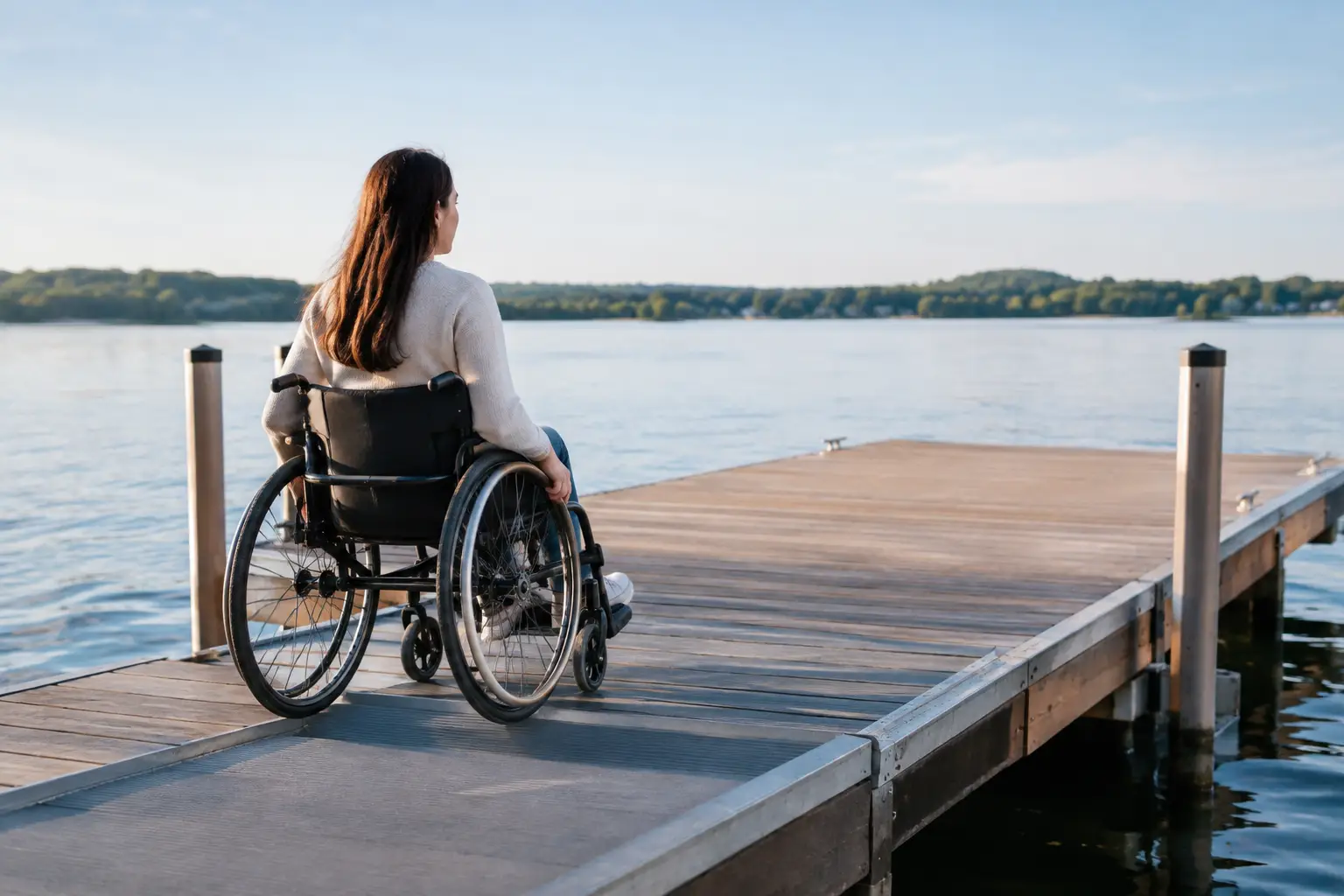
A wheelchair user should not have to stop at the shoreline while everyone else heads out to fish, launch a kayak, or board a boat. So, can docks support wheelchairs? Yes, a properly designed floating dock system can provide practical wheelchair access, but the answer depends on far more than whether the dock can carry the weight of a chair.
The route from shore to dock, the changing slope of the gangway, deck texture, edge protection, turning space, anchoring, and intended use all affect whether a waterfront access point works safely in real conditions. A dock that feels stable on a calm summer day may be difficult to use after a reservoir level change or during a busy public event. Good accessibility starts with planning for the full experience, not simply adding a ramp at the end.
Can Docks Support Wheelchairs Structurally?
Modern modular floating docks can be engineered to support wheelchairs, mobility devices, pedestrians, and the other loads expected for the installation. However, structural capacity and accessible use are two different questions.
A manual wheelchair may add relatively little weight, while a powered wheelchair, its user, equipment, and a companion can create a much greater concentrated load. A public fishing pier or marina gangway must also accommodate groups of people, carts, coolers, maintenance equipment, and occasional emergency access. The dock sections, flotation, connectors, anchoring system, and shore connection must be selected for those combined demands.
Rather than relying on a general statement that a dock is “wheelchair capable,” ask for the rated capacity and design assumptions for the specific system. The right configuration considers live load, flotation reserve, the distribution of weight across the deck, and the forces created by wind, waves, current, and changing water levels. A stable, well-supported dock is more comfortable for every visitor, not only those using mobility equipment.
Modular systems are especially useful because the layout can be designed around an accessible route from the beginning. Wider dock sections, platform areas, accessible fishing locations, kayak launch approaches, and connection points can be incorporated without treating accessibility as an afterthought.
The Gangway Usually Determines Accessibility
For most floating dock projects, the gangway is the hardest part of providing wheelchair access. A floating dock rises and falls with the water, while the shoreline connection remains fixed. That means the gangway slope changes as the lake, river, or pond level changes.
A gangway that is easy to travel at one water elevation can become steep when water drops. On Texas reservoirs and other inland waterways with seasonal fluctuations, this is often the central design issue. More gangway length generally reduces the slope, but it also requires more room on shore and may affect the dock layout, anchoring plan, and budget.
Public projects may need to meet applicable accessibility requirements, including ADA standards and local or agency-specific rules. These standards can include different slope allowances for long gangways because waterfront conditions are unique. The governing requirements depend on the facility, ownership, funding source, jurisdiction, and intended public use. A municipal fishing dock has different compliance considerations than a private residential dock.
Even when formal ADA compliance is not required, the same principles are useful. A longer gangway with a manageable slope, secure handrails where appropriate, a slip-resistant walking surface, and a level transition onto the floating dock can make a major difference for wheelchair users, older adults, parents with strollers, and visitors carrying gear.
Plan for low water, not just launch day
Designing around the current water level is a common mistake. A dock should be evaluated at the expected high and low water elevations, including the water conditions most likely during the seasons when the property is used. If the access route only works during a narrow range of lake levels, it may not deliver the long-term value the owner expects.
At sites with significant drawdown, an adjustable or extended gangway arrangement may be needed. In some cases, a different shore landing elevation, a switchback route, or a redesigned dock orientation can create a more usable approach. The best option depends on available shoreline space, terrain, water depth, and the site’s anchoring requirements.
Details That Make an Accessible Dock Usable
Wheelchair access is not limited to getting onto the dock. Once there, a person needs enough room to move, turn, pause, and enjoy the waterfront without facing abrupt edges or narrow pinch points.
A clear travel path is the starting point. Public accessible routes commonly call for minimum clear widths, with additional space for passing or turning where needed. In a practical dock design, wider areas near transitions, gates, fishing stations, boat boarding points, and dead ends are especially valuable. A straight route that technically fits a wheelchair may still be frustrating if there is nowhere to turn around or pass another user.
Decking should provide reliable traction when wet. Textured polyethylene dock surfaces can offer a durable, low-maintenance option compared with weathered wood that may splinter, warp, or become slick. The surface should also have smooth, secure transitions between dock sections so small wheelchair casters do not catch at joints or changes in elevation.
Edges deserve equal attention. Depending on the application, curbs, edge protection, railings, or a combination of these features can help users navigate with confidence. Railings can provide support along a gangway or viewing area, but they should be planned around fishing access, boat boarding, rescue access, and the need to avoid creating a narrow passage.
Lighting is another practical consideration for public facilities, marinas, and residential properties used after sunset. Well-placed lighting helps visitors see changes in direction, dock edges, and boarding points without creating glare on the water.
Accessible Use Changes by Waterfront Activity
The right accessible design depends on what people will do after reaching the dock. A fishing pier may need open side access, lower rail sections, and generous room for chairs to turn beside anglers. A marina may need a stable route to slips, with boarding points designed around the boats that use them. A kayak or canoe launch calls for a transfer-friendly area that allows a paddler to move safely between a wheelchair and a watercraft.
For a private lake home, the goal may be a smooth route for a family member using a power chair to reach a shaded sitting area or join the group at the boat. At a park or campground, the priority may be durable circulation for a wide range of visitors, along with access that can stand up to high traffic and limited maintenance staff.
These uses create trade-offs. An open fishing edge improves casting access but may need thoughtful edge protection elsewhere. A wider dock increases circulation space but can affect cost, anchoring, and the footprint of the installation. Longer gangways improve slope but require room and may change the shore approach. There is no one-size-fits-all accessible dock, which is why site-specific planning matters.
Do Not Overlook the Shore Approach and Transitions
A well-designed floating dock cannot solve an inaccessible path from the parking area or home to the gangway. The complete route should be reviewed from arrival to the intended waterfront activity.
Look at the path surface, cross slope, drainage, gates, thresholds, and any changes in elevation between shore and gangway. Gravel paths, deeply rutted ground, loose pavers, and steep ramps can prevent access long before a visitor reaches the water. At public sites, accessible parking, route connections, and signage may also be part of the broader accessibility plan.
The transition from shore to gangway and from gangway to dock deserves careful attention. These areas move, wear, and receive concentrated traffic. Proper hardware, durable connections, and a design that accommodates movement without creating problematic gaps help keep the route functional over time.
Start With a Real-World Design Conversation
An accessible waterfront project works best when the design team understands who will use it, what activities it must support, and how the water level behaves throughout the year. Photos and measurements are helpful, but a site evaluation can reveal shoreline grades, access constraints, wind exposure, bottom conditions, and other details that affect the final layout.
EZ Dock Texas helps homeowners, marinas, parks, and public agencies configure modular dock systems for long-term waterfront use. For projects serving the public, involve the appropriate architect, engineer, accessibility consultant, or governing agency early so structural, permitting, and accessibility requirements are addressed together.
Before selecting dock sections or accessories, walk the route as a user would: from the vehicle or home, across the shore, down the gangway, onto the dock, and to the boat, fishing spot, or launch area. That simple exercise often identifies the design choices that turn waterfront access from possible into genuinely usable.