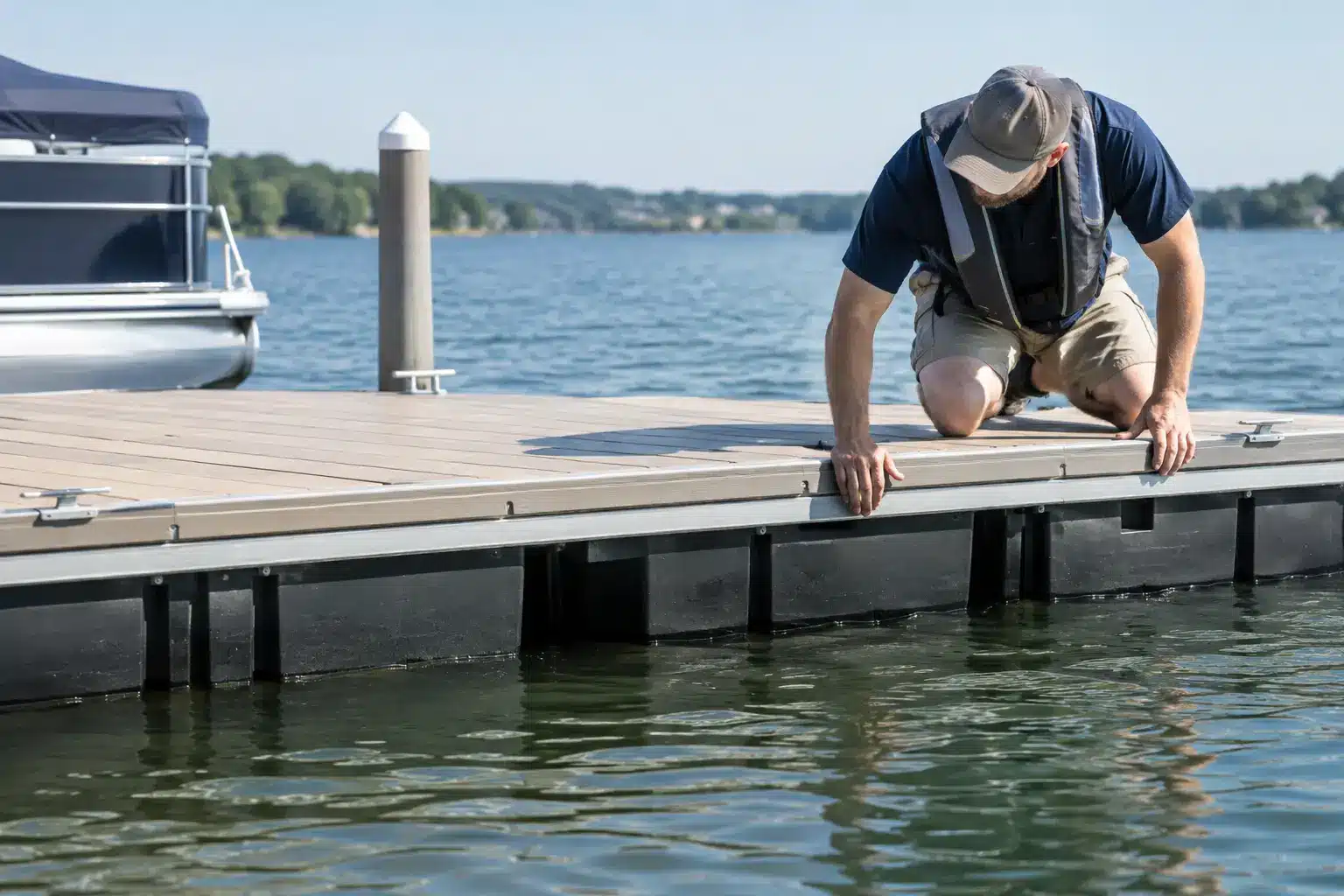
A floating dock maintenance review is not about finding something to fix every weekend. It is a practical way to catch small changes before they affect safe access, anchoring performance, or the useful life of your waterfront system. For lake homes, marinas, parks, camps, and public facilities, a consistent review also makes it easier to budget for repairs and keep the dock ready for the people who depend on it.
Floating dock systems are designed to move with changing water levels, but they still work in a demanding environment. Sun exposure, wake action, storms, shifting shorelines, fluctuating reservoirs, and heavy seasonal use all place different demands on the structure. The right maintenance routine focuses on the parts that carry loads, control movement, and protect users from slips and falls.
What a Floating Dock Maintenance Review Should Cover
A good inspection starts from the shore and moves outward. Walk the gangway, transition points, dock sections, connections, anchoring components, and accessories in the same order each time. This makes it easier to notice changes from one season to the next.
The first question is simple: does the dock still sit level and feel stable under normal use? A floating dock will have some natural movement, especially in open water or near boat traffic. Excessive rocking, unusual separation between sections, or a noticeable tilt may point to an anchor issue, a changed water depth, or a component that needs adjustment.
Look closely at the walking surface as well. Modular polyethylene dock sections are valued for their low-maintenance, non-slip surfaces, but they should still be kept clear of mud, leaves, fishing line, algae, and other debris. A surface can be structurally sound and still become a slip hazard when it is covered with organic buildup.
Connections and couplers
Connections deserve close attention because they allow a modular dock to flex while keeping the overall layout secure. Check couplers, pins, bolts, chains, and hardware for wear, corrosion, loosening, or damage. Pay particular attention to high-traffic areas, such as the point where people step from a gangway onto the dock, a swim platform, or a boat port.
Not every bit of movement is a problem. Floating systems are built to respond to water movement rather than resist it rigidly. The concern is movement that has increased, feels uneven, creates gaps, or causes dock sections to rub in ways they did not before. If a connection is worn or hardware has backed out, address it before peak boating season.
Anchoring and shoreline attachment
Anchoring is one of the most important parts of dock ownership, particularly on Texas and regional reservoirs where water levels can change dramatically. A dock that performed well at one water elevation may need attention after a prolonged rise, drawdown, or major storm.
Inspect cables, chains, augers, deadweights, pile guides, and shoreline connection points based on the anchoring system in use. Look for fraying, rust, abrasion, bent components, shifted anchors, or lines that are too tight or too slack. Also watch for shoreline erosion around the gangway landing or anchor points.
A common mistake is treating anchoring as a one-time installation decision. In reality, it is an ongoing system. The correct setup depends on water depth, bottom conditions, exposure to wind and wakes, expected water-level changes, dock size, and intended use. A private fishing dock may have different needs than a commercial marina, public kayak launch, or event dock.
Inspect Safety Features Before They Become an Issue
Rails, ladders, cleats, lighting, and accessibility features can receive less attention than the dock itself, yet they are often the first components guests and visitors touch. Check that railings are secure, ladder rungs are clean and firmly mounted, and cleats do not wobble or show sharp edges.
If the dock includes electrical service or lighting, inspect visible wiring, fixtures, conduit, and mounting hardware. Replace damaged components promptly and use qualified professionals for electrical work around water. Lighting should provide clear wayfinding from the shore to the dock without creating glare that interferes with nighttime navigation.
For public-facing facilities, accessibility should be reviewed as part of routine maintenance, not only during a renovation. Gangway slope, handrails, transition plates, surface condition, and usable width can change as water levels and site conditions change. The goal is safe, predictable access for a wide range of users.
Seasonal Care Makes Maintenance Easier
The most useful schedule is tied to how your water is used. Many owners benefit from a thorough review before the busy season, a midseason check after heavy use, and another inspection after major storms or seasonal drawdowns. Marinas, parks, rental operators, and high-traffic facilities may need more frequent visual checks.
After a storm, inspect the dock before reopening it to guests or the public. Wind and wave action can shift anchors, loosen connections, move shoreline hardware, and deposit debris around access points. Do not assume the dock is ready because it remains afloat.
During cooler or lower-use months, remove debris, clean surfaces using methods appropriate for the dock material, and review any issues noted during the season. This is also a good time to consider upgrades that are harder to complete when the waterfront is busy, such as adding a kayak launch, changing a slip layout, installing railings, or reconfiguring a boarding area.
Know When a Professional Review Is Worth It
Routine owner checks are valuable, but some conditions call for experienced assessment. Contact a dock professional if the dock has shifted significantly, repeated hardware issues are occurring, anchor lines are damaged, the shoreline is eroding, or water-level changes have made the gangway approach uncomfortable or unsafe.
A professional review is especially helpful when your needs have changed. A dock originally built for fishing and swimming may now need to support a pontoon boat, personal watercraft, paddle sports, or more frequent guests. Because modular systems can be reconfigured, the best answer may not be a complete replacement. It may be an adjusted layout, stronger stabilization, additional access equipment, or a better fit between the dock and the way the property is used.
For commercial and public projects, documentation matters too. Keeping inspection notes, photographs, repair records, and seasonal observations can help facilities teams plan capital improvements and demonstrate a consistent approach to safety. It also gives a dock designer a clearer starting point when evaluating a proposed expansion or repair.
A Low-Maintenance Dock Still Needs Attention
Low maintenance does not mean no maintenance. It means the system is built from durable materials, avoids frequent painting or board replacement, and can be cleaned and inspected without turning waterfront ownership into a second job. That is a meaningful advantage over traditional structures, but it does not eliminate the need to monitor anchoring, connections, safety equipment, and changing site conditions.
At EZ Dock Texas, we have seen how a timely adjustment can prevent a larger waterfront problem later. The most dependable dock is not simply the one that looks good on installation day. It is the one that continues to provide stable, safe access as water levels, weather, and the way you use your shoreline evolve.
Set a calendar reminder before your busiest season, walk the dock with a critical eye, and address changes while they are still small. That simple habit protects your investment and helps keep every trip to the water focused on the reason you built the dock in the first place.