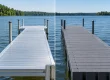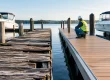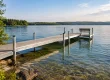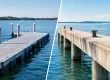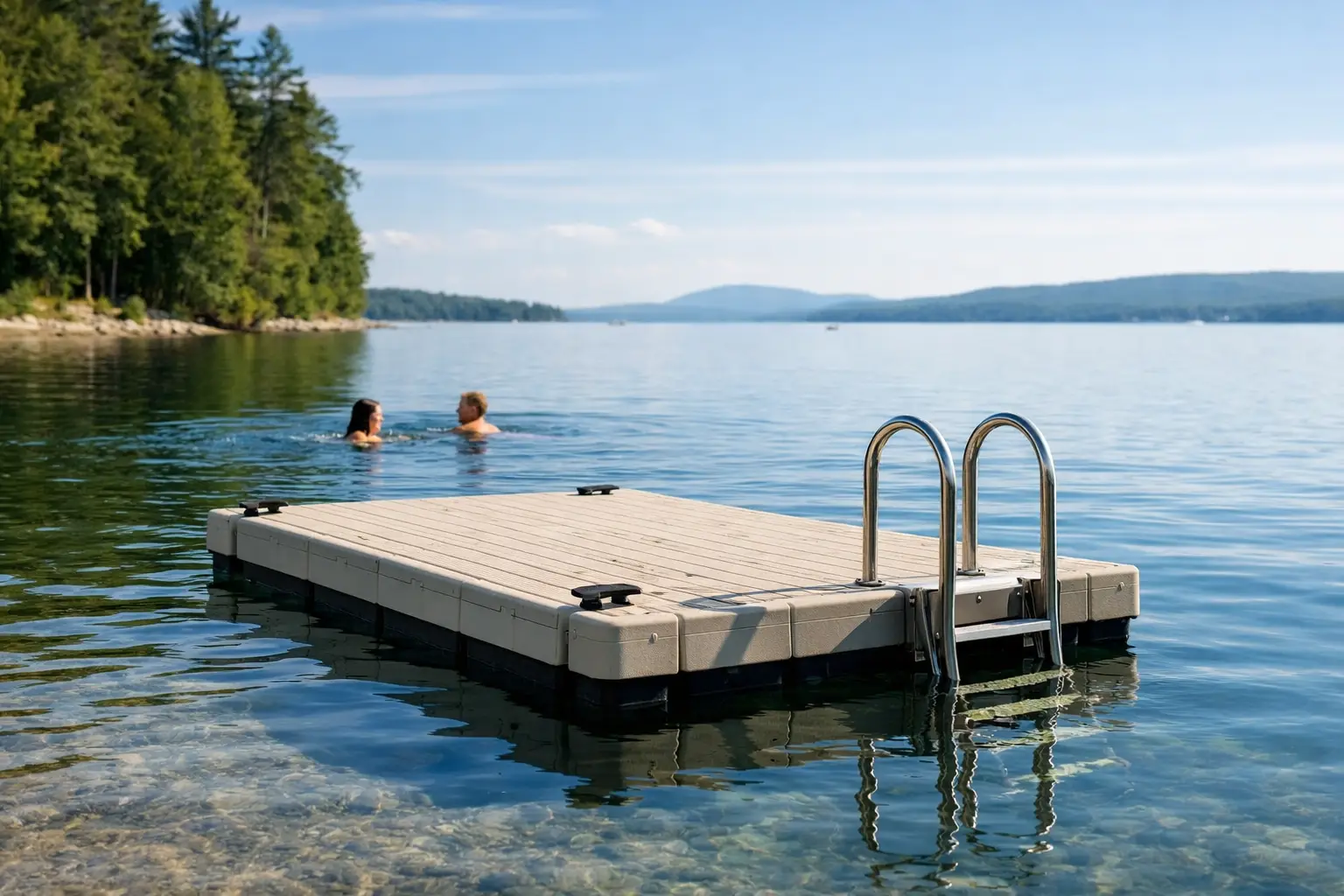
A good swimming dock changes the way people use the water. Instead of stepping over rocks, mud, or an uneven shoreline, swimmers have a stable place to enter, rest, launch a paddleboard, and climb back out. The right floating dock for swimming also creates a clear recreation zone, which matters whether you are planning for a lake home, a camp, an HOA, or a busy public shoreline.
The goal is not simply to put a platform on the water. A swimming dock should fit the people using it, the conditions at the site, and the way water levels move throughout the year. Size, surface traction, ladder placement, anchoring, and shoreline access all work together. Getting those details right early can prevent a dock that feels too small, sits in the wrong location, or requires more maintenance than expected.
Start With How the Dock Will Be Used
A private family dock and a public swimming platform may look similar from shore, but they have very different demands. A lakefront homeowner may want a comfortable place for children to swim, adults to lounge, and kayaks to launch. A resort, camp, or municipal park may need wide circulation paths, multiple exits from the water, more durable hardware, and a layout that keeps swimmers separate from boat traffic.
Think about peak use rather than average use. If six family members will usually use the dock but 15 guests arrive on holiday weekends, a small platform can quickly become crowded. For commercial and public applications, account for supervision, group use, accessibility needs, and the possibility that people will carry towels, coolers, life jackets, and water toys across the surface.
Location matters just as much. A swim dock belongs away from regular boat approach lanes, personal watercraft traffic, and areas where fishing lines are common. It should be deep enough for the intended water entry, while still allowing a safe, direct route from shore. A well-planned layout makes the boundary between swimming and boating obvious without making either activity inconvenient.
Why a Floating Dock for Swimming Works Well
Unlike a fixed pier, a floating dock rises and falls with the water. That is a major advantage on reservoirs, lakes, and ponds where seasonal rain, drought, releases, and wind can change the waterline. The dock surface remains close to the water, so the climb in and out is more consistent than it would be from a high fixed structure.
Floating systems are also modular. A simple swim platform can become a larger T-shaped gathering area, a protected swimming zone, or a combined dock with dedicated sections for kayaking and boating. That flexibility is valuable for properties that evolve over time. The family may add a boat, an HOA may expand amenities, or a camp may need separate access for different age groups.
Material selection affects long-term ownership, too. High-quality polyethylene dock sections are designed to resist rot, splinters, corrosion, and the repeated wet-dry cycle that wears down traditional wood structures. A textured, slip-resistant surface helps with wet bare feet and requires far less routine upkeep than a wood deck that needs staining, board replacement, and frequent inspection.
That does not mean every floating dock is automatically the right answer. Very exposed water, heavy wave action, unusually shallow areas, or large elevation changes may call for a more specialized anchoring and access plan. The dock system should be designed around those conditions, not selected from a one-size-fits-all package.
Design Features That Make Swimming Safer
Swimming safety begins with the dock surface. Look for a durable, textured walking area that provides traction when wet but remains comfortable on bare feet. The layout should allow people to walk around towels, gear, and seated swimmers without being forced to step close to the edge.
A proper swim ladder is essential. It should be easy to reach from the water, securely mounted, and positioned where swimmers can climb out without crossing beneath jumping areas. Multiple ladders are often a practical choice for larger platforms, youth groups, and public settings. A single ladder can create a bottleneck when several people are in the water.
Consider whether the platform needs a designated jumping side. If it does, that side should have suitable water depth, a clear underwater area, and no conflict with boats, anchors, or submerged obstacles. Local rules, property restrictions, and changing water conditions should always guide how the area is used. A dock should never encourage jumping where conditions have not been evaluated.
Railings can improve confidence along shore connections, gangways, and portions of a dock used by young children, older adults, or visitors with limited mobility. They are not appropriate around every edge of a swim platform, since swimmers need clear access to the water. The best approach is targeted protection where fall risk is higher, paired with open, intentional entry points.
Lighting is another useful consideration for properties used near sunset. Low-profile dock lighting can improve visibility along walking routes and help users see ladders and transitions. It should support safe movement, not turn the water into a nighttime swim area without proper supervision.
Plan the Route From Shore to Water
Many dock projects focus heavily on the platform and overlook the route to it. Yet a steep, narrow, or unstable connection can make even a well-built swimming dock difficult to use. The shore approach should be considered as part of the system.
A gangway can provide a safer transition where water levels fluctuate. Its length, slope, handrails, and connection points should be matched to the site’s elevation changes. At a ranch pond or small private lake, the solution may be straightforward. At a reservoir with substantial drawdown, the gangway and anchoring system need more planning so the dock remains usable across a wider range of water levels.
Accessibility should be discussed early for community and public-facing projects. Wide, stable routes and thoughtful transitions help more visitors reach the waterfront. Specific accessibility requirements vary by project and jurisdiction, but designing for easier movement benefits families, staff, guests, and maintenance crews alike.
Anchoring Is What Keeps the Experience Stable
A floating dock is only as dependable as its anchoring system. Wind, wave action, changing water depth, bottom conditions, and dock size all influence the correct method. Depending on the site, a system may use pipe brackets, cable anchoring, deadweights, piling, or combinations designed for the specific waterfront.
The wrong anchoring approach can leave a dock drifting out of position, rubbing against the shore, or moving more than users expect. It can also put unnecessary strain on connections and accessories. This is one of the strongest reasons to involve a waterfront professional before ordering dock sections.
A site review should consider prevailing wind, exposure to wakes, seasonal low-water conditions, soil or lake-bottom characteristics, nearby utilities, and the practical route for installation. For public facilities and larger commercial projects, permitting, procurement requirements, and operating needs may be part of the conversation as well.
Choose a Size That Leaves Room to Grow
A compact platform may be enough for two or three swimmers, but docks tend to become gathering places. People sit at the edge, set down gear, tie up kayaks, and wait for friends. Planning a little additional usable space can make the dock feel comfortable rather than crowded.
Modular construction gives owners an advantage here. Start with a swimming platform sized for current needs, then add sections later for a lounging area, a kayak launch, a fishing extension, or boat access. The key is to plan initial connections and anchoring with potential expansion in mind.
For a residential lakefront, that may mean preserving a clear side for a future personal watercraft port. For a park or camp, it may mean allowing for additional ladders, safety equipment, or a separate launch zone. A flexible design protects the investment when recreation needs change.
Work With a Dock Partner Who Understands the Site
Swimming docks are simple to enjoy, but the planning behind them should be deliberate. A design consultation helps match the dock layout, anchoring, access route, and accessories to real site conditions instead of relying on assumptions from a photo or shoreline measurement.
EZ Dock Texas has helped waterfront owners and operators build durable modular systems for changing water levels and years of active use. From a private swim platform to a larger community waterfront, professional design and installation can make the finished dock safer, more useful, and easier to maintain.
Before the next swim season, take a walk down to the shoreline and picture the full experience: where people arrive, where they set their gear, how they enter the water, and how they get back out. That simple exercise often reveals exactly what your dock needs to do.