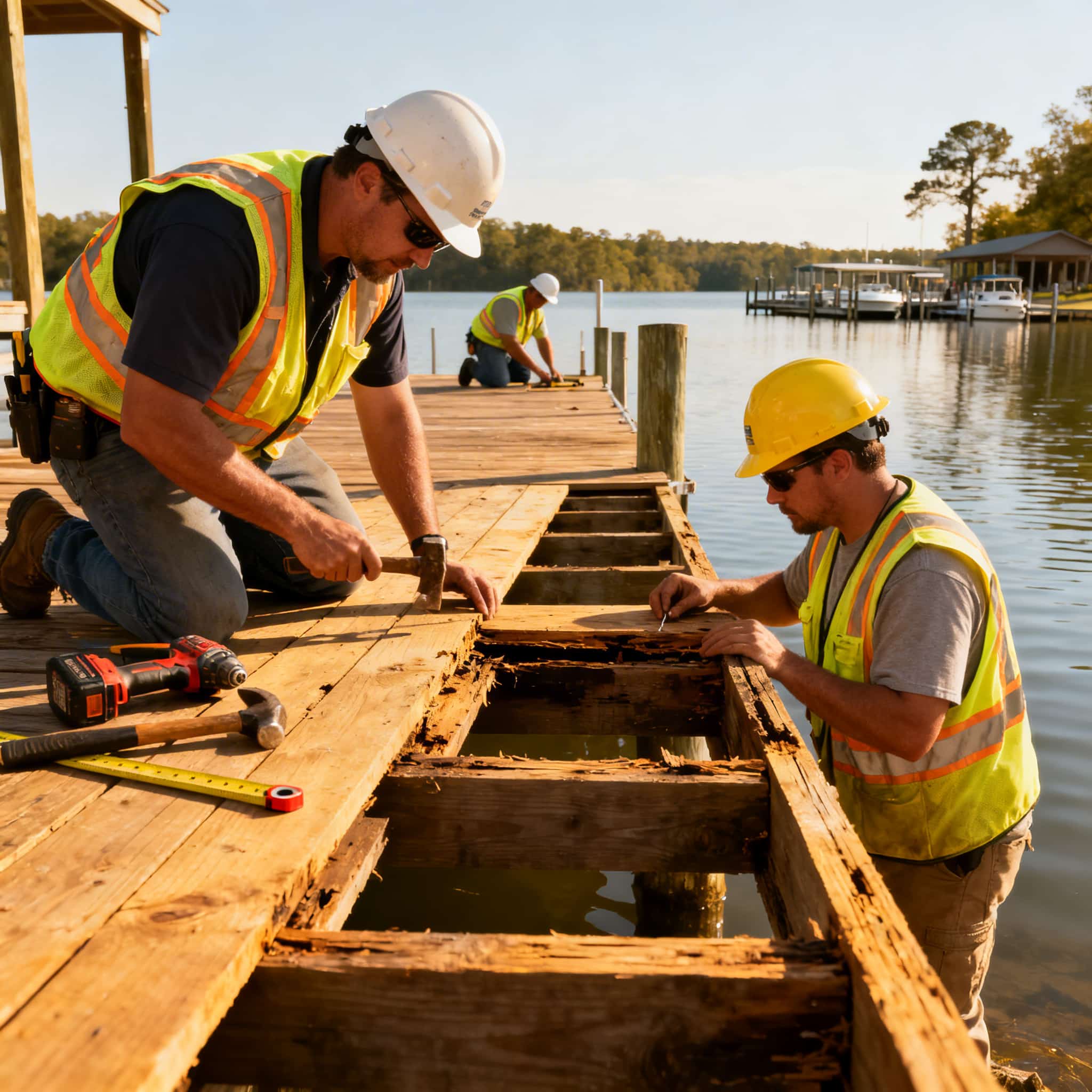
Simple dock repairs maintenance crews can handle in-house include tightening hardware, replacing worn connectors, cleaning surfaces, adjusting anchoring, and fixing minor surface damage. Routine in-house maintenance reduces downtime, prevents larger failures, and extends dock lifespan.
Key Takeaways
- Small repairs prevent major failures
- In-house crews reduce maintenance costs
- Regular inspections identify early issues
- Most repairs involve hardware and surface upkeep
- Documentation improves long-term planning
Why This Matters
Texas waterfront infrastructure sees heavy use and harsh conditions. Heat, UV exposure, and fluctuating water levels accelerate wear.
Waiting on contractors for every issue creates:
- Delays
- Higher costs
- Increased safety risks
In-house crews can handle a large percentage of routine repairs.
Common Mistakes to Avoid
- Ignoring minor damage
- Delaying simple fixes
- Not training staff on inspections
- Using incorrect replacement parts
- No maintenance documentation
- Overlooking anchoring adjustments
- Waiting for full failure before acting
Best Practices
1. Train Crews on Basic Repairs
Focus on:
- Hardware tightening
- Surface inspection
- Connector replacement
2. Standardize Inspection Checklists
Ensure consistency across:
- Weekly inspections
- Monthly reviews
3. Keep Replacement Parts On Hand
Common items:
- Bolts
- Connectors
- Fasteners
4. Address Issues Immediately
Small issues escalate quickly in Texas conditions.
5. Document All Repairs
Track:
- Date
- Issue
- Action taken
Maintenance & Operations Plan
Weekly
- Visual inspection
- Tighten loose hardware
Monthly
- Replace worn components
- Check anchoring
Quarterly
- Full structural review
After Storms
- Immediate inspection required
Budget & Planning Notes
- In-house repairs reduce contractor costs
- Budget for spare parts inventory
- Track repair trends to plan replacements
- Allocate funds for periodic upgrades
Safety & Liability Considerations
Unaddressed dock issues increase:
- Trip hazards
- Structural failures
- Injury risk
Routine maintenance reduces liability exposure.
FAQ
What simple dock repairs can maintenance crews handle in-house?
Tightening hardware, replacing connectors, cleaning surfaces, and minor adjustments.
How often should docks be inspected?
Weekly during peak use and after storms.
Do crews need specialized training?
Basic training is sufficient for most routine repairs.
What tools are required?
Standard hand tools and replacement hardware.
When should contractors be used?
For structural or major repairs.
Why is documentation important?
It tracks maintenance history and supports planning.
What is the most common issue?
Loose hardware and worn connectors.
How do you extend dock lifespan?
Consistent maintenance and early repairs.
Checklist
- Conduct weekly inspections
- Tighten all hardware
- Replace worn connectors
- Clean dock surfaces
- Check anchoring systems
- Document repairs
- Stock replacement parts
- Inspect after storms
- Train maintenance staff
- Plan for upgrades
Simple dock repairs maintenance crews can handle in-house are one of the easiest ways to reduce long-term costs and improve safety across Texas waterfronts. The teams that stay proactive avoid bigger failures and downtime. If you’re evaluating dock conditions or planning upgrades, EZ Dock Texas can help guide next steps. Reach out here: https://ezdocktexas.com/contact/ or follow updates here: https://www.facebook.com/EZDockTX/