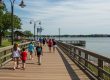
Texas waterfront risk management focuses on three pillars: Engineering (maintaining stable, ADA-compliant docks), Education (clear, visible signage for “No Wake” and “Swim at Your Own Risk”), and Enforcement (regular documented inspections). Park directors must ensure that all swimming zones are clearly marked with high-visibility buoys and that dock structures feature non-slip surfaces and proper electrical grounding to prevent Electric Shock Drowning (ESD).
Key Takeaways:
- Documented monthly inspections are your best defense against negligence claims.
- High-visibility markers for swim zones and hazards are a state legal requirement.
- Separate pedestrian paths from boat trailer lanes to prevent shoreline accidents.
- Electrical systems on docks must meet NEC standards to prevent ESD.
- Signage should use icons to bridge language barriers for visitor safety.
The Director’s Duty of Care
In Texas, “sovereign immunity” provides some protection for municipalities, but it is not a shield against gross negligence. Texas waterfront risk management is about proving that the park has exercised a “Duty of Care.” If a visitor is injured, the first thing a court will look for is a paper trail of safety inspections and clear evidence that hazards were marked and mitigated.
High-Impact Risk Areas
- Electric Shock Drowning (ESD): This is a silent killer on Texas docks. Any dock with power must be inspected annually by a certified electrician for ground faults.
- Trip and Fall: Algae buildup on boat ramps and uneven transitions on aging wood docks are the leading causes of minor injury claims.
- Vessel Conflicts: Mixing swimmers and motorized boats is a recipe for disaster. Physical barriers (buoy lines) are essential.
Tactical Risk Mitigation Strategies
1. The “Paper Trail” Protocol
Maintain a digital log of all inspections. A modern risk management plan should include:
- Weekly: Visual check of life rings, signage, and dock surface integrity.
- Monthly: Physical inspection of anchoring tension and gangway rollers.
- Post-Storm: Immediate audit of the facility for submerged debris or structural shifting.
2. Standardized Signage
To be effective, signage must be seen and understood.
- Height: Place signs at eye level for both pedestrians and boaters.
- Contrast: Use reflective lettering for visibility at dawn and dusk.
- Language: Given Texas’s demographics, bilingual (English/Spanish) or icon-based signs are the industry best practice.
3. Smart Infrastructure Choice
Modular HDPE (High-Density Polyethylene) docks are a risk manager’s dream. Unlike wood, they don’t splinter or rot, and unlike metal, they don’t have sharp edges or rust. Choosing “barefoot-friendly” materials reduces minor injury reports by up to 40%.
Maintenance & Operations Plan
- Daily: Janitorial staff should report any “near-miss” incidents or broken safety gear.
- Quarterly: Conduct a “Safety Walkthrough” with the city’s risk manager to identify emerging hazards.
- Annually: Refresh all painted “No Wake” or “Safety Zone” markings on the shoreline.
Safety & Liability Considerations
- PFD Stations: Implementing a “Life Jacket Loaner Station” is a low-cost way to significantly reduce drowning risk and demonstrate safety leadership.
- Clear Addressing: Every public dock should have its street address clearly visible from the water (at least 2-inch reflective letters) to assist emergency responders.
FAQ
Are we liable if someone swims in a “No Swimming” zone?
If you have clearly marked the area and documented regular enforcement/signage checks, your liability is significantly reduced.
What is the “Texas Water Safety Act”?
It is the state law that mandates how you must mark hazards and what equipment is required on public waters.
How do we prevent “Electric Shock Drowning”?
By installing GFCI breakers and ensuring no electrical cords touch the water. Better yet, switch to solar-powered dock lighting.
Can we be sued for a visitor tripping on a natural shoreline?
Generally, natural hazards are viewed differently than “man-made” hazards. However, if you’ve built a path to that shoreline, you must maintain that path to a safe standard.
Checklist for Park Directors
- [ ] Review the current “Safety Inspection Log” for gaps.
- [ ] Verify all dock electrical systems are GFCI-protected.
- [ ] Check that all swim buoys are in their designated GPS locations.
- [ ] Audit the PFD loaner station for missing or damaged jackets.
- [ ] Ensure every gangway has a non-slip transition plate.
- [ ] Schedule a “Hazard Hunt” with staff to find protruding bolts or splinters.
- [ ] Confirm that the “Rule Kiosk” is legible and not faded by the sun.
- [ ] Document the training of seasonal staff in basic water rescue.
Managing a Texas waterfront is a high-stakes job, but with the right infrastructure and documentation, it doesn’t have to be a high-stress one. At EZ Dock Texas, we help park directors reduce liability through the installation of ultra-safe, low-maintenance modular systems that meet the strictest Texas waterfront risk management standards. Ready to harden your park against risk? Contact us today or visit our Facebook for more safety insights.