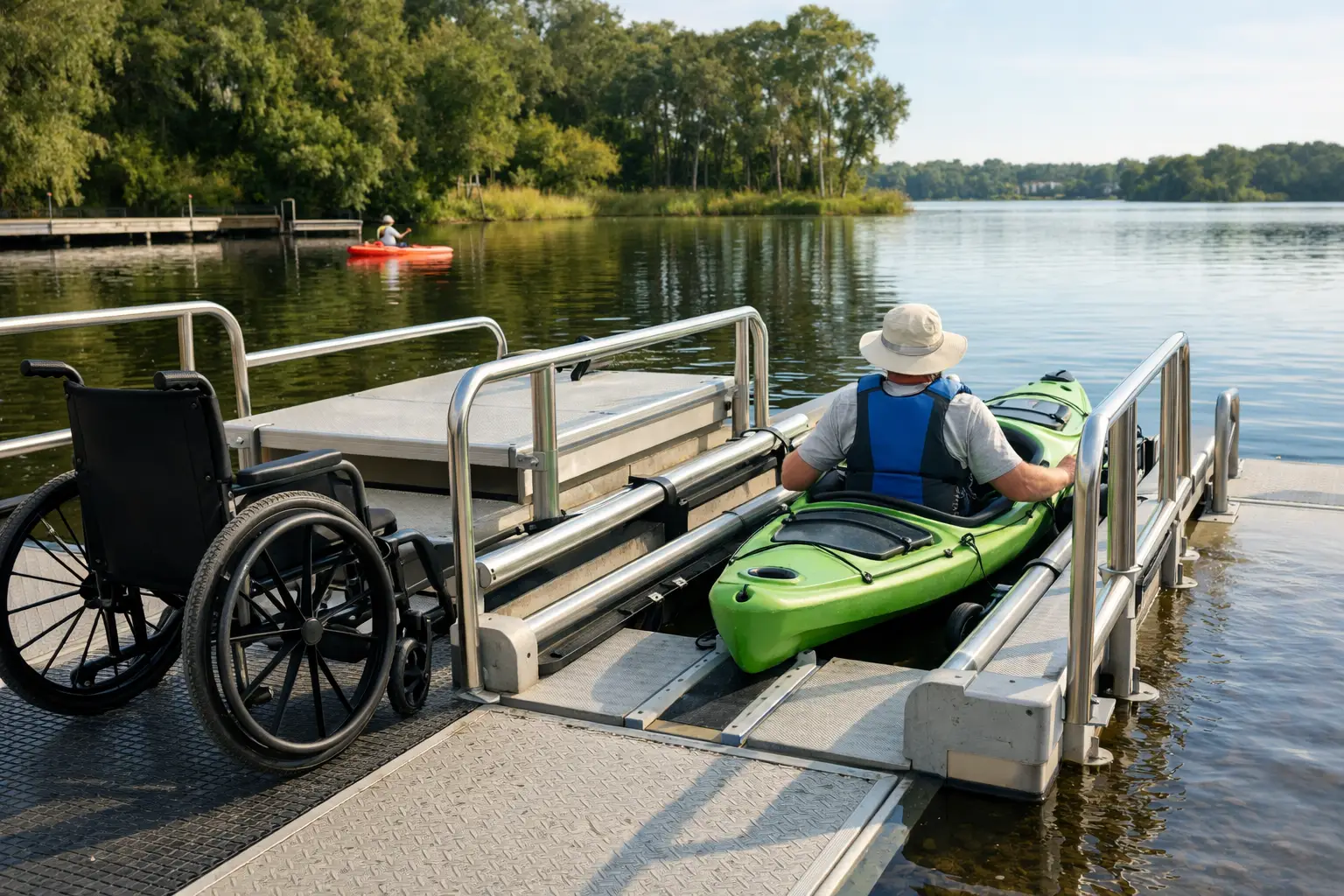
A well-planned ADA accessible kayak launch does more than put a kayak at the water’s edge. It gives more people a practical, dignified way to participate in paddling, whether they are visiting a city park, staying at a resort, attending a camp, or living in a waterfront community. The right design also makes daily operations easier for staff and creates a safer, more organized launch area for every user.
For public-facing waterfront projects, accessibility needs to be part of the layout from the first site visit. Retrofitting a launch after the dock, gangway, and shoreline path are already in place can limit options and add cost. A customized floating dock system gives project teams more flexibility to create a route that works with the shoreline, water levels, and anticipated users.
What Makes an ADA Accessible Kayak Launch Work?
An accessible kayak launch is a connected system, not a single piece of equipment. A visitor must be able to travel from accessible parking or the facility entrance to the water, move through the launch area, transfer into a vessel if needed, and return safely. If any one part of that route is too steep, unstable, narrow, or difficult to use, the overall experience falls short.
The Americans with Disabilities Act does not offer one simple, universal kayak-launch drawing that fits every shoreline. Requirements can vary based on whether the facility is public or private, the nature of the site, applicable building codes, and the authority having jurisdiction. A qualified design professional and local accessibility authority should review the final plan. Still, the best projects consistently focus on stable surfaces, usable clear space, manageable slopes, supportive handholds, and a logical route from land to water.
A floating dock is often an effective foundation because it rises and falls with the water. On reservoirs and lakes with changing elevations, that movement can help preserve a more consistent relationship between the dock deck and the kayak. The gangway remains a critical part of the design, however. As water levels change, its slope changes too. Planning for expected high and low water conditions is essential in Texas, Oklahoma, Arkansas, and New Mexico, where seasonal conditions can be significant.
Start With the Route to the Water
The accessible route should be considered before choosing a launch accessory. Look at the full journey: parking, sidewalks, gates, restrooms, staging areas, gangway access, dock circulation, and the launch itself. A beautiful launch platform has limited value if a user cannot comfortably reach it.
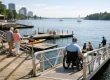
Firm, stable, slip-resistant walking surfaces are a practical priority. The route needs enough width for wheelchair users and companions to pass or turn where required. Changes in level, thresholds, curbs, and drainage details all deserve attention. At the shoreline, avoid creating a situation where people must cross loose gravel, exposed riprap, soft ground, or a steep concrete ramp to reach the dock.
Gangway selection deserves the same level of care. The length, width, handrails, transition plates, and landing areas should fit the site and the anticipated water-level range. A longer gangway may require more shoreline room and investment, but it can provide a more manageable slope during normal operating conditions. Shorter gangways can work well at stable-water sites, but they demand a more careful review of seasonal changes.
For facilities that host groups, consider the traffic pattern around the launch. Paddlers need space to stage a kayak, mobility device, paddle, and personal gear without blocking the accessible path. A designated preparation area near the launch can reduce congestion and help staff supervise activity.
Choose a Launch Method for Real Users
Not every paddler needs the same support. Some can step into a kayak with a little extra stability. Others may need a transfer bench, grab bars, a lower deck edge, or a more controlled entry area. The best launch method depends on the types of kayaks in use, user abilities, staffing, programming, and the level of independence the facility wants to support.
A launch area should help hold the kayak in place while the paddler gets in or out. Uncontrolled boat movement is one of the biggest barriers to a safe transfer. A stable floating platform, guide rails or rollers designed for the application, and well-positioned handholds can reduce that movement and give users more confidence.
Clear deck space matters just as much as the transfer point. A wheelchair user may need room to approach from the side, position alongside the kayak, make a transfer, and store mobility equipment while paddling. Staff may also need enough space to assist without creating a crowd at the water’s edge.
Think carefully about the vessel fleet. Recreational sit-on-top kayaks, traditional sit-inside kayaks, tandem boats, and adaptive paddling equipment all have different entry heights and stability characteristics. A launch that is ideal for one type may be awkward for another. If the facility will provide rental kayaks, camps, or organized paddling programs, test the proposed setup with the actual vessels before finalizing the design.
Floating Docks Solve One Problem, Not Every Problem
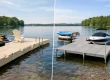
Floating dock systems are a strong choice for accessible launches because the launch deck moves with the water. That can make transfers more predictable than a fixed pier where the distance to the water rises and falls dramatically. Modular dock sections also allow the layout to be expanded, reconfigured, or repaired as needs change.
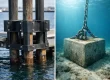
But floating systems need proper anchoring and stabilization. Excessive movement from wind, wakes, current, or inconsistent anchoring can make even a well-equipped launch feel insecure. The dock should be designed for the waterbody, anticipated loads, exposure, and shoreline conditions. On larger lakes, wave action and long fetch may require a more substantial stabilization approach than a protected pond or marina basin.
Deck texture, connection quality, edge treatment, and drainage should all support safe use. Low-maintenance polymer dock surfaces can be particularly useful for public facilities because they resist rot, splinters, and corrosion while providing a consistent walking surface. Regular cleaning is still necessary. Algae, mud, sunscreen residue, and wet leaves can create slip hazards on any waterfront surface.
Plan for Operations, Not Just Opening Day
An accessible launch is only as useful as its ongoing condition. Public agencies, parks, marinas, and resorts should establish a simple inspection routine for handrails, dock connections, gangway transitions, launch hardware, and walking surfaces. Staff should know how to identify loose components, sharp edges, worn grips, tripping hazards, and conditions that may require temporary closure.
Signage can support safe use without becoming cluttered. Clearly identify the launch area, accessible route, operating rules, and any conditions that affect access, such as water-level restrictions or weather closures. If assistance is available, explain how users can request it. If the launch is intended for independent use, provide straightforward instructions that match the installed equipment.
Emergency access is another planning detail that is easy to overlook. Consider how staff, first responders, or rescue personnel would reach the dock and the launch area. Lighting, visible address information, secure but operable gates, and an unobstructed path can make a meaningful difference during an incident.
Build Accessibility Into the Waterfront Plan
The most successful accessible launch projects are designed around the complete waterfront experience. A park may pair its kayak launch with accessible fishing areas, floating boardwalks, benches, railings, and shade. A marina or resort may need a dedicated launch zone that keeps paddlers separate from powerboat traffic. An HOA or lakefront community may prioritize a compact layout that works for residents of different ages and mobility levels.
Budget choices should reflect long-term ownership, not just initial purchase price. A lower-cost launch solution may become frustrating if it does not accommodate water-level changes, requires frequent repairs, or leaves too little deck space for safe transfers. Durable, American-made modular components and professional installation can help protect the investment over years of waterfront use.
A site-specific consultation is the right starting point. EZ Dock Texas can help property owners, municipalities, and facility managers evaluate shoreline conditions, docking needs, access routes, anchoring, and launch configuration before construction decisions narrow the options. A thoughtful design gives more people a reason to spend time on the water – and a dependable way to get there.