A private lake dock design should do more than reach the water. It should make every trip to the shoreline easier, whether you are stepping aboard a boat, launching a kayak, casting for bass, or giving grandchildren a stable place to enjoy the lake. The right layout accounts for the conditions you have now and the way your family, guests, or property may use the waterfront years from now.
For many lakefront properties, a floating dock is the practical starting point. Unlike a fixed structure, it rises and falls with changing water levels. That matters on Texas reservoirs, ranch lakes, and private waterfronts where seasonal rain, drought, and shoreline contours can change the distance between land and water dramatically.
Start Private Lake Dock Design With How You Use the Water
The best dock layout begins with a clear answer to a simple question: what needs to happen here? A fishing-focused dock may need open rail-free edges, seating space, and room to move around without tangling lines. A boating dock needs a protected boarding area, appropriate cleat placement, and enough water depth for the vessel at normal low water. A family swimming area may benefit from a ladder, handrails, a defined entry point, and separation from boat traffic.
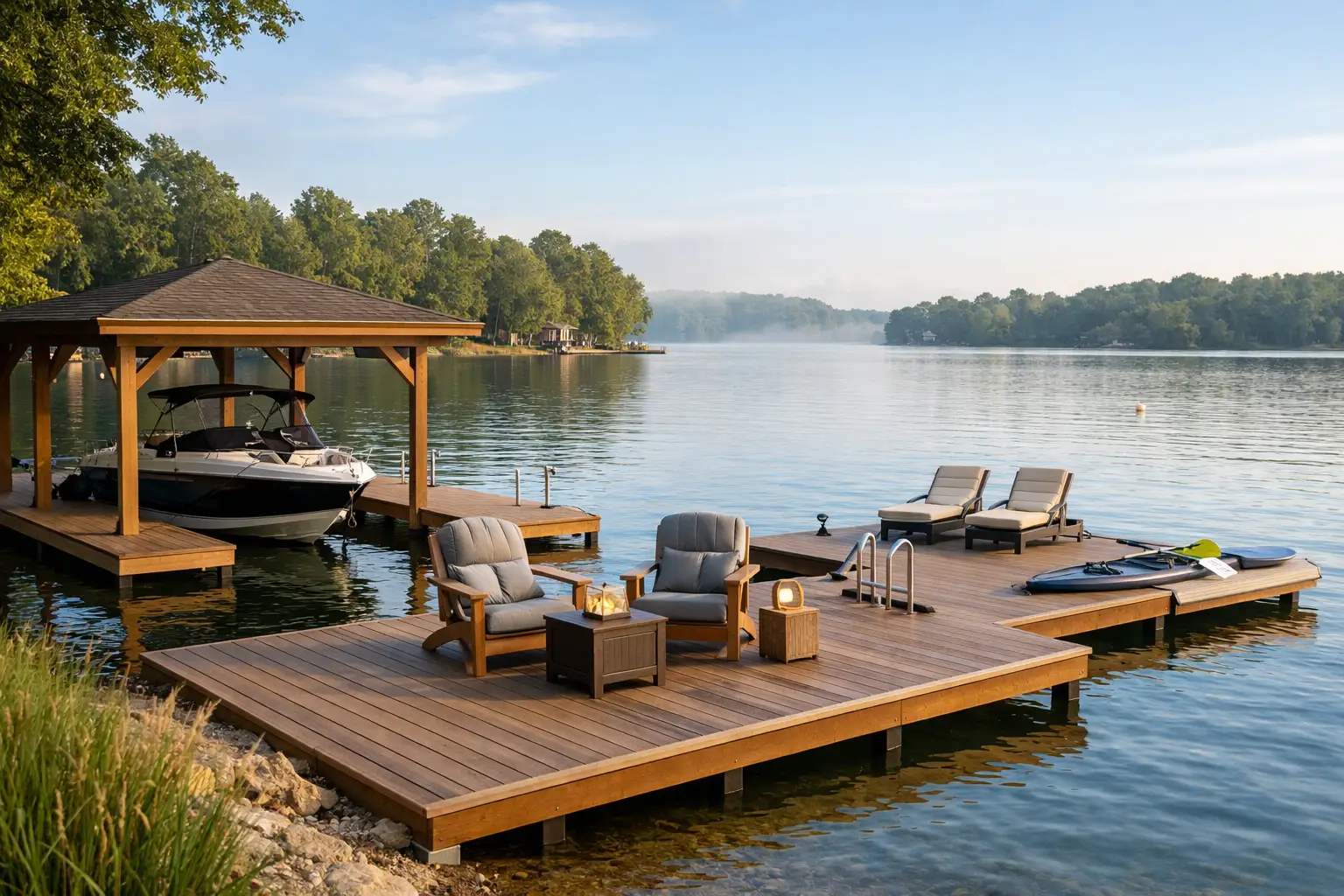
Many private lake owners want all of those uses. That is where modular dock systems earn their value. Instead of committing to one permanent shape, you can configure a main walkway with an L, T, or U-shaped end section, then add a boat port, personal watercraft port, kayak launch, or swim platform as needs change. A dock that serves a fishing boat today may need room for paddleboards and personal watercraft later.
Avoid designing around a single busy holiday weekend. Consider ordinary use as well: one person carrying a cooler, a child walking beside an adult, a guest unfamiliar with the property, or a boat arriving in a crosswind. Those everyday details often determine whether a dock feels useful or frustrating.
Read the Shoreline Before Choosing a Layout
Your shoreline sets the rules for access. A gradual bank, steep bluff, rocky edge, soft soil, and retaining wall each call for a different approach. The distance from the house to the water also affects the overall experience. A long walk to the dock may call for a floating walkway, a fixed approach, or a combination of both.
Water-level fluctuation is one of the most important design factors. A gangway provides the transition from shore to floating dock, but its length and slope need to work across the expected water range. A gangway that feels comfortable at full pool can become uncomfortably steep when the lake drops. In locations with significant fluctuation, a longer gangway may improve access, although it requires more shoreline space and planning.
Water depth deserves the same attention. Measure depths at the proposed dock location and along the route a boat will take to reach it, especially at typical low-water conditions. A dock can be perfectly placed for swimming but too shallow for a pontoon boat or wake boat. If low water is a recurring issue, moving the dock farther from shore or selecting a layout that reaches deeper water may be more practical than constantly relocating equipment.
Wind exposure is another factor that is easy to underestimate. An open shoreline can experience waves that make boarding difficult and place added stress on the dock, anchoring system, and vessels. A protected cove may allow a simpler layout, while an exposed main-lake location may need more deliberate orientation, stronger stabilization, and a protected boat slip configuration.
Choose a Dock Shape That Fits the Property
Straight docks are efficient for simple access and limited shoreline frontage. They work well for fishing, swimming, or reaching a single boat tie-up, but they provide less room to maneuver around a vessel.
An L-shaped layout creates a useful end space without requiring the footprint of a larger dock. It can offer a protected side for boarding and a separate area for fishing or swimming. T-shaped docks add more usable edge space and can support multiple activities at once, making them a strong choice for active family waterfronts.
A U-shaped dock can create a protected slip for a boat, particularly when the opening faces away from prevailing wind and wave action. It requires more space and a carefully planned anchoring approach, but it can make docking more comfortable for boat owners who use the lake frequently.
The goal is not to build the largest dock possible. Extra square footage can improve comfort, but it also affects budget, anchoring requirements, shoreline permitting, and long-term maintenance. A well-planned modular layout gives you enough room for the way you use the water without adding sections that serve no purpose.
Plan circulation, not just dock size
Think about how people move across the dock. Leave clear walking paths from shore to boat, from boat to swim area, and around corners. If a boat is tied alongside the dock, can someone still pass safely? Is there a place to set down gear without blocking the walkway? These questions matter more than a diagram that looks good from above.
For properties used by children, older adults, or guests, consider wider walking surfaces and handrails where they provide meaningful support. Railings improve security near gangways and elevated transitions, but they may not be ideal along every fishing edge. The right balance depends on who uses the dock and how they use it.
Build for Changing Conditions, Not a Perfect Day
A private lake dock must perform through heat, rain, sun exposure, changing water levels, boat wakes, and regular use. Material selection affects both safety and ownership effort. Modular polyethylene floating docks are designed to resist rot, splintering, and many of the maintenance demands associated with traditional wood structures. Their textured surfaces can also provide more reliable footing when wet.
Anchoring is what keeps a floating dock where it belongs. The appropriate system depends on water depth, bottom conditions, fluctuation range, exposure, and dock size. Cable systems, piling systems, stiff-arm anchoring, and other stabilization methods each have a place. Selecting one based on convenience rather than site conditions can lead to a dock that drifts, binds, or becomes difficult to access as the water changes.
This is one area where professional site evaluation pays off. A smaller protected stock pond may need a very different solution than a deep-water lake property exposed to wind and boat traffic. The dock itself is only part of the system. Gangways, anchors, connectors, shoreline transitions, and accessories must work together.
Add Features That Earn Their Space
Accessories should solve a real waterfront need. A boarding ladder makes swimming access easier. Dock lighting can improve visibility for early morning departures and evening returns. Cleats and bumpers protect the dock and simplify boat tie-up. A dock box keeps life jackets, lines, and fishing gear from cluttering the walking surface.
For paddling, a kayak or canoe launch can make entering and exiting the water far more stable than balancing from a dock edge. Personal watercraft ports keep PWCs out of the water when not in use and reduce the repeated effort of tying them off. Boat ports can provide a drive-on solution that helps protect a boat from prolonged water exposure.
Do not add accessories simply because they are available. A clean, open layout with the right two or three features is often safer and more useful than a crowded dock with every possible add-on.
Plan for Permits, Installation, and Future Changes
Before construction, verify the rules that apply to your property. Requirements can come from lake authorities, homeowners associations, municipalities, utility districts, or property covenants. They may address dock size, placement, materials, setbacks, lighting, and whether permits are required. On some lakes, the shoreline may be controlled separately from the adjacent home site.
It is also wise to plan for future expansion from the beginning. If you expect to add a second boat, purchase a personal watercraft, or create a more accessible fishing area, a modular system lets you make changes without replacing the entire dock. Planning connection points and anchoring capacity early can make those upgrades much simpler.
EZ Dock Texas helps property owners turn shoreline conditions and real-world use into customized floating dock solutions. With the right site information and a layout built around your priorities, your dock can remain a dependable part of the property through changing water levels, changing seasons, and changing ways of enjoying the lake.
A good dock should make the water feel closer, safer, and easier to use. Start with the shoreline you have, plan for the conditions it will face, and choose a system that can keep up with the life built around it.