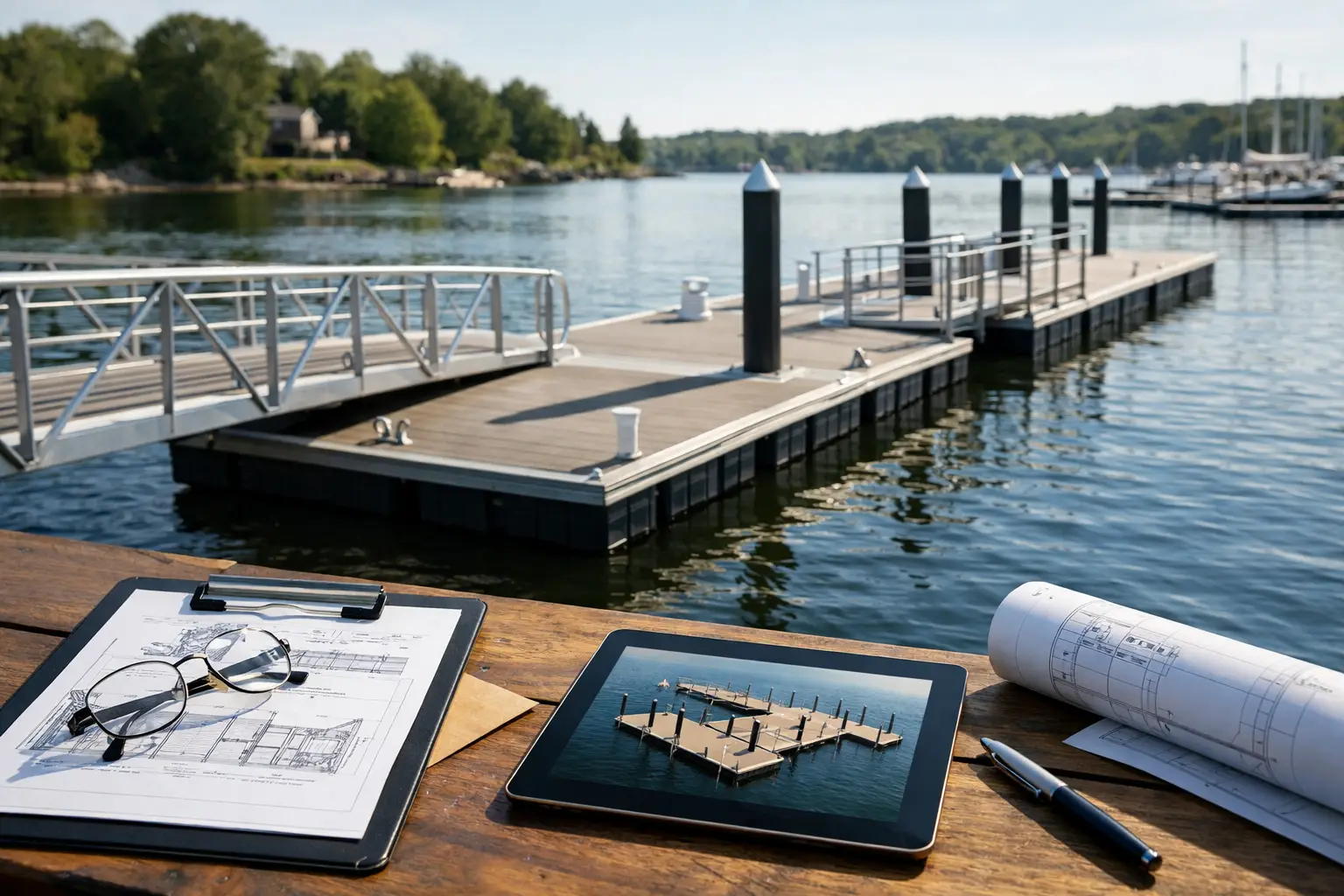
A public dock project can look straightforward on a site plan and become complicated the moment water levels move, public access requirements enter the conversation, or a vendor quote leaves out anchoring and installation. Effective public agency floating dock procurement starts by defining how the waterfront will be used and what conditions the system must handle over its service life.
For parks departments, municipalities, state agencies, schools, emergency response organizations, and public facility managers, the lowest initial quote is rarely the lowest ownership cost. A dock that fits the site, supports the intended users, and can be reconfigured as needs change is a better public investment than a system that creates ongoing maintenance and access problems.
Start With the Public Use Case
Before writing specifications, identify the job the dock must perform. A fishing pier extension, a paddlecraft launch, a transient boat dock, and an emergency-response landing may all be called “public access docks,” but they require different layouts, capacities, boarding conditions, and accessories.
Consider who will use the facility, how often it will be used, and what happens during peak demand. A city park may need a wide, durable platform that manages weekend fishing traffic. A university rowing program may need long, stable access along a launch line. A fire department may prioritize a clear approach, reliable tie-off points, and access for changing operational conditions. These details should shape the procurement package before vendors are asked to price a dock.
Water conditions deserve the same attention. Reservoirs across Texas, Oklahoma, Arkansas, and New Mexico can experience substantial elevation changes. Wind exposure, wakes, current, shoreline geometry, water depth, bottom conditions, and seasonal debris all affect the appropriate anchoring method and gangway design. A floating dock is only as dependable as the connection between the dock, the shore, and the waterbody.
Build Specifications Around Performance
A useful specification describes the performance the agency needs without unnecessarily limiting qualified solutions. Rather than copying a generic dock description, establish the functional requirements that a proposed system must meet.
For example, a procurement document can address flotation capacity, decking surface, freeboard, load requirements, connection strength, anchoring, gangway slope range, railing needs, and installation scope. It should also clarify whether the project includes site verification, freight, offloading, permitting support, final assembly, and staff orientation.
Modular floating dock systems can be especially practical for public facilities because sections can be expanded, rearranged, repaired, or repurposed as programming changes. That flexibility matters when a park adds kayak rentals, a marina needs more transient space, or a conservation area develops a new accessible water trail. It also reduces the risk of treating a changing waterfront as a one-time construction problem.
Specify the whole system, not just dock sections
Procurement packages often focus on deck size and overlook the components that determine safety and serviceability. A complete scope should account for four connected elements:
- Floating dock sections sized for the intended activity and expected traffic
- A shore connection or gangway designed for changing water elevations
- An anchoring system appropriate for depth, soil or lakebed conditions, wind, wake, and fluctuation
- Safety and access features such as railings, ladders, cleats, dock boxes, lighting, boarding areas, and launch equipment
Leaving these items open to interpretation can produce quotes that are difficult to compare. One bidder may include installation and engineered anchoring while another prices only floating sections. Clear scope language protects the agency from apparent savings that turn into change orders later.
Make Accessibility a Design Conversation Early
Public waterfront access should be considered early, not added as an afterthought. Accessibility requirements can affect gangway length, landing areas, transition details, railings, surface selection, and the usable route from parking or pathways to the water.
The right solution depends on the site and the activity. A gangway that works well at normal pool may become too steep during low water. A launch intended for kayaks and canoes may need a different transfer approach than a dock built for fishing or passenger boarding. Applicable federal, state, local, and facility-specific requirements should be reviewed with the agency, design team, and relevant authorities.
The practical goal is dependable, dignified access for the widest range of users the site can reasonably serve. That may require a longer gangway, an intermediate landing, specialized launch equipment, or a redesigned shore approach. Addressing these choices during planning is more economical than modifying a completed facility.
Choose a Purchasing Path That Fits Agency Rules
Public agencies need a procurement process that is defensible, transparent, and workable within their purchasing policies. Depending on the entity and jurisdiction, that may involve a formal bid, a request for proposals, an existing cooperative purchasing contract, or another authorized method.
Cooperative purchasing can reduce administrative effort when the product and installation scope align with an available contract. BuyBoard and Sourcewell are examples of cooperatives that may provide a compliant purchasing path for eligible agencies. The agency should still verify its authority to use the contract, confirm current contract terms, and make sure the scope includes the equipment and services needed for the project.
A formal competitive process may be the better fit when the site requires substantial custom design, civil work, specialized engineering, or unique installation conditions. In those cases, evaluation criteria should go beyond purchase price. Relevant waterfront experience, installation capability, schedule, warranty support, material quality, design responsiveness, and understanding of public access needs are all legitimate factors in determining best value when agency rules allow.
Evaluate Long-Term Value, Not Just Bid Price
Docks are exposed to sun, water, movement, impact, and constant public use. The agency’s evaluation should reflect the operating cost of that environment.
Ask how the dock material performs under UV exposure and whether the deck surface is easy to clean after mud, algae, fishing activity, or event use. Review how damaged components can be replaced, whether parts are readily available, and who will support the system after installation. American-made modular systems can offer an advantage when agencies need consistent product availability and long-term replacement options.
Maintenance planning is also a safety issue. Staff should know how to inspect connections, floats, anchor lines or piles, shore attachments, railings, and gangway hardware. A vendor should be able to explain what the agency can inspect routinely, what requires professional service, and how the system should be prepared for unusual weather or seasonal conditions.
The most durable configuration is not always the right one if it is oversized for the site or difficult for staff to manage. Conversely, a lighter-duty system may be a poor fit for a busy public launch or an exposed reservoir. The right answer depends on actual use, environmental forces, available maintenance resources, and the agency’s plans for the facility five or ten years from now.
Require Site Review Before Final Design
Aerial images and rough dimensions are useful for budgeting, but they are not enough for final dock design. Site review should confirm shoreline elevation, water depth, bank slope, access for delivery equipment, utility conflicts, bottom conditions, wind exposure, and the route users will take to reach the dock.
It is also the time to identify permitting responsibilities. Requirements vary by waterbody ownership, shoreline jurisdiction, navigation rules, environmental conditions, and the type of work proposed. The procurement documents should clearly state which party is responsible for permits, approvals, engineering, and coordination with the controlling authority.
EZ Dock Texas works with public and institutional customers to translate these site realities into a practical layout, including dock sections, gangways, anchoring, access features, delivery, and installation. That design support helps procurement teams compare complete solutions rather than disconnected equipment prices.
Create a Procurement Package Vendors Can Price Fairly
A strong request gives vendors enough information to propose a complete, comparable solution. Include available site drawings and photos, intended uses, expected traffic, water-level information, preferred installation window, required safety features, accessibility objectives, and any known permitting constraints.
Ask bidders to identify assumptions and exclusions in plain language. Require a line-item breakdown for equipment, anchoring, gangways, accessories, freight, installation, and optional items. This makes it easier to see whether a lower proposal is truly equivalent or simply incomplete.
Also request a proposed layout, product data, warranty information, installation approach, project schedule, maintenance guidance, and examples of comparable public or commercial waterfront work. The objective is not paperwork for its own sake. It is to confirm that the proposed dock will perform at the actual site and remain supportable after the project is accepted.
A public dock becomes part of the community’s daily experience of the water. Build the procurement around that responsibility, and the finished system can provide safer access, lower maintenance demands, and room to adapt as public use grows.