A shoreline may look inviting, but getting a kayak from land to water can be the most difficult part of the outing. Muddy banks, steep grades, riprap, shifting water levels, and crowded docks all create barriers before the paddle ever touches the lake. These 7 ways kayak launches make lake access easier show why a purpose-built launch can be a practical upgrade for lake homes, parks, marinas, campgrounds, and public waterfronts.
A good launch is not simply a place to tie off a kayak. It is an access point designed around the real movement of people, paddles, boats, and changing water. When it is connected to a properly designed floating dock system, it can create a safer, more reliable route to the water for everyday recreation and organized programs alike.
7 Ways Kayak Launches Improve Lake Access
1. They create a stable place to enter and exit
The transition from dock to kayak is where many paddlers feel unsteady, especially first-time users, children, older adults, and anyone managing a wider recreational kayak. A designated launch gives the user a controlled area to step down into the boat instead of balancing at the edge of a conventional dock or trying to launch from an uneven shore.
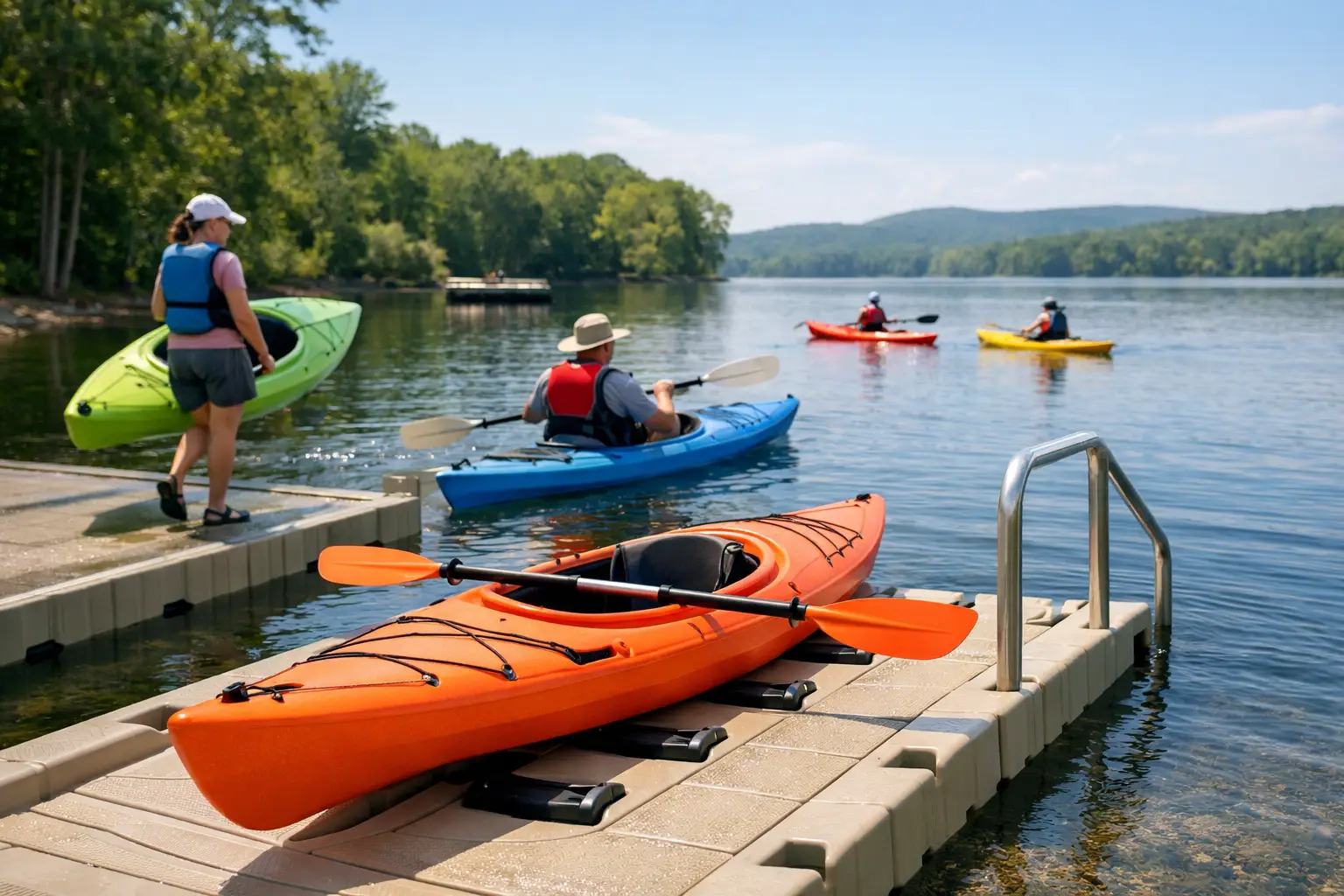
Many launch designs use a recessed or guided entry area that helps keep the kayak alongside the platform while the paddler gets seated. The result is less rocking, less awkward twisting, and fewer wet shoes before the trip begins. For facilities that welcome the public, this stable entry point can also reduce the confusion that happens when guests try to board from whatever open edge they can find.
2. They keep users off muddy, eroding shorelines
Repeated foot traffic and dragged boats can quickly wear down a natural bank. At private lakes and ranch ponds, that may mean a slippery launch spot after rain. At parks, campgrounds, and rental properties, the same traffic can create erosion that spreads beyond the original access point.
A floating kayak launch directs use to one durable location. Paddlers can carry or roll their boats down a defined path, board from the dock, and return without repeatedly climbing the shoreline. This protects the bank while making the waterfront easier to maintain. It also keeps the launch experience more consistent when conditions change from season to season.
3. They adjust with changing water levels
Water levels do not stay still, particularly on Texas, Oklahoma, Arkansas, and New Mexico reservoirs where seasonal weather patterns and water management can significantly change the distance between land and water. A fixed platform may sit too high above the water at one point in the year and become difficult to reach at another.
A properly anchored floating dock and kayak launch rise and fall with the lake. That helps maintain a more usable boarding height for kayaks, canoes, and paddleboards. The gangway, anchoring approach, and shoreline connection still need to be planned for the site, because extreme fluctuations and deep-water conditions require the right system design. But floating access gives property owners and facility managers far more adaptability than a fixed launch point.
4. They make shared docks more organized
On a busy waterfront, kayakers compete for space with fishing boats, pontoon boats, personal watercraft, swimmers, and dockside visitors. Launching a lightweight kayak from a boat slip or main boarding area can slow traffic and put paddlers near larger vessels where prop wash and movement are greater.
A dedicated launch gives paddlecraft their own zone. This is especially useful at marinas, resorts, parks, camps, and rental operations where guests may arrive at the water with different experience levels. By separating low-profile paddlecraft from motorized boat activity, a facility can keep the main dock clearer and give kayak users a calmer place to prepare.
The right placement depends on the property. A launch should be convenient enough that people will use it, yet positioned away from active boat lanes, fueling areas, and heavy wake. For some sites, a side connection off the primary dock works well. For others, a separate paddlecraft branch or floating boardwalk creates a better flow.
5. They support more inclusive recreation
Lake access should not depend on a person’s ability to climb down a rocky bank or lower themselves into a moving boat from a high dock. Kayak launches can make paddling more approachable for a wider range of users by providing handholds, stable surfaces, and a more predictable transfer area.
Accessibility needs vary, and no single product arrangement solves every mobility need. Public agencies and organizations may need to consider applicable accessibility requirements, user populations, supervision, and the type of watercraft being launched. Still, a thoughtfully configured launch is a meaningful starting point for making paddling programs more welcoming.
For schools, adaptive recreation programs, veterans’ groups, and parks departments, the launch should be considered as part of the full route to the water. Parking, pathways, gangways, railings, dock surface, and boarding area all work together. A strong waterfront design looks at the complete experience rather than treating the launch as an isolated accessory.
6. They simplify rental and group operations
Outfitters, camps, resorts, and municipal recreation departments need a launch process that is easy to explain and repeat. When staff have to guide every guest down a steep bank or manage boats from a crowded dock edge, turnaround times slow down and supervision demands increase.
A designated kayak launch creates a clear routine: bring the boat to the launch, place it in the entry area, board, paddle out, and return to the same location. That consistency is valuable when serving a large group, running a youth program, or managing a rental fleet on a busy weekend.
It also gives staff a logical place to stage boats. Nearby storage racks, dock boxes, paddle stations, and a designated return area can keep equipment from spreading across walkways. The best layout balances convenience with clear circulation so arriving guests, departing paddlers, and staff are not working in the same small space.
7. They add flexibility as waterfront needs change
A quality modular floating dock system can grow with the property. A homeowner may start with a simple kayak and canoe access point, then add fishing space, a swim platform, a personal watercraft port, or a boat slip later. A park may begin with a small public launch and expand its dock layout as programming, funding, or visitor demand grows.
That flexibility matters because waterfront needs rarely stay fixed. A family’s children grow, an HOA adds amenities, a marina adjusts its offerings, or a campground starts renting paddleboards. With modular components, the launch can be integrated into a larger layout without requiring the entire waterfront to be rebuilt.
Durability matters just as much as flexibility. The launch must withstand sun exposure, regular foot traffic, wet equipment, and the demands of the local water conditions. Low-maintenance, American-made floating dock components can provide long-term value when the system is correctly designed, installed, and anchored for the site.
Planning a Kayak Launch That Works for Your Property
Before selecting a launch, consider who will use it and how often. A quiet lake home with two recreational kayaks has different needs than a public park serving families, fishing groups, and organized paddling events. The expected number of users, water-depth changes, shoreline grade, exposure to wind and wake, available land access, and local permitting requirements should all influence the design.
The watercraft themselves matter, too. A launch intended for narrow touring kayaks may not suit wide fishing kayaks, tandem boats, canoes, or paddleboards without adjustments. If the facility expects users to bring their own equipment, plan for the variety that will actually show up rather than designing only around one boat type.
Installation details should not be an afterthought. Gangway slope, anchoring, dock orientation, and connection points affect the way a launch performs over time. Professional planning can help avoid a common problem: a launch that looks good on a site plan but is inconvenient, unstable, or difficult to reach under real lake conditions.
A well-planned kayak launch turns the waterfront from a place people admire into a place they can use with confidence. Whether the goal is an easier family paddle after dinner or dependable public access for an entire community, the right dock layout gives every trip a better start.