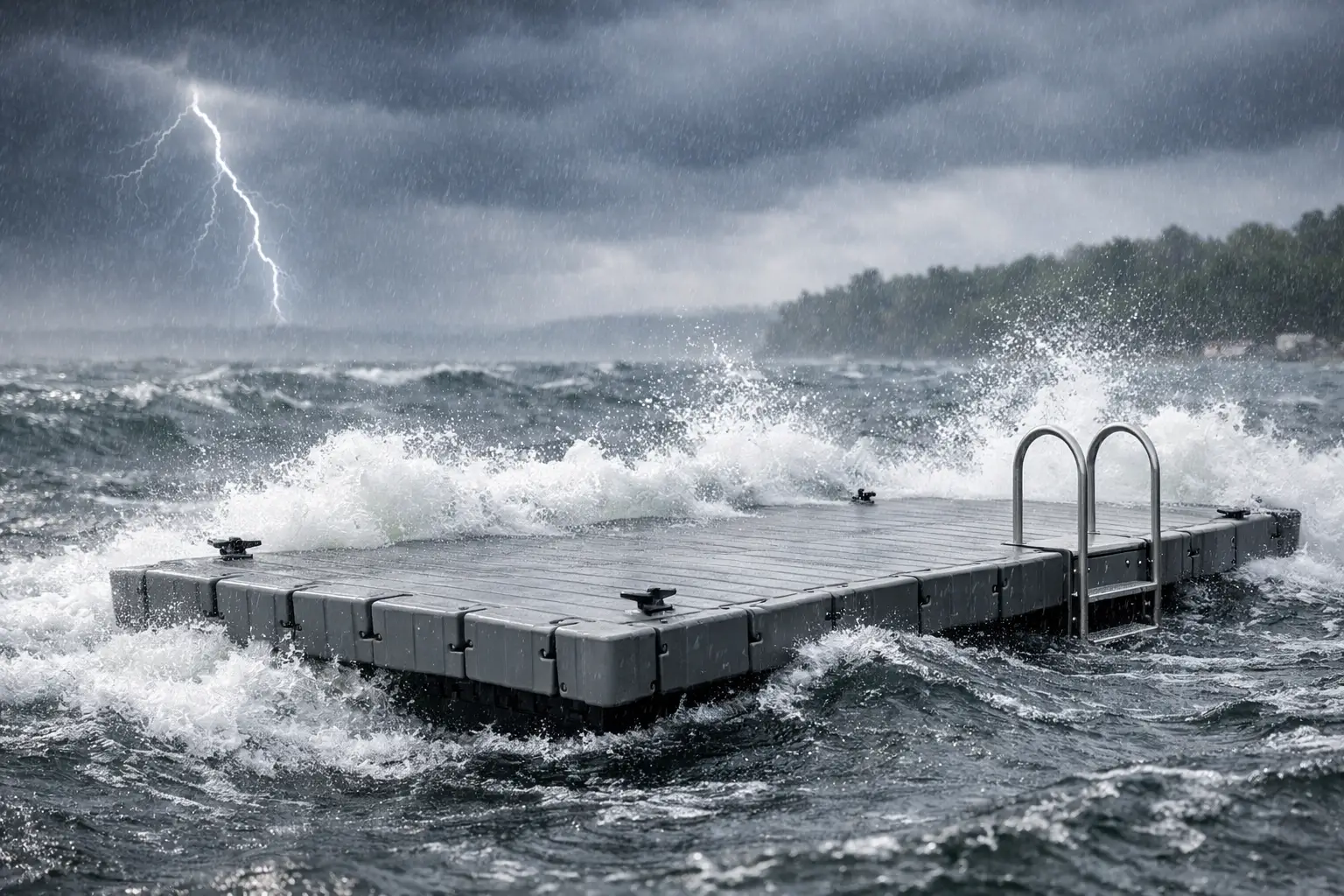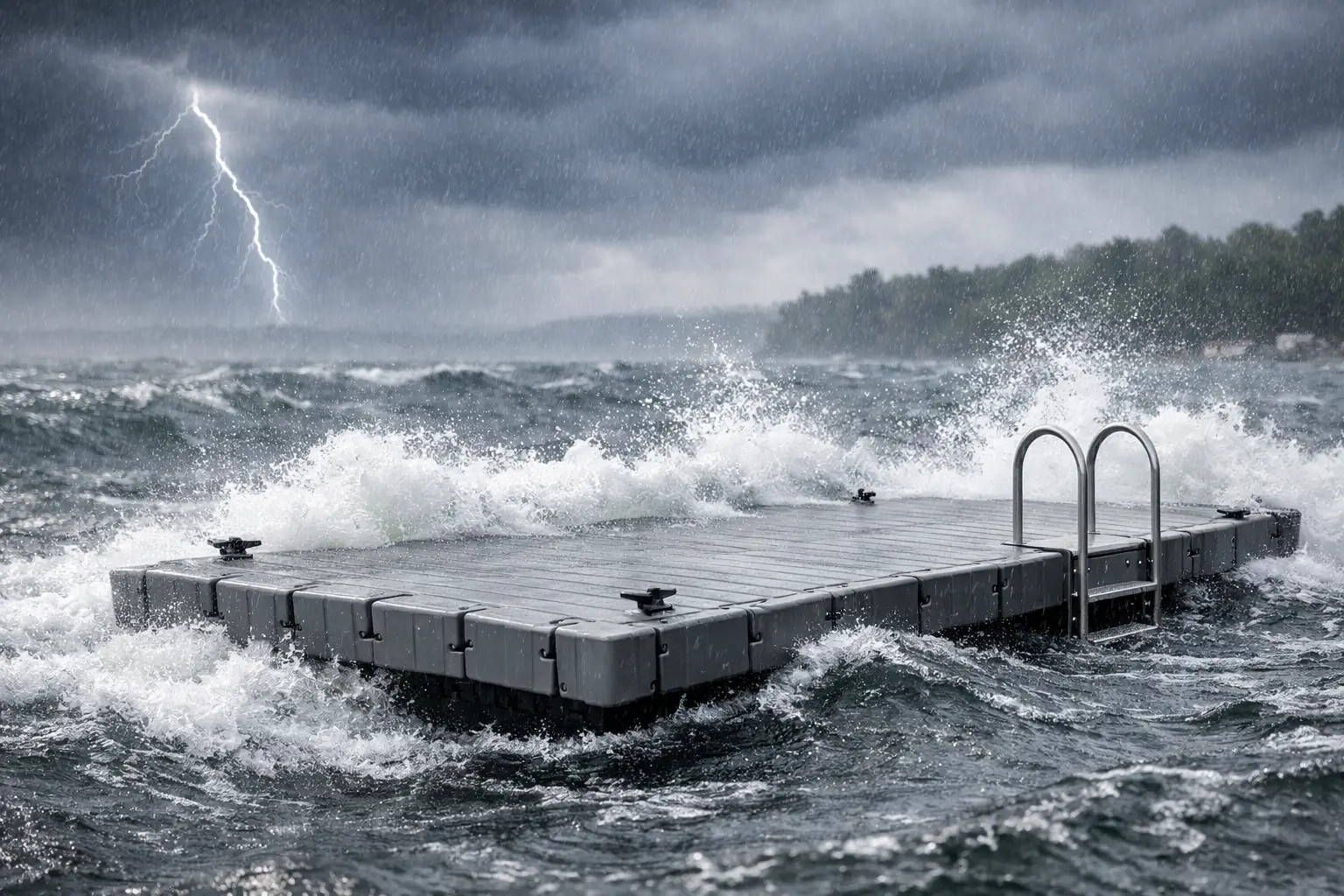
A dock can look perfectly secure on a calm afternoon and still be poorly prepared for the next high-wind storm. So, are floating docks storm resistant? A well-designed floating dock system can perform exceptionally well in rough conditions, but no dock should be described as storm-proof. Its performance depends on the dock structure, the anchoring method, water depth, shoreline conditions, exposure to wind and waves, and the owner’s preparation before severe weather arrives.
For lake homes, marinas, parks, and waterfront facilities across Texas and the surrounding region, the right question is not simply whether a dock floats. It is whether the entire system is designed to move predictably, stay connected, and avoid damaging forces when water and weather become unpredictable.
Are Floating Docks Storm Resistant by Design?
Floating docks have one meaningful advantage over fixed docks during changing water levels: they rise and fall with the water. That ability can reduce stress created by reservoirs that climb quickly after heavy rain or drop during dry conditions. A fixed dock may be left too high, too low, or partially submerged when water levels change dramatically. A floating system remains at the water’s surface, preserving access when it is properly connected to the shore and secured to the lakebed or shoreline.
That does not mean every floating dock is ready for every storm. High winds can push a dock sideways, create wave action that repeatedly loads connections, and pull against anchor points. Floating debris can strike the structure. Fast-moving water can introduce forces that are very different from the normal chop on a protected lake cove.
A storm-resistant dock is therefore a complete system, not just a collection of floating sections. The dock sections, couplers, gangway, hinges, anchor hardware, and shoreline connection all need to work together. If one part is undersized or installed for calm-water use only, it can become the weak point during severe weather.
Anchoring Is the Foundation of Storm Performance
The most durable dock surface will not compensate for inadequate anchoring. Anchors control how far a floating dock can move and how it responds to wind, waves, and changing water levels. The correct approach depends on the site.
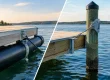
Pipe anchoring can work well in appropriate water depths and bottom conditions, allowing the dock to travel vertically as the water level changes while limiting horizontal movement. Cable or chain anchoring may be used where deeper water, fluctuating levels, or bottom conditions make pipe systems impractical. Shore-mounted hardware and properly designed gangways also matter because the landward end of the dock must accommodate movement without binding or transferring excessive force to the shoreline.
Anchor placement is just as important as anchor type. A dock exposed to prevailing winds may need a different layout and more deliberate anchoring than a dock tucked into a protected cove. Long, narrow walkways can experience more movement than compact layouts. A marina with multiple slips, a public kayak launch, or a floating boardwalk may require engineered planning that accounts for the load created across the entire system.
Water depth also changes the calculation. Anchoring that feels firm during normal pool may not provide the same restraint at a low-water elevation. On reservoirs with significant seasonal fluctuation, the system needs enough adjustment range to remain functional throughout the year, not only on installation day.
Materials and Connections Matter in High Winds
Storm resistance begins with dock components built for long-term waterfront use. Durable, low-maintenance polyethylene dock sections are not subject to rot, splintering, or the corrosion concerns that can affect some traditional dock materials. A stable, textured surface also helps provide safer footing after rain and wave splash.
Still, material strength is only part of the equation. Connections are where movement is concentrated. Quality couplers and connection hardware allow modular dock sections to move with waves while keeping the system aligned. That flexibility is valuable because a dock that is too rigid can transfer force into the wrong component. At the same time, connections must be inspected and maintained so normal movement does not become damaging play.
Modular design can be especially helpful after a storm. If a section or accessory is damaged by debris, a modular system may allow targeted repair or replacement rather than requiring a complete dock rebuild. It also makes it easier to reconfigure a layout when changing water conditions or a new boat lift, PWC port, or launch area changes how the waterfront is used.
Wind, Waves, and Fetch Change the Risk
Two docks on the same lake can face very different storm conditions. The key difference is often fetch – the open distance over water that wind has to build waves. A dock on a broad, wind-facing shoreline can receive much larger waves than one protected by a point, cove, breakwater, or natural shoreline.
A floating dock can ride over moderate wave action, but repeated wave impact increases stress on anchors, couplers, gangways, and accessories. High-profile items such as railings, signs, shade structures, and unsecured furniture can add wind load or become hazards. Boats tied to the dock can create another concern if lines are too short, too tight, or positioned in a way that allows the boat to strike the dock repeatedly.
Current is another consideration. Most lake docks are designed around wind and wave exposure, not high-flow river conditions or floodwater carrying debris. If a site can experience moving water, sudden releases, or significant flood flow, that should be addressed during design. A standard recreational configuration may not be suitable for those forces.
How to Prepare a Floating Dock Before a Storm
Storm preparation protects both the dock and the people who use it afterward. The exact steps depend on local conditions and the severity of the forecast, but a practical pre-storm check should include these actions:
- Inspect anchor lines, chains, pipes, brackets, and connection hardware for wear, looseness, corrosion, or damage.
- Remove loose chairs, storage items, fishing gear, portable accessories, and anything that could blow away or strike the dock.
- Check that boats and personal watercraft are secured according to the expected wind direction and water-level change, or move them to safer storage when appropriate.
- Confirm that the gangway can travel freely and that its shore attachment is secure without preventing the dock from rising or falling.
- Avoid walking on the dock during lightning, extreme winds, flooding, or conditions where waves are washing across the surface.
For commercial and public-access facilities, preparation should be part of an established operating plan. Staff should know who is responsible for inspections, when access should be closed, and how the system will be checked before reopening. This is particularly important for marinas, parks, camps, rental operations, and community docks where many users may not understand changing conditions.
What to Inspect After Severe Weather
Wait until conditions are safe, then inspect the dock from shore before stepping onto it. Look for shifted anchor positions, damaged couplers, bent hardware, cracked sections, debris caught beneath the dock, and changes to the shoreline connection. Check gangway alignment and confirm that railings, ladders, lighting, and ports remain securely attached.
Do not assume a dock is safe because it is still floating. A partly compromised anchor or connection can fail under the next normal wind event. If the dock has shifted significantly, the water level has changed beyond its planned range, or debris impact is visible, a professional assessment can prevent a smaller repair from becoming a larger replacement project.
EZ Dock Texas helps property owners and facilities plan dock layouts around the conditions that actually affect their waterfront, including fluctuating reservoirs, deep water, public access needs, and exposed shorelines. That site-specific approach is often the difference between a dock that merely looks good and one that remains dependable season after season.
A floating dock earns its value when the weather turns. Choose a system designed for your shoreline, anchor it for the full range of water conditions, and treat inspections as part of responsible waterfront ownership.