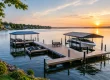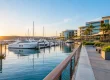
A marina dock has to do more than look good on opening day. It has to support daily traffic, accommodate different vessels, handle changing water levels, and remain practical for the staff who operate the facility. When a dock falls short, the effects show up in customer access, maintenance demands, and the way the entire marina functions.
EZ Dock Texas will be an exhibitor at the 54th Annual Marina Association of Texas Conference & Trade Show, October 19–21, 2026, at the Tremont House in Galveston. Exhibits are open October 20 and 21. If you are replacing aging docks, rethinking your slip layout, expanding capacity, or improving access to the water, we would welcome the chance to discuss your marina.
You do not need finished plans to have a useful conversation. Bring photos, rough measurements, an aerial view, or a description of the problems your team encounters during a busy weekend. The better we understand how your marina operates, the more productive that conversation can be.
Dock Design Starts With Marina Operations
A marina layout affects far more than the number of slips on a plan. Customers need a practical route from parking to their boats. Staff need room to work, reach moored vessels, and respond when something goes wrong. Boats need enough space to maneuver, while docks and access points need to remain usable as conditions change.
For some operators, the priority is replacing a dock that requires too much upkeep. For others, it is adding slips, improving circulation, creating a better place for rental customers to board, or making an existing waterfront easier to navigate. A marina may also need to complete improvements in phases so it can continue serving customers during construction.
Those operational goals should guide the design. Vessel sizes, anticipated traffic, shoreline grade, water depth, wind exposure, and seasonal changes can all influence the right configuration. So can future plans. If expansion is likely, it is worth discussing that possibility before choosing the main dock layout, connections, and access route.
At the show, tell us what works well at your facility and what does not. A successful upgrade should preserve the strengths of an existing marina while addressing the problems that slow down staff or frustrate customers.
Make Better Use of Your Waterfront
More dock space does not automatically create a better marina. The arrangement of slips, walkways, access points, and service areas determines how comfortably people and boats move through the property.
Consider what happens at your busiest times. Are customers trying to load coolers and gear along a narrow walkway? Is there enough space for staff carts? Do rental guests have a clear place to gather for instructions and board? Are certain slips difficult to reach or maneuver into? Does an existing dock configuration limit how the marina can grow?
Modular floating docks offer ways to configure a waterfront around those needs. A marina might begin by replacing a problem area, adding a section to serve a different vessel mix, or improving the connection between shore and an existing dock. Other projects may call for a broader redesign. In either case, the goal is a layout that works for the people using and operating it every day.
Accessories deserve attention during that planning process, too. Boat and personal watercraft ports, railings, ladders, dock boxes, and other features can affect how customers use the facility and how staff maintain it. It is easier to make those elements work together when they are considered as part of the layout instead of added after installation.
Account for Water Levels, Anchoring, and Access
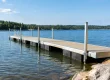
Texas marinas face different site conditions, but changing water levels are a familiar planning challenge for many operators. A floating dock can rise and fall with the water. Its gangway, anchoring, and shore connection must also be suited to the range of conditions the marina experiences.
Dock stabilization is one of the technical questions worth bringing to the show. Water depth, bottom conditions, exposure, water-level variation, and the size of the dock system can affect the appropriate approach. Guide piles, cables, stiff arms, and other methods each need to be considered in the context of the site. Choosing an anchoring approach before evaluating those conditions can lead to avoidable problems.
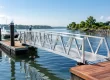
Gangway access calls for the same care. Its length, slope, width, surface, handrails, and transitions affect how customers and staff move between land and dock. An access route that feels comfortable at one water level may work very differently when the lake rises or falls.
If you have records of seasonal water changes, site photos taken at different levels, or notes about areas that become difficult to access, bring them. Those details can help move the discussion from general product options toward the conditions your marina needs to handle.
Consider Maintenance Alongside the Initial Investment
Marina operators have to think about the work that follows installation. Repairs, surface upkeep, and worn components take time from staff and can interfere with customers’ use of the facility. For an operator managing multiple slips and amenities, those recurring demands add up.
Dock materials have different ownership and maintenance considerations. Traditional wood structures may require ongoing attention to splintering, staining, fasteners, and weather-related wear. EZ Dock’s modular polyethylene systems offer a durable, low-maintenance option for waterfront facilities.
The right choice still depends on the marina’s site, use, and goals. An active marina basin presents different demands than a protected cove. A dock serving customers every day may need a different layout from one used mainly for seasonal rentals. We can discuss those differences, along with how an upgrade might be phased to limit disruption during your operating season.
Bring Your Next Project to the Show
The most productive conversations often begin with a specific challenge rather than a complete design. You might be looking at a section of dock that needs replacement, considering additional slips, or trying to improve the path customers take from shore to their boats. Even if the project is still early, those are good starting points.
If possible, bring an aerial image or simple sketch, approximate shoreline and dock dimensions, known water depths, and photos from several angles. Tell us how water levels change, what types of vessels you serve, where traffic builds up, and what your staff would change about the current setup. If you have a target timeline or need to keep certain areas open during construction, include that as well.
The Marina Association of Texas Conference & Trade Show is an opportunity to compare ideas with people who work in the marina industry every day. Stop by the EZ Dock Texas exhibit on October 20 or 21 in Galveston. We would be glad to hear about your facility, talk through your operating goals, and help you explore what a more useful waterfront layout could look like.