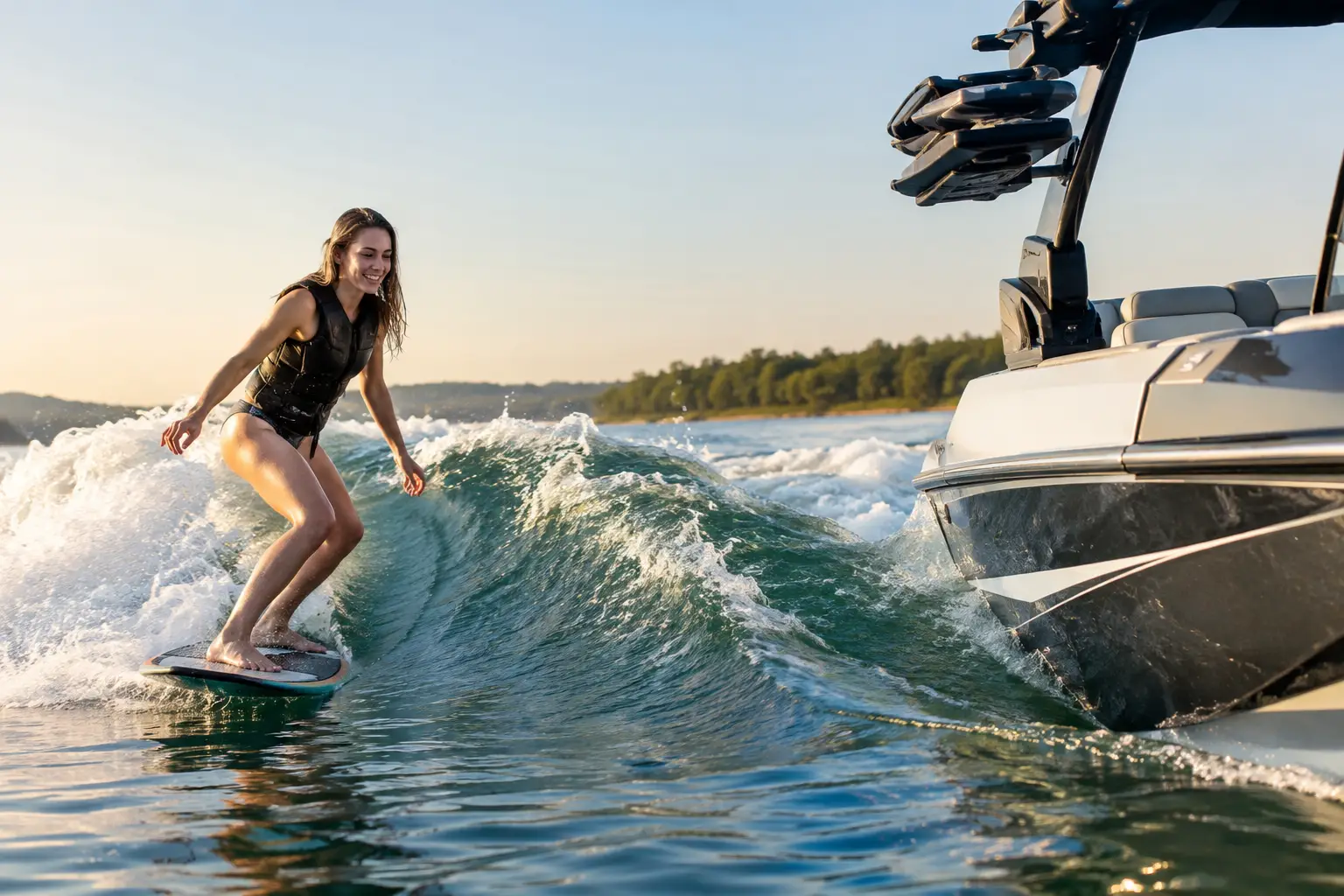
A wakesurf boat is built to move serious water, but leaving it in that water full-time can create expensive problems. The best boat ports for wakesurfing keep a large, heavy boat protected between sessions while making launch and recovery simple enough that the boat gets used more often. The right answer depends on your hull, loaded weight, shoreline conditions, dock layout, and how your lake level changes through the year.
For many lakefront owners, the question is not whether a boat port is worthwhile. It is whether the port will truly fit a modern wakesurf boat with a wide beam, deep hull, tower, racks, and ballast system – without turning every return to the dock into a careful maneuver.
Why wakesurf boats need a different kind of boat port
Wakesurf boats are not lightweight runabouts. Many models have substantial dry weights before fuel, gear, speakers, batteries, trailers, and ballast are considered. Their towers add height, their swim platforms extend aft, and their propellers, rudders, and tracking fins require protection below the waterline.
That combination changes how a boat port should be planned. A port sized only around a published boat length may leave too little clearance at the bow, stern, or sides. A system selected only by a dry-weight number may not provide an appropriate margin once real-world equipment is added. And a low-profile design may conflict with a tower or board racks before the boat ever reaches its stored position.
A well-designed port gives the boat a predictable place to land. It also helps reduce prolonged exposure to algae, staining, hull fouling, and floating debris. On reservoirs and lakes where water levels fluctuate, a floating dock and port system can maintain more consistent access than a fixed shoreline structure.
Start with the boat, not the port
The best selection process begins with accurate measurements and use habits. Measure the boat at its widest point, including rub rail and any protruding accessories. Record the actual overall length from the bow to the farthest point aft, which may include the swim platform or surf tabs. Measure height with the tower in its normal stored position, then account for racks, antennas, and lights.
Weight deserves the same attention. Use the manufacturer’s dry weight as a starting point, then add the capacity of the fuel tank, installed batteries, audio equipment, gear, and any accessories that stay on board. Ballast should usually be drained before storage, but the port design should reflect how the boat is actually operated, not an optimistic best-case number.
Clearance is not wasted space. Wakesurf boat owners need room to board passengers, load boards, manage dock lines, clean the boat, and move around the platform without rubbing gelcoat against the dock. At busy marinas, resorts, and shared HOA waterfronts, extra maneuvering room also helps less experienced operators return safely.
Consider the approach as carefully as the parking spot
A port can be properly sized and still be frustrating if the approach is too tight. Your boat needs enough open water to line up before entering, especially on a windy afternoon or when wakes from nearby traffic reach the shoreline.
The approach should account for prevailing wind, boat traffic, shoreline contours, and the turning radius of the boat. A straight-in approach is often easiest, but a side-entry or angled layout can make more sense at constrained waterfronts. The goal is a layout that feels natural when the driver is tired after a long day on the lake, not one that works only in calm conditions.
Floating boat ports versus traditional lifts
There is no universal winner between a floating boat port and a conventional lift. The best choice depends on the waterbody, the boat, available power, water-level movement, maintenance expectations, and budget.
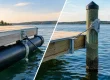
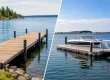
A floating port moves with the dock and water level. This can be especially valuable on Texas, Oklahoma, Arkansas, and New Mexico lakes where seasonal drawdowns, rain events, and reservoir operations can significantly change the distance between the shoreline and the water. Floating systems can also be configured as part of a larger modular dock, creating an integrated path from shore to boat.
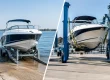
Traditional lifts suspend the boat above the water, which can provide excellent hull protection. However, they typically require a compatible mounting structure, regular mechanical inspection, and appropriate electrical planning where powered components are used. Depending on the setting, a fixed lift may also be less forgiving when water levels change substantially.
For either option, proper capacity, attachment details, and site-specific engineering matter more than the label on the system. A professional waterfront layout should account for the port and dock as one working system, including anchoring, gangway access, freeboard, utilities, and long-term service needs.
Features that matter most for wakesurf boats
When comparing boat port options, focus on the features that affect safe, repeatable daily use. A good system should support the boat’s actual size and weight, protect vulnerable running gear, and give the operator clear visual cues while entering and exiting.
Four details deserve special attention:
- Capacity with a realistic margin: The port, lift, hardware, and supporting dock structure should be selected for the boat’s equipped operating weight, not just its brochure weight.
- Hull and running-gear support: The support arrangement must suit the hull shape and keep the propeller, rudder, fins, and surf equipment protected from contact.
- Tower and overhead clearance: If the boat enters beneath a canopy or covered structure, confirm clearance at normal water levels and during high-water conditions.
- Walk-around access: Stable dock surfaces, adequate width, nonslip traction, and well-placed boarding access make loading people and equipment safer.
Avoid assuming every V-drive or surf boat can use the same support arrangement. Hull geometry varies by manufacturer and model. The placement of strakes, transducers, exhaust outlets, tabs, and underwater gear can affect how the boat should be supported. A port provider should work from the specific boat information rather than offering a one-size-fits-all estimate.
Plan for the water conditions you actually have
Wakesurfing often happens on open water exposed to wind, wave action, and changing lake conditions. That means the boat port cannot be considered separately from the dock anchoring and site layout.
A protected cove may allow a different configuration than an exposed point or a marina fairway. In rougher locations, the dock system needs enough stability and anchoring capacity to manage repeated motion without placing unnecessary stress on connections or equipment. On deep-water sites, the anchoring strategy may differ from the approach used along a gradual shoreline.
Water-level changes can affect gangway slope, shore connections, utility routing, and canopy clearance. A layout that looks ideal at one lake elevation may become awkward at another. This is why it is useful to discuss historic water movement, not simply the level on the day measurements are taken.
For public, commercial, and shared-use facilities, circulation is equally important. Guests, staff, rental customers, and emergency personnel need clear access along the dock. A boat port should not create a pinch point that makes the rest of the waterfront less safe or less accessible.
Build a dock layout around the whole day on the water
The best boat port is part of a complete waterfront plan. Think about where people will step onto the dock, where boards and life jackets will be stored, where fuel and shore power are managed if applicable, and how passengers move from parking or the house to the boat.
A modular floating dock layout can create dedicated areas for boarding, swimming, kayaking, fishing, or personal watercraft without forcing every activity into the same narrow slip. For families and high-use properties, that separation helps protect the boat while making the dock more enjoyable for everyone else.
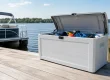
Accessories also matter. Ladders should be placed where swimmers can reach them easily without entering a boat berth. Dock boxes can keep ropes, vests, and surf gear off walking surfaces. Lighting can improve visibility for evening returns, while railings may be appropriate on access routes where additional support is needed. These details are small individually, but they influence whether a waterfront feels organized or improvised.
Do not overlook installation and seasonal service
A high-quality port can underperform if it is installed on an unstable dock or anchored for the wrong conditions. Installation should address the dock’s flotation, connection points, load distribution, anchoring, and access from shore. If the project includes a gangway, its angle and landing points should be evaluated across expected water levels.
Owners should also establish a simple operating routine. Drain ballast before storing the boat, secure lines appropriately, remove loose gear before storms, and inspect the port, dock connections, and anchoring after severe weather or unusual water-level movement. Routine attention helps identify small issues before they become downtime during boating season.
For a new lake home, marina upgrade, or shared waterfront project, a customized design consultation can prevent the most common mistake: buying a port first and trying to make the rest of the dock work around it. EZ Dock Texas helps property owners and facilities plan floating systems around real boats, real shorelines, and long-term use.
A wakesurf boat should be easy to launch, easy to return, and protected when the lake day is over. Start with accurate boat information and the conditions at your waterfront, then choose a port and dock layout built for the way you will actually use both.