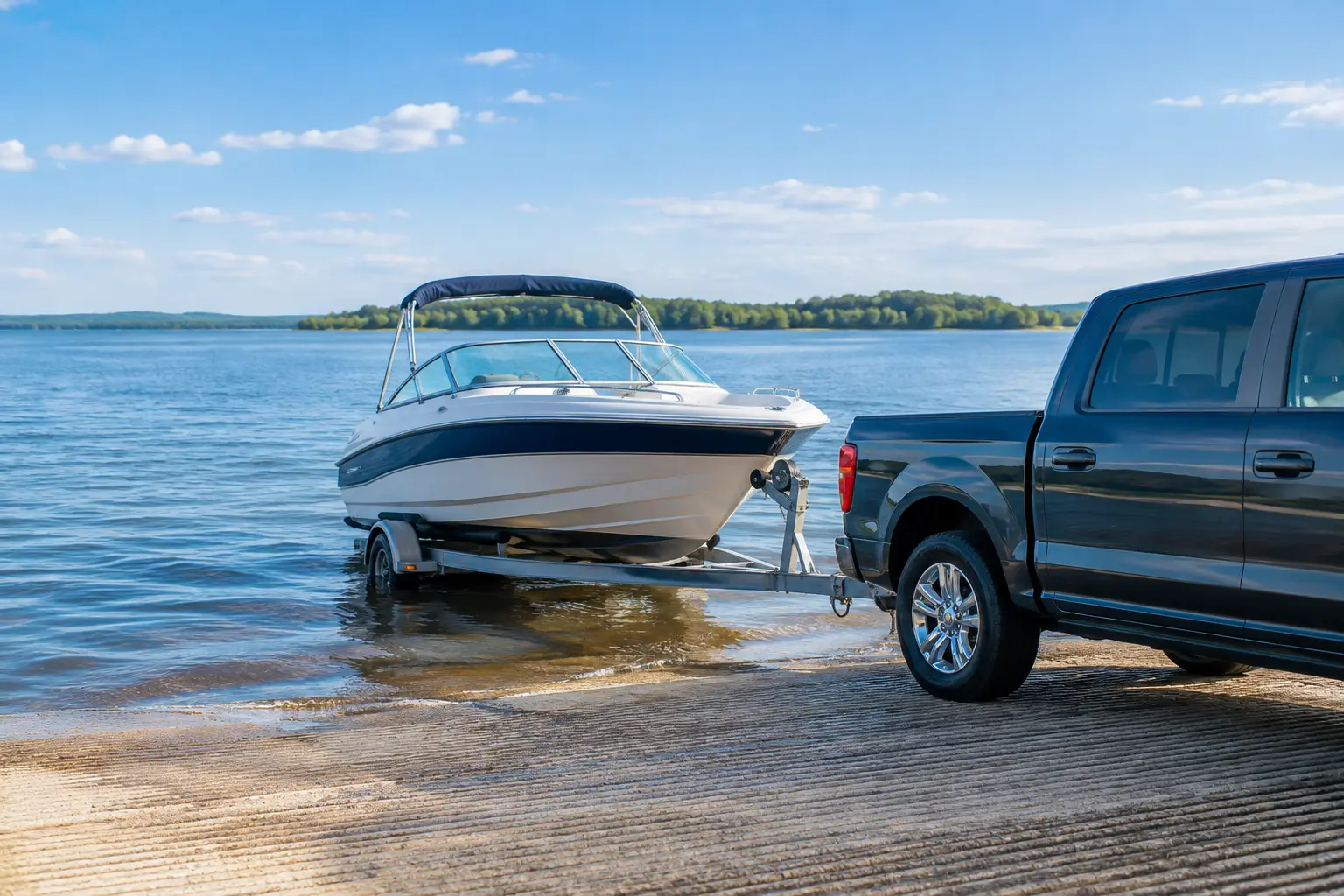
A crowded Saturday at the lake can expose every weakness in a boat ramp. A slope that is too shallow leaves trailers struggling for depth. A slick surface turns a routine launch into a safety problem. Poor traffic flow backs vehicles into the road and frustrates everyone waiting their turn. This boat ramp guide helps property owners, park managers, marina operators, and public agencies plan for safer, more dependable access to the water.
A boat ramp is not a standalone slab of concrete. It is part of a complete waterfront access system that includes the approach, launch lane, boarding area, dock connection, parking, drainage, and water-level strategy. When those elements work together, launching feels orderly. When they do not, even a well-built ramp can become difficult to use.
Start With How the Boat Ramp Will Be Used
The right ramp begins with real-world use, not a standard drawing. A private ranch pond used by one fishing boat has different needs than a public park serving bass boats, pontoons, kayaks, emergency vessels, and trailers throughout the weekend. A marina may need a service ramp for occasional hauling, while a municipal facility may need multiple lanes and durable boarding access for heavy daily traffic.
Consider the vessel types, trailer lengths, expected traffic, and frequency of use. Also look at who will use the facility. Families, older boaters, first-time visitors, anglers carrying gear, and staff operating maintenance equipment all benefit from clear circulation and stable places to board.
Water-level changes matter just as much. Reservoirs throughout Texas, Oklahoma, Arkansas, and New Mexico can rise or fall significantly with weather, release schedules, and seasonal demand. A ramp that works at one elevation may become too short, too steep, or disconnected from the shoreline at another. Planning for the expected operating range protects the investment and reduces future modifications.
Boat Ramp Guide: Key Design Decisions
Ramp slope and length
Ramp slope affects traction, launching depth, and driver confidence. A steeper ramp can reach deeper water in less distance, but it may be harder to use when wet and can make trailer control more challenging. A shallower ramp often provides a more gradual transition, but it requires additional length and may not reach usable water during low levels.
There is no single slope that fits every shoreline. Grade, soil conditions, wave action, vessel size, and seasonal water variation all affect the decision. The best approach is to evaluate the site rather than forcing a generic ramp layout onto it.
Length deserves the same attention. The usable end of the ramp should remain accessible at anticipated low-water conditions, while the upper end needs a smooth transition to the approach road. Extending a ramp later can be expensive if grades, permits, shoreline stabilization, or underwater conditions were not considered early.
Surface traction and durability
Boat ramps spend their lives wet, exposed to sun, and subjected to vehicle loads. Surface material must provide dependable traction while holding up to repeated launching, braking, turning, and water exposure. Textured concrete is a common choice because it offers a durable, familiar driving surface. In certain applications, precast sections, pavers, or other engineered systems may be appropriate.
The best material depends on the site and use level. A heavily used public launch demands a different level of engineering than a low-volume private ramp. Regardless of material, avoid a finish that becomes slick with algae, silt, or standing water. Drainage and routine cleaning have as much to do with traction as the original surface selection.
Width, lanes, and traffic flow
A single-lane ramp can work well for private use or light traffic. At busy public locations, however, one slow launch can create a long line. Multiple lanes may improve throughput, but only if the parking lot, staging area, and boarding docks can support them.
Think through the entire arrival sequence. Drivers need room to prepare boats before they reach the ramp, maneuver trailers without blocking other vehicles, and exit without crossing incoming traffic. Signage should be simple and visible. Marked lanes, directional arrows, designated staging areas, and separate pedestrian routes reduce confusion when the facility is busiest.
Connect the Ramp to a Safe Boarding Area
Launching a boat is only half the job. Once the trailer is in the water, passengers need a stable place to wait, board, unload gear, or tie off temporarily. That is where a floating dock system can add practical value.
A fixed dock beside a ramp may be usable at one water level but awkward or inaccessible at another. A floating dock rises and falls with the water, helping preserve a more consistent boarding height. A properly selected gangway provides the transition between shore and dock, while an anchoring system helps keep the dock positioned where it is needed.
The layout should keep people out of trailer lanes whenever possible. A boarding dock located beside, not inside, the launch path gives boaters a place to handle lines and passengers without stopping ramp traffic. For public facilities, durable railings, lighting, ladders, and edge protection can further improve safety and usability.
Accessibility should be considered from the beginning. That may include a gangway grade appropriate to changing water conditions, railings where needed, stable deck surfaces, and clear paths from parking to the waterfront. Requirements vary by project and ownership type, so public agencies and commercial operators should involve the appropriate design, engineering, and permitting professionals early.
Protect the Shoreline and the Investment
A ramp concentrates traffic and water movement in one location. Without proper site planning, runoff can erode the approach, sediment can collect at the launch point, and wave action can undermine shoreline edges. These conditions do not just affect appearance. They reduce ramp depth, create hazards, and increase maintenance costs.
Good drainage moves water away from the ramp approach rather than channeling it down the launching surface. Shoreline stabilization may be needed along the sides of the ramp and near the dock connection. The ramp toe, or underwater end, should be designed to reduce abrupt drop-offs that can catch trailer wheels or create unstable footing.
For low-water sites, plan how users will identify the end of the ramp. Markers, reflectors, or other visible cues can prevent drivers from backing too far. For sites exposed to wind and wakes, consider how wave action affects both the ramp and the adjacent floating system. A dock layout that is ideal in calm water may need additional protection or a different anchoring approach on an open shoreline.
Plan for Operations, Not Just Opening Day
A dependable boat ramp needs an operating plan. That includes inspection schedules, debris removal, algae management, lighting checks, and periodic review of signs, striping, and hardware. Public and commercial facilities should also establish procedures for high-use weekends, emergency access, and temporary closures during hazardous water conditions.
Seasonal changes deserve attention. After storms or significant water-level shifts, inspect the ramp surface, shoreline, dock connections, gangway, and anchors. Look for settlement, cracking, washout, exposed edges, loose hardware, or sediment buildup. Addressing a small issue early is usually far less disruptive than closing a launch area for major repairs.
Private owners benefit from the same discipline. A ramp used only a few times each month can still become slippery, damaged, or partially blocked by storm debris. Keep the launch path clear, confirm that lights and railings remain secure, and make sure the dock connection is appropriate for the current water level before guests arrive.
When a Custom Waterfront Layout Makes Sense
Standard ramp concepts are useful starting points, but difficult shorelines often need a custom solution. Steep banks, soft soils, fluctuating reservoirs, restricted access, commercial traffic, and multiple recreation uses can all change the design. A facility may need a ramp, a floating boarding dock, kayak access, fishing space, personal watercraft ports, and a pedestrian boardwalk within the same shoreline footprint.
That is where early coordination saves time. A waterfront specialist can evaluate the site conditions, intended use, access needs, and equipment options before construction begins. EZ Dock Texas works with homeowners, marinas, parks, municipalities, and other waterfront operators to configure durable floating access systems that complement the ramp rather than compete with it.
A well-planned boat ramp should make launching feel routine, even when water levels change and the shoreline is busy. Start with the way people actually use the site, build for the conditions you expect over time, and give every boater a stable path from vehicle to water.