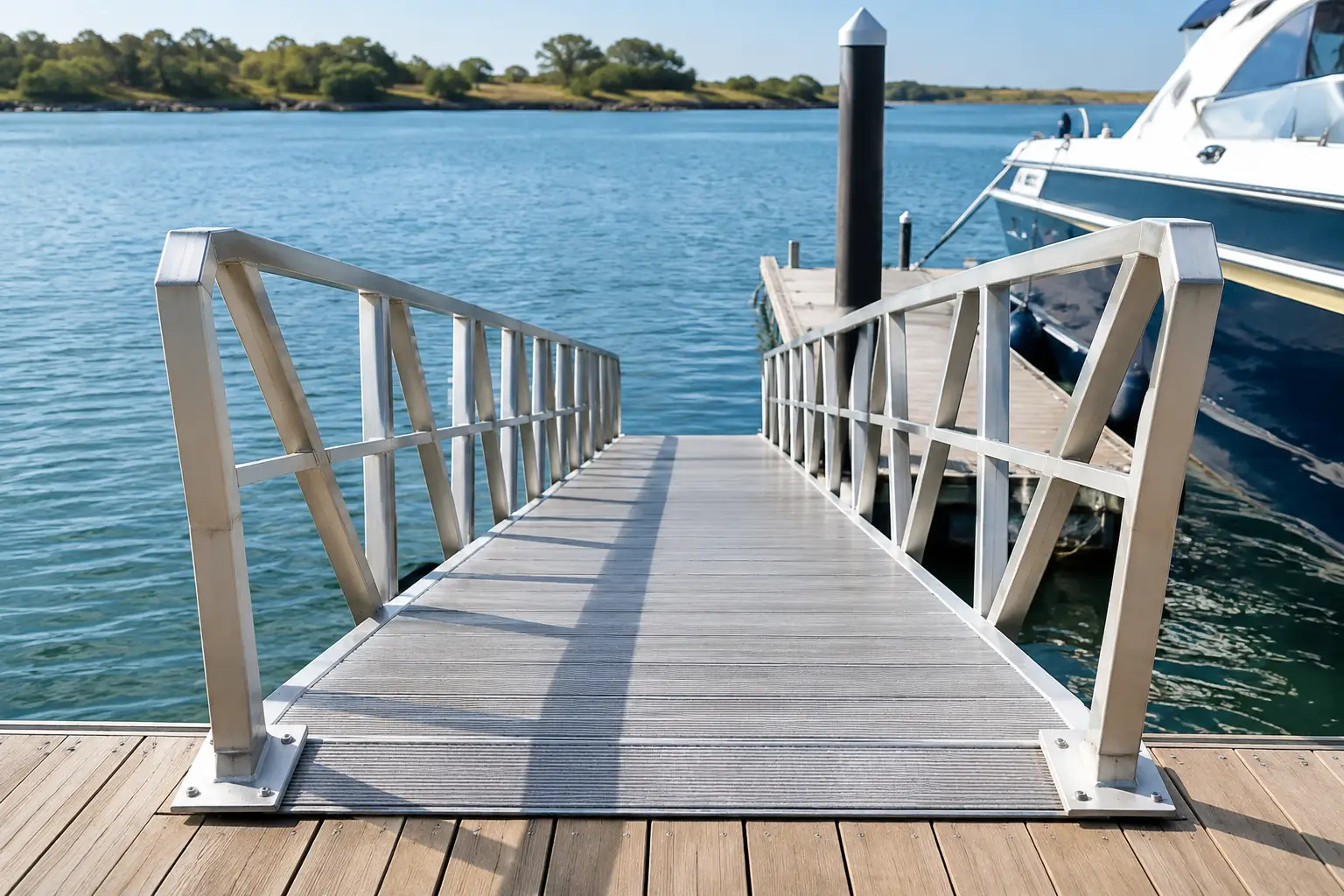
A gangway can be the one part of a dock system that every visitor uses – and the part that changes most with water levels. So, do dock gangways need handrails? Often, yes. But whether they are legally required depends on the site, the users, the gangway design, and the rules enforced by the local authority with jurisdiction.
For a private lake dock, a handrail may be a smart safety upgrade rather than a universal requirement. For a marina, public park, resort, ADA-accessible route, or commercial waterfront facility, railings may be required by building, accessibility, or local regulations. The right answer starts with how people will use the access route, not simply how the dock looks on installation day.
Why Gangway Handrails Matter
A floating dock rises and falls with the water. That movement is one of its greatest advantages, particularly on Texas reservoirs and other waterways with changing levels. It also means the gangway slope can change significantly from one season to the next.
As the shoreline-to-dock elevation difference increases, the gangway becomes steeper. A surface that feels easy to walk on at normal water level can be more challenging during a drawdown, after heavy weather, or when someone is carrying fishing gear, coolers, paddles, or supplies. Handrails give users a stable point of contact when footing is less certain.
They are especially valuable for children, older adults, guests unfamiliar with the property, and people with limited balance or mobility. On public and commercial docks, they also help establish a clear, more controlled pedestrian route. A rail is not a substitute for a properly designed gangway, non-slip decking, or sound anchoring, but it is an effective layer of protection.
When Do Dock Gangways Need Handrails by Code?
There is no single nationwide rule that applies to every dock gangway. Requirements can vary based on whether the dock is private or public, whether it serves a commercial operation, the project’s permit conditions, local building rules, and the standards adopted by the governing agency.
In general, handrails are more likely to be required when a gangway is part of a public access route, serves a marina or business, or is designed as an accessible path to the water. Projects involving municipalities, parks, schools, campgrounds, public boat access, or government facilities may have more specific design and accessibility requirements than a residential dock.
Accessibility standards may affect far more than railings. Gangway width, slope, landings, edge protection, transition plates, surface condition, and changes in elevation can all matter. Because floating systems move with the water, accessible dock design requires careful planning from the beginning. Adding a railing later may improve safety, but it does not automatically make a route compliant.
Private property owners should not assume that a residential project is exempt from every requirement. Shoreline permits, homeowner association standards, lake management rules, and local regulations may still apply. Before selecting a gangway or rail system, confirm requirements with the relevant permitting authority and discuss the intended use with a qualified dock design professional.
Private Docks: A Practical Safety Decision
For many private lake homes, ranches, and stock ponds, the question is less about minimum code and more about practical risk. A handrail deserves serious consideration when the gangway is long, regularly steep, exposed to waves, or used by a wide range of family members and guests.
It is also a good investment when the dock supports frequent activity. A quiet fishing dock used by one experienced owner has different needs than a family dock serving swimmers, boaters, kayakers, paddleboarders, and weekend visitors. If people routinely carry equipment across the gangway, they may not have a free hand available to steady themselves against a rail on both sides. That is one reason rail placement and gangway width should be evaluated together.
There are trade-offs. Railings can add cost, visual presence, and wind exposure. On narrow gangways, poorly planned rails can make it harder to move bulky gear or navigate with a cart. The best solution is not always the most railing. It is the configuration that maintains clear passage while protecting the people who will use the dock most often.
Public, Commercial, and Shared Waterfronts
For marinas, resorts, HOAs, RV parks, public parks, fishing piers, and rental operations, handrails are usually part of a larger risk-management and user-experience conversation. These properties welcome people with different ages, abilities, experience levels, and expectations. The dock access route should be intuitive, secure, and appropriate for frequent use.
A marina gangway, for example, may see customers hauling bags, crews handling supplies, and guests moving to and from boats in wet or windy conditions. A park dock may be used by school groups, anglers, paddlers, and visitors who have never walked on a floating surface. In those settings, railings can make access feel more secure while reducing the chance that an awkward transition becomes an incident.
Facility managers should also think beyond the main gangway. Railings may be appropriate near shore connections, changes in direction, boarding areas, floating boardwalks, kayak launches, and areas where users wait or queue. The design should support the operation rather than create pinch points or interfere with docking, rescue access, maintenance, and seasonal adjustments.
Handrails, Guardrails, and Edge Protection Are Different
These terms are sometimes used interchangeably, but they serve different purposes. A handrail is intended to be grasped for support while walking. A guardrail is intended to help prevent falls from an elevated edge. Edge protection may help keep wheels, feet, or mobility devices from slipping off the side of a route.
A dock gangway may need one, two, or a combination of these features depending on its use and applicable requirements. For instance, a rail at graspable height may help a person maintain balance, while a separate protective element may be needed to address a fall hazard at the edge. The appropriate design depends on the actual condition, not a one-size-fits-all accessory package.
This distinction matters because a decorative side rail may look finished without providing the support, spacing, strength, or protection the application requires. If safety or compliance is a concern, specify the system based on the project requirements rather than appearance alone.
Design Details That Affect Safety
A railing works best as part of a complete access system. Gangway length is one of the biggest factors. A longer gangway can reduce slope changes as water rises and falls, creating a more comfortable approach to the floating dock. It takes more shoreline space and investment, but it can make daily use substantially easier.
Surface traction matters just as much. Wet shoes, mud, algae, rain, and spray can turn an otherwise stable walkway into a slipping hazard. Choose a gangway surface designed for marine use and establish a routine for cleaning and inspection. Check connections, fasteners, rail attachments, transition plates, flotation, and anchoring on a regular schedule.
Lighting also deserves attention. Many waterfront injuries happen when people are returning from the water near dusk or after dark. Well-placed dock lighting can define the route without creating glare on the water. At larger facilities, consistent lighting and visible edges help visitors understand where to walk before they step onto the gangway.
Finally, plan for changing conditions. Wind, wakes, drought, flood conditions, shoreline erosion, and seasonal water-level shifts can alter how a gangway performs. A design that accounts for those conditions from the start will be safer and easier to own over the long term.
A Better Way to Choose the Right Rail System
Start by identifying who uses the dock, how often they use it, and what they carry. Then consider the highest and lowest anticipated water levels, the slope the gangway will reach, and whether the project serves the public or must meet accessibility requirements.
For a simple private dock, that discussion may point to a practical rail on one or both sides of a properly sized gangway. For a public or commercial project, it may lead to a more detailed review of code requirements, clear width, landing areas, edge protection, and operational needs. A custom layout is usually more effective than adding rails after the rest of the dock has already been selected.
EZ Dock Texas helps property owners, marinas, parks, and public agencies plan complete waterfront access systems that fit the site, the water conditions, and the people who will use them. A gangway should do more than connect shore to dock. It should give every user a confident first step toward the water.