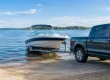
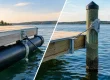
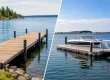
A good swimming area should not require balancing on a narrow dock edge, climbing over a boat, or searching for a safe way back out of the water. Swim platforms give waterfront properties a dedicated place to enter, relax, supervise children, launch a paddleboard, and return from the water with confidence. For lake homes, campgrounds, parks, marinas, and community waterfronts, they can turn unused water space into one of the most active parts of the property.
The best platform is not simply the largest one that fits. It needs to suit the shoreline, typical water conditions, intended users, and the way the rest of the dock system works. A thoughtful floating layout can provide a more stable, lower-maintenance solution than a fixed structure while allowing the platform to rise and fall with changing water levels.
What Swim Platforms Add to a Waterfront
A swim platform is a dedicated floating surface designed to support swimming, watersports, and water-level recreation. It may stand alone, connect to a main dock, extend from a boat slip, or become part of a larger modular dock layout. Unlike a small boarding ladder attached to a dock, a platform gives users room to gather, move around, dry off, and safely prepare to get in or out of the water.
For homeowners, that often means keeping swimmers away from areas where boats, personal watercraft, and fishing gear are moving. A platform can create a clear recreation zone just off the main dock, with a ladder positioned for easy re-entry and enough deck space for towels, life jackets, and adults supervising children.
For commercial and public properties, the value is often operational as well as recreational. Resorts, camps, municipal parks, and waterfront rental operations can use floating platforms to organize activity areas and direct traffic away from launch lanes or boat slips. The right design makes expectations clearer: this is where guests swim, this is where paddlers launch, and this is where vessels load and unload.
Floating Platforms Work With Changing Water Levels
Across Texas and neighboring states, water levels can shift substantially through seasonal weather, reservoir operations, and storm events. A fixed platform may sit too high above the water at one level and become inaccessible at another. Floating systems rise and fall with the water, helping maintain a more consistent step from deck to water and from water back onto the platform.
That does not mean every floating platform feels or performs the same. Stability depends on the platform’s overall size, flotation, connection points, load distribution, anchoring method, and exposure to wind and boat wake. A small platform can work well for a private swim ladder and a couple of loungers. A larger platform used by groups, rental guests, or camp participants needs more deliberate planning.
Modular floating dock systems are especially useful because the layout can change over time. A homeowner might begin with a simple swim extension and later add a kayak launch, a personal watercraft port, or a wider walkway. A campground may need a seasonal swimming area now but a different event layout later. The ability to reconfigure sections helps protect the original investment as waterfront needs change.
Start With How People Will Use the Platform
The first design question is not color, accessory package, or even footprint. It is what people will actually do there. A quiet lakefront home, a busy HOA waterfront, and a youth camp may all need swim platforms, but their layouts should not look alike.
A residential platform may be designed around family swimming, lounging, and paddleboard access. In that case, easy water entry, a clear connection to the main dock, and a location away from boat propellers are usually the priorities. If the property frequently hosts larger groups, a wider deck area and more than one exit point may make sense.
At a marina or resort, the platform may need to keep swimmers separated from vessel traffic while remaining visible from shore or from staff areas. Parks and public facilities may also need to consider accessible routes, durable railings where appropriate, controlled entry points, and the wear that comes with frequent public use. The goal is not to add every possible feature. It is to create a layout that supports safe, predictable use.
Size and shape affect more than capacity
A rectangular platform is often the most efficient starting point, but a straight rectangle is not always the best answer. An L-shaped configuration can create a protected swimming pocket. A wider end section can provide gathering space without making the entire access dock oversized. A separate floating island may be appropriate where users need a destination away from the shore-connected dock, provided anchoring, supervision, and local conditions support that use.
Leave enough room for people to pass without walking through a cluster of bags, coolers, and life jackets. On high-use platforms, circulation matters. A layout that looks generous on paper can feel crowded when several people are preparing to enter the water at once.
Water depth deserves a site-specific review
A swim platform should be placed where water depth supports its intended activity. Swimming, floating, and ladder entry have different requirements from diving. Never assume a platform is suitable for diving because the water appears deep from the surface. Bottom contours, changing lake levels, submerged hazards, and water clarity all matter.
A professional site review can help identify appropriate placement and determine whether the proposed area should be designated for swimming only. Keeping diving separate from general platform use is often the safer choice.
Features That Improve Safety and Daily Use
The most useful accessories are usually straightforward. A durable swim ladder with comfortable handholds gives swimmers a reliable way to return to the deck. Mounting the ladder where users can approach it without crossing a boat lane or passing underneath a vessel is just as important as selecting the ladder itself.
Lighting can improve visibility for early morning or evening use, though it should be planned with the property’s operating rules and local conditions in mind. Dock edge markings, railings in selected areas, and clear separation between swimming and docking zones can also help users understand where they should be.
For family and public settings, consider where life jackets, rescue equipment, towels, and basic first-aid supplies will be kept. A dock box may seem like a small addition, but it prevents safety gear from being carried back and forth or left exposed to the weather. On a larger site, signage and staff procedures may be more valuable than decorative upgrades.
Surface traction also matters. Wet feet, sunscreen, and lake spray are part of normal waterfront use. Choose decking designed for marine conditions and maintain it so debris, algae, and loose accessories do not create unnecessary slip hazards.
Anchoring Is What Keeps the Experience Consistent
People tend to judge a platform by how steady it feels underfoot. That experience begins below the surface. Anchoring must account for water depth, bottom conditions, anticipated water-level changes, wind, wave action, and the loads created by people using the structure.
A protected private cove may require a different approach than an exposed shoreline that receives regular boat wake. Deep-water applications may call for specialized stabilization planning. A poorly matched anchoring system can allow excessive movement, put stress on dock connections, or make a platform difficult to use when conditions change.
This is one reason a custom design consultation is worthwhile before purchasing dock sections. The platform, access route, gangway, shoreline connection, and anchoring system should be considered as one waterfront system. Solving only for the deck surface can create problems later at the transition points.
Plan for Ownership, Not Just Installation Day
A well-built floating platform should reduce routine upkeep, not create another seasonal chore list. Durable, low-maintenance, American-made modular components are a practical fit for owners who want more time on the water and less time repairing wood, replacing fasteners, or addressing surface deterioration.
Even low-maintenance systems need attention. Inspect connections, ladders, anchors, and accessories periodically, especially after major weather events or unusual water-level changes. Remove loose gear before storms, keep the walking surface clear, and address damage early rather than waiting for a small issue to affect the rest of the dock.
For properties with evolving needs, plan ahead for expansion. A platform positioned with future connections in mind can make it easier to add a fishing extension, launch area, boat port, or additional gathering space later. That flexibility is one of the strongest advantages of a modular floating system.
The right swim platform becomes more than a place to jump in the water. It gives people a defined, dependable place to enjoy the waterfront, while giving owners a system built around the way their property is actually used. EZ Dock Texas can help turn that use case into a practical layout that is ready for years of changing water, changing seasons, and changing plans.