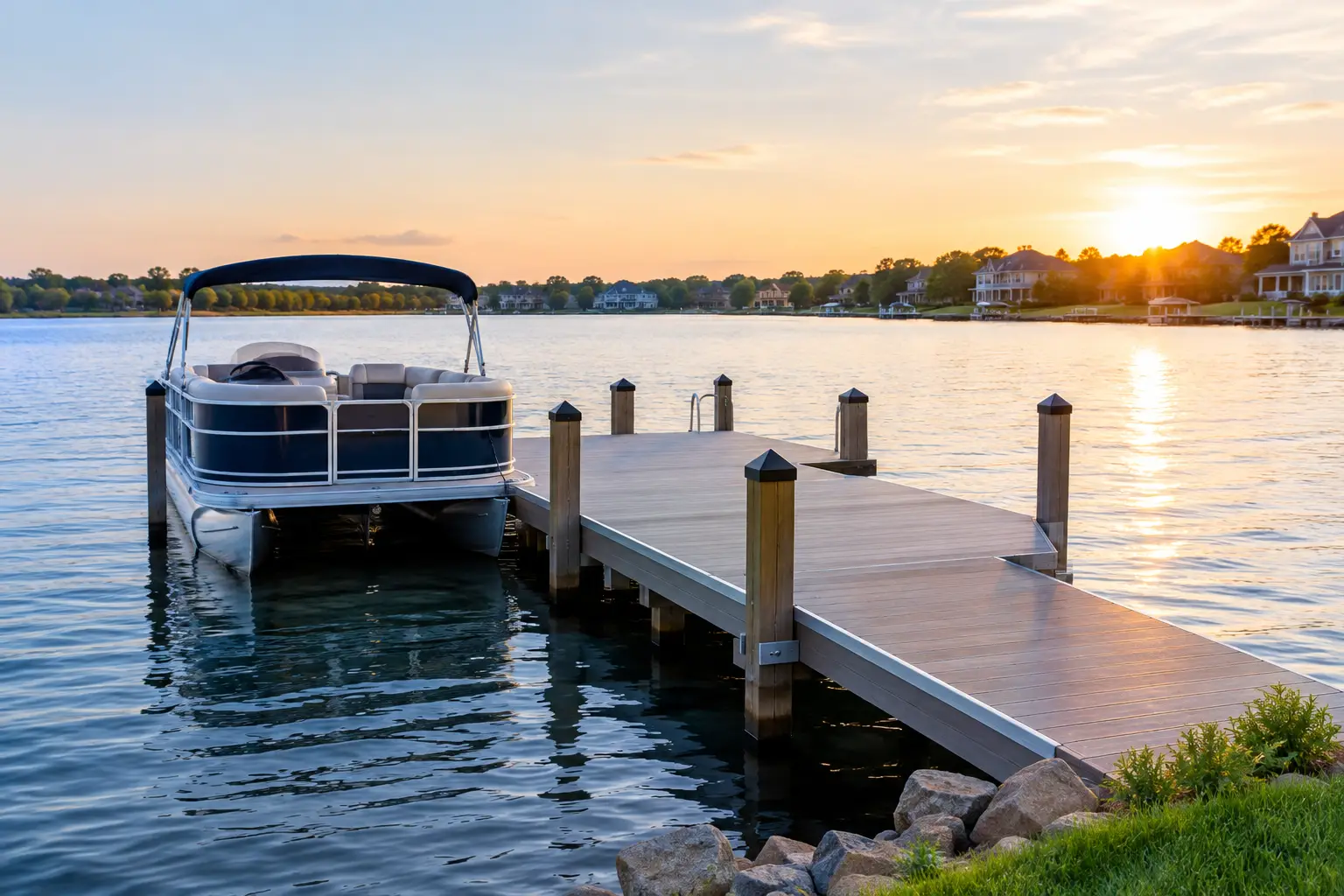
A community dock has to do more than get a boat off the shore. HOA docks must serve different ages, abilities, watercraft, and expectations while holding up to constant use. The best systems make waterfront access feel easy for residents, simplify upkeep for the association, and give the board a practical path for adapting as the community changes.
For lakefront neighborhoods, private communities, ranches with shared water, and resort-style developments, the dock is often one of the most visible common amenities. A poorly planned dock can create crowding, maintenance surprises, and safety concerns. A well-designed floating dock becomes a reliable place to launch a kayak, fish with family, access a boat, or simply enjoy the water.
Start HOA Dock Planning With How Residents Use the Water
The first question is not how many slips the dock should have. It is how the waterfront is used now and how it is likely to be used over the next decade. A neighborhood centered on fishing may need open deck space, railings in key locations, and easy access to a cleaning station or shoreline path. A community with wake boats, pontoons, personal watercraft, and paddleboards needs a layout that separates activity zones and keeps traffic moving safely.
A board should also consider whether the dock is intended for day use, assigned boat slips, transient guest access, or a combination of all three. These uses have different operational requirements. Assigned slips may call for clear numbering, fair allocation policies, and designated walkways. A day-use dock benefits from wider gathering areas and convenient launch points. Trying to make every section serve every purpose usually creates congestion.
Before settling on a design, document the watercraft residents actually own, the peak number of users on busy weekends, and the activities the association wants to encourage. This information gives the dock designer something concrete to work from and helps the board explain the project to homeowners.
Why Floating HOA Docks Make Sense on Changing Water
In Texas, Oklahoma, Arkansas, and New Mexico, water levels can change dramatically with weather, seasonal drawdowns, and reservoir operations. A fixed dock that works beautifully at one elevation can become inconvenient or unusable when the water moves. Floating systems rise and fall with the water, helping preserve a consistent boarding height from the deck to the boat.
That does not mean every floating dock performs the same way. The anchoring system determines how well the dock stays aligned, resists movement, and accommodates water-level change. Depending on the site, an HOA may need piling, cable, stiff-arm, or deadweight anchoring. Shoreline conditions, water depth, fetch, wave exposure, soil characteristics, and the range of water fluctuation all affect that decision.
A proper site evaluation also identifies where a gangway should land and how steep it may become at low water. This is especially important for communities that want safer access for children, older residents, and people carrying gear. A longer gangway can provide a more manageable slope, but it requires enough shore-side space and must fit the waterfront layout. There is always a balance between accessibility, available footprint, and budget.
Design for the busy Saturday, not the empty Tuesday
Dock capacity should be based on real peak demand. If residents gather at the water on holiday weekends, the main walkway needs enough width for people to pass without stepping around coolers, fishing gear, or parked paddleboards. Boat traffic should not cross through the same narrow space used for swimming or launching kayaks.
Creating distinct zones helps. Boat slips and PWC ports can sit away from a dedicated paddlecraft launch. A fishing area can be positioned where people are not walking through it to reach their boats. If swimming is permitted, it should have a clearly defined area away from propeller traffic. The exact layout depends on the site, but the principle is consistent: give each activity a logical place.
Build Safety Into the Dock Layout
Safety begins with predictable movement. Residents should be able to see where to enter, where to tie up, and where to avoid boat traffic. Clear edges, stable walking surfaces, adequate lighting, and sensible circulation matter more than decorative features that take up usable space.
For many communities, railings are appropriate along gangways, elevated transitions, fishing platforms, and other areas where fall protection is needed. They are not always the right choice around every dock edge because railings can interfere with boarding, mooring, and emergency egress. The right approach is to place them where they improve safety without making the dock harder to use.
Lighting deserves the same practical thinking. Low-profile, well-positioned lighting improves visibility for early-morning anglers and residents returning at dusk. It should illuminate walking paths, transitions, signage, and entry points without creating glare across the water or shining into nearby homes. Electrical components need to be selected and installed for the marine environment, with local code requirements and qualified electrical work considered from the start.
A dock policy is part of safety, too. Associations should decide how boat slips are assigned, where watercraft may be stored, whether swimming is allowed, and what behavior is expected around launches and common areas. Good rules are clear, enforceable, and matched to the physical design. A sign cannot solve a layout problem, but it can reinforce a layout that already makes sense.
Choose Materials for Long-Term Association Ownership
An HOA board is not just purchasing a dock. It is taking responsibility for an asset that will be exposed to sun, water, wind, foot traffic, and occasional hard use. Low maintenance is not about avoiding all care. It is about choosing materials that do not demand frequent painting, staining, splinter repair, or replacement after normal exposure.
Modular floating dock systems made from durable, UV-resistant materials can be a strong fit for common-use waterfronts. Their sections can be configured into slips, T-shapes, fishing platforms, kayak launches, and walkways, then reconfigured later if the community’s needs change. A growing neighborhood may add slips, while a community that sees more paddle sports may convert part of the dock to launch and storage access.
American-made components, durable connection hardware, and a site-appropriate anchoring plan are worth evaluating closely. Upfront cost matters, but so do recurring repair costs, resident complaints, downtime, and the expense of rebuilding a dock that was undersized or poorly suited to the site. The lowest initial bid is not always the lowest ownership cost.
Plan the Budget Beyond the Dock Surface
A realistic HOA dock budget accounts for more than dock sections. It should include design, site access, freight, installation, anchoring, gangways, permitting support where needed, electrical work, lighting, accessories, and future inspections. Depending on the waterfront, shoreline preparation or equipment access may also affect the project cost.
Boards should establish a reserve strategy at the same time they approve the project. Even durable systems need periodic inspection. Connections, anchoring components, gangway hardware, bumpers, cleats, lighting, and shore transitions should be checked on a defined schedule. After severe storms or unusual water-level events, an additional inspection is a sensible precaution.
The association also needs to think through responsibility. Will a property manager coordinate inspections? Will a marina-style dock committee handle slip assignments and resident communication? Who has authority to close the dock temporarily if a storm, damage, or water condition creates a hazard? Clear answers prevent delays when quick action is needed.
Work Through Permitting and Shoreline Requirements Early
Common-property waterfront projects may involve HOA approvals, local requirements, lake authority rules, utility restrictions, and state or federal permitting considerations. The details vary by waterbody and jurisdiction. Some locations limit dock size, number of slips, setback distances, lighting, or the placement of structures near navigation channels.
Do not treat these requirements as paperwork to address after a layout is selected. The proposed dock footprint, anchoring method, shoreline connection, and intended use can all affect what is allowed. Starting early helps avoid redesigns and gives the association a clearer schedule and budget before contracts are finalized.
For larger communities, a phased approach can be useful. The association may install the core walkway, accessible entry, and a limited number of slips first, while preserving a layout that allows future expansion. Phasing is most successful when the original anchoring and circulation plan anticipates the next stage rather than forcing a costly retrofit later.
A Dock Should Adapt as the Community Does
The strongest waterfront amenities are designed around daily use, not a brochure image. Residents need stable access, room to move, and clear separation between boats, fishing, and paddlecraft. Board members need a system that is durable, maintainable, and supported by a realistic operating plan.
EZ Dock Texas helps communities evaluate their shoreline, water conditions, recreation needs, and long-term goals before recommending a customized modular layout. A thoughtful design consultation can turn a difficult shared waterfront into an amenity residents use with confidence for years to come.