A great swim dock can become the center of a lake day, but getting back onto it should never be the hardest part. The right dock ladder for swimming gives children, guests, and experienced swimmers a dependable way to exit the water without wrestling with slick edges, unstable steps, or a ladder that sits too high above the surface.
For a private lake home, community dock, camp, marina, or public recreation area, a swimming ladder is more than an accessory. It is a safety and usability decision that affects how confidently people use the waterfront. The best choice depends on water depth, dock height, swimmer needs, traffic levels, and whether the dock will move with changing water conditions.
Start With the Way People Use the Water
Before selecting a ladder, consider who will use it and what happens around the dock. A ladder serving a family swim area may need wide, easy-to-see steps and handholds that work well for children and older adults. A ladder at a busy campground, HOA, or park may need to withstand frequent use, wet feet, sunscreen, sand, and the occasional bump from a kayak or floating toy.
Think about the swimmer’s full path. They may enter from the dock, swim beneath a platform, hold onto the side while talking, or return carrying goggles, a life jacket, or a child’s flotation device. That return route needs to feel straightforward. A ladder that looks adequate on shore can prove frustrating when someone is treading water and trying to find the first step.
The dock’s intended use also matters. A ladder positioned beside a boat slip can create conflicts with lines, prop wash, and arriving boats. On a multipurpose dock, a dedicated swim side or swim platform is often the better approach. It gives swimmers a predictable entry and exit point while keeping boat traffic separate.
What Makes a Dock Ladder for Swimming Safer
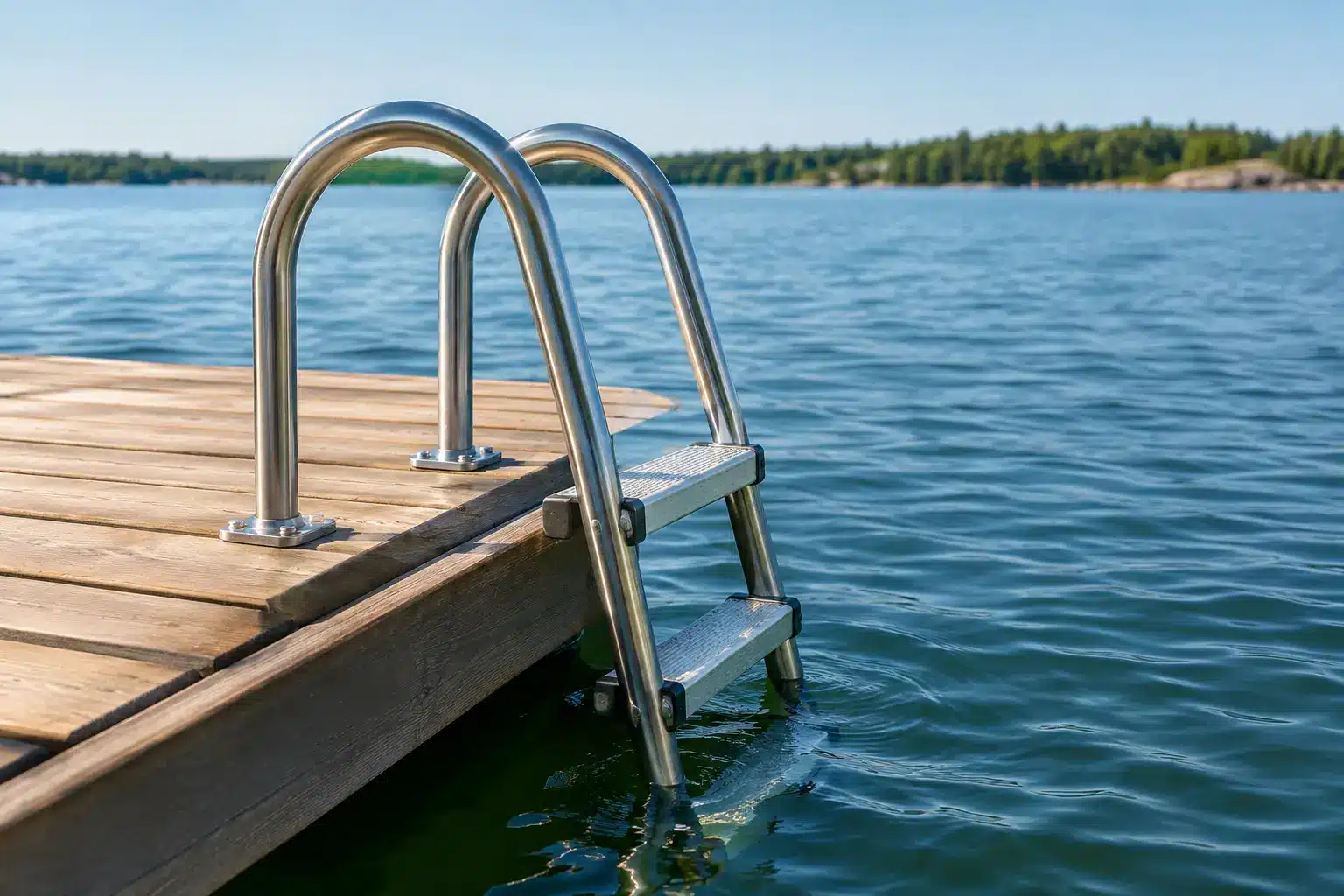
A swimming ladder should be easy to locate, easy to grip, and easy to climb from the water. Those fundamentals sound simple, but several design details determine whether a ladder performs well over years of use.
Choose comfortable, stable steps
Narrow rungs can be difficult on bare feet, particularly for children, seniors, and anyone climbing out after a long swim. Wider, slip-resistant steps offer more secure footing and make the ascent less tiring. Look for a design that maintains traction when wet rather than relying on a smooth metal surface that can become slick.
Step spacing matters, too. If the distance between steps is too large, shorter users may struggle to climb comfortably. If it is too tight, the ladder can feel cramped. A properly designed marine ladder creates a natural climbing rhythm and gives swimmers enough space to place each foot securely.
Make sure the ladder reaches far enough below the water
The bottom step should be accessible from the water, not suspended so high that a swimmer has to pull themselves upward before their foot can find it. Water levels change throughout Texas, Oklahoma, Arkansas, and New Mexico, especially on reservoirs and managed lakes. A ladder that works during one season may sit too high during another if its position cannot be adjusted.
Floating dock systems have a real advantage here because they rise and fall with the water. Still, the ladder must be selected and mounted with expected water-level variation in mind. The goal is consistent access at normal operating levels, not just a good appearance on installation day.
Prioritize handholds from the waterline up
Swimmers need a secure point of contact before they ever place a foot on a step. Handrails or integrated grab points should extend high enough above the deck to support the final transition out of the water. This is especially valuable for younger swimmers, guests unfamiliar with the dock, and people with limited mobility or reduced upper-body strength.
Avoid installations where users must reach around a dock edge, under a platform, or past exposed hardware to grab the ladder. The path should be direct and obvious.
Select materials built for marine exposure
A ladder stays wet, faces sun exposure, and may be exposed to changing water chemistry, debris, and temperature swings. Marine-grade materials help protect the investment and reduce ongoing maintenance needs. Durable components, quality fasteners, and a mounting system designed for the dock are worth more than a lower-cost ladder that loosens, corrodes, or becomes uncomfortable after a few seasons.
For floating dock owners, it is also important that the ladder and mounting hardware work with the dock’s structure rather than requiring improvised drilling or unsupported attachment points. A properly matched accessory protects both the ladder and the dock system.
Fixed, Flip-Up, and Removable Ladder Options
There is no single best ladder style for every waterfront. The practical choice comes down to usage, exposure, and how the dock functions when people are not swimming.
A fixed ladder is ready whenever swimmers need it. It can be a practical option for dedicated swim docks and controlled areas where access is needed throughout the day. The trade-off is that a fixed ladder remains in the water, where it may collect debris or be more exposed to impacts.
A flip-up ladder can be raised out of the water when not in use. This helps reduce fouling, keeps the ladder clearer of floating debris, and can be useful where the dock sees regular boat traffic. It also gives owners a way to limit unsupervised access in some settings, though it should never replace active supervision and sound water-safety practices.
A removable ladder offers flexibility for seasonal properties, event docks, and waterfronts where the dock layout changes. It may be stored during the off-season or moved to match a new swim area. The drawback is simple: a ladder cannot help anyone if it has been removed and is not available when needed.
For high-use public or commercial sites, permanent or securely mounted flip-up options often make the most sense because they provide reliable access while supporting maintenance and operational needs. For a private dock, the decision may be more about convenience, aesthetics, and seasonal use.
Plan Ladder Placement Before the Dock Is Installed
The best time to decide on a swim ladder is during the dock design process. Retrofitting is possible in many cases, but planning ahead gives you better placement options and ensures the dock layout supports safe circulation.
Place the ladder away from boat slips, personal watercraft launches, propulsion zones, and areas where anglers cast lines. If the dock includes a kayak or canoe launch, keep the swim access separate enough that paddlers can enter and exit without crossing through swimmers. On a large dock, more than one ladder may be appropriate, especially if the platform serves both children’s activities and adult swimming areas.
Visibility should guide placement as well. A ladder near the main gathering area allows parents, staff, or other guests to see who is entering and leaving the water. At resorts, campgrounds, and municipal facilities, clear sightlines help staff monitor activity and reinforce designated swim boundaries.
Water depth deserves the same attention. A ladder may offer a safe exit point, but it does not automatically make the surrounding water suitable for diving or jumping. Mark or communicate depth conditions, watch for underwater hazards, and establish rules that fit the site. Lakes and ponds can change over time due to sediment, drought, vegetation, and shifting shorelines.
Accessibility and Confidence for More Users
Not every swimmer approaches a dock ladder the same way. Young children may need closer step spacing and steady rails. Older adults may benefit from a broad first step, a secure grip, and enough clearance to move slowly without feeling rushed. Guests recovering from an injury or people wearing a life jacket may need more room to maneuver.
A standard ladder can be part of an accessible waterfront plan, but some sites require more specialized solutions. Public facilities, camps, schools, and community associations should consider their expected users, applicable requirements, and whether additional railings, transfer systems, or accessible entry options are appropriate. Designing for a broader range of abilities makes the waterfront more welcoming and can reduce avoidable risk.
Keep the Ladder Ready for Use
Even a well-built ladder needs regular attention. Check mounting points, fasteners, rails, step surfaces, and moving parts at the start of the season and periodically during heavy use. Remove wrapped fishing line, vegetation, mud, or debris that could interfere with climbing or folding mechanisms.
If the ladder folds or flips up, make sure everyone responsible for the property knows how to operate it and where it should be positioned during swim hours. On commercial and public docks, a simple opening and inspection routine can prevent a small maintenance issue from becoming a bad guest experience.
A dock ladder should feel like a natural part of the waterfront, not an afterthought added after someone struggles to get out of the water. EZ Dock Texas can help property owners and facility managers match a ladder to a floating dock layout, water conditions, and the people who will use it. A well-planned swim exit lets everyone spend less time climbing and more time enjoying the water.