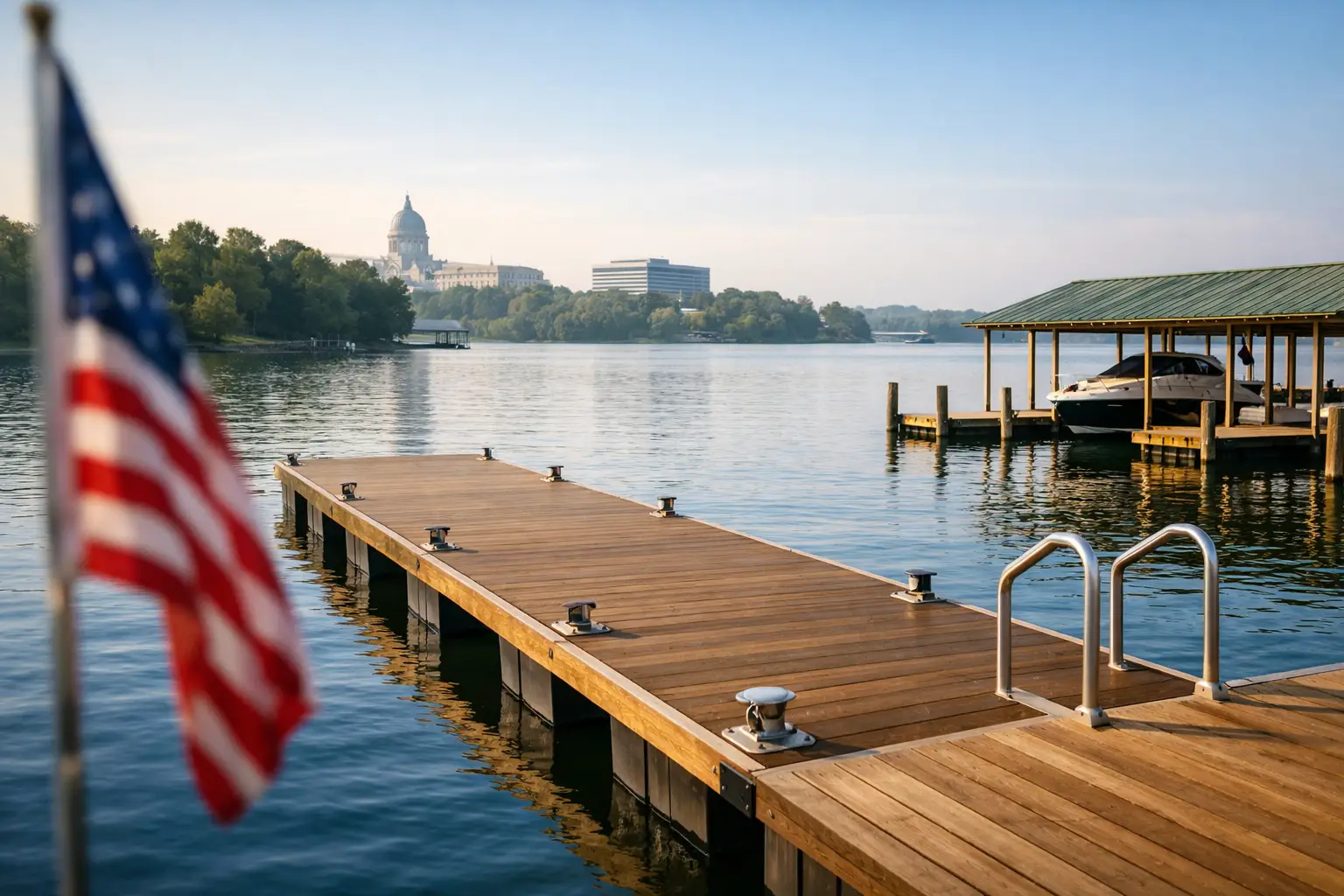
A public dock can become one of the most-used assets at a park, boat ramp, campus, or emergency response site. It also has to perform through heavy traffic, changing water levels, weather exposure, and public expectations for safe access. Government dock purchasing should therefore start with the intended use and site conditions, not with a standard dock size or the lowest initial price.
For municipalities, parks departments, state agencies, schools, military facilities, and conservation organizations, the right floating dock system can support boating, fishing, paddlesports, patrol operations, ADA-conscious access planning, and waterfront programs for years to come. The right configuration is rarely one-size-fits-all. A durable modular system gives an agency room to address the site as it exists today while retaining options for future expansion or changing public needs.
Start Government Dock Purchasing With the Site
Before requesting quotes, define how the waterfront will be used and what the water does throughout the year. A dock at a quiet community pond has different anchoring, access, and load requirements than one at a busy reservoir boat ramp or a public fishing pier on a fluctuating lake.
Water-level movement is often the deciding factor. Fixed structures can work in certain shallow, stable conditions, but a floating dock rises and falls with the water. That can preserve more consistent access between the shore connection and dock surface when reservoir levels change. The gangway, anchoring method, and transition from land to water must all be evaluated together.
Site assessment should also consider water depth, bottom conditions, wave action, wind exposure, shoreline grade, utility access, boat traffic, and seasonal debris. These factors affect the layout as well as the hardware needed to keep the dock stable. A dock that looks adequate on a site plan can become difficult to use if a gangway is too steep at low water or if the anchoring system was not designed for the location.
For public projects, ask early whether the dock needs to accommodate patrol boats, fishing access, kayak launches, rowing shells, rental fleets, accessible routes, or emergency response. Those uses can coexist, but they need intentional spacing and traffic flow. Separating boat boarding from paddlecraft launching, for example, can make a busy waterfront safer and easier to manage.
Buy for Lifecycle Value, Not Just Initial Cost
Public procurement teams have a responsibility to manage taxpayer dollars carefully. That does not always mean selecting the lowest bid. A more useful comparison considers the total cost of ownership: expected service life, maintenance labor, replacement parts, installation requirements, safety performance, and the ability to reconfigure the system later.
Traditional dock materials may require recurring painting, staining, board replacement, or repairs after prolonged water exposure. Modular polyethylene floating dock systems are designed to reduce that maintenance burden. Durable, American-made components with a slip-resistant surface can be especially valuable where staff time is limited and the facility serves the public every day.
Modularity also changes the value calculation. An agency may begin with a boarding dock and gangway, then add a fishing platform, kayak launch, PWC port, railing, lighting, or additional slips as funding and programming evolve. With compatible components, the original investment does not have to become obsolete when the waterfront plan changes.
This flexibility is particularly useful for parks and recreation departments. A waterfront may start as a basic boat-access point, then grow into a venue for paddling programs, youth camps, fishing events, or seasonal rentals. Planning a layout that can expand is often more economical than replacing an undersized dock a few years later.
Design Public Access Around Real Users
A successful public dock does more than float. It gives people predictable, comfortable access at the edge of the water. That means considering who will use it, what they will carry, and how the site will operate during its busiest hours.
For a public boat ramp, the priority may be a stable boarding area that lets passengers step into a boat away from the launch lane. For a city park, a wide walkway, handrails where appropriate, fishing access, and a kayak or canoe launch may matter more. A school or rowing program may need low-freeboard access that supports efficient entry and exit for lightweight craft. Emergency response facilities may prioritize clear approaches, durable tie-up points, and fast access to equipment.
Accessibility should be addressed during concept development, not after the dock layout has been selected. Grade changes, gangway length, dock freeboard, clear width, railings, turning space, and local requirements all affect usability. Requirements can vary by project and jurisdiction, so agencies should coordinate with their internal accessibility staff, engineers, and permitting authorities. The goal is a practical route that supports the people the facility is intended to serve.
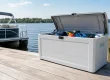
Safety accessories deserve the same attention as the dock sections themselves. Depending on the application, a project may benefit from railings, ladders, cleats, bumpers, lighting, life ring stations, dock boxes, gate systems, or clearly marked boarding zones. These are not afterthoughts. They shape how visitors move through the space and how staff manage risk.
Match Procurement Requirements to the Project
Government purchasing processes can add time to a waterfront project, particularly when multiple departments, approvals, and funding sources are involved. Clarifying the procurement path early can help prevent delays after a design has been approved.
Some agencies purchase through approved cooperative contracts, which can streamline the process while maintaining procurement compliance. EZ Dock Texas provides access to public procurement cooperatives including BuyBoard and Sourcewell, giving eligible public entities another purchasing option. Whether a cooperative contract, competitive bid, formal quote, or another approved method is appropriate depends on the agency’s rules and the project scope.
The bid or quote request should be specific enough to produce comparable proposals. Rather than requesting a generic floating dock, define the desired use, approximate layout, anticipated loads, access needs, anchoring expectations, installation responsibilities, and any required accessories. Include site photos, water-depth information, shoreline measurements, and known permitting constraints when available.
An incomplete scope can create misleading price differences. One quote may include a gangway, anchoring, delivery, and installation, while another covers dock sections only. Reviewing what is included, excluded, and assumed is essential. The lowest number on paper may not represent the finished, operational waterfront asset.
Plan for Installation, Permits, and Ongoing Operations
Dock installation is where a well-designed system becomes a reliable public facility. Professional installation helps ensure that the dock, gangway, anchoring, and shore connection work as a complete system. It also gives agencies a clear point of coordination when site conditions require adjustments.
Permitting responsibilities vary by waterbody and jurisdiction. Projects may involve local rules, lake authorities, state agencies, utility districts, federal requirements, or property-owner approvals. A qualified waterfront partner can help identify questions to address during planning, but the public entity should confirm which permits and approvals apply to its site.
After installation, establish an operating plan. Staff should know how to inspect connections, anchor lines or piles, gangways, railings, and safety equipment, especially after storms, flooding, or major water-level changes. Even a low-maintenance dock benefits from regular visual inspections and a documented response plan for damaged components or changing conditions.
It is also wise to plan for the public behaviors a dock will attract. Clear signage, designated launch areas, sensible traffic patterns, and seasonal checks can reduce conflicts between anglers, swimmers, paddlers, and boaters. Good operations protect the investment while making the waterfront more welcoming.
Questions to Ask Before You Approve a Dock
Before final approval, procurement teams and project managers should be able to answer a few practical questions: What public use is the dock designed to support? How will it perform at the highest and lowest expected water levels? What anchoring approach fits the site? Who is responsible for permits, delivery, installation, and future inspections? Can the layout grow without replacing the core system?
Those answers lead to better decisions than selecting dock sections from a catalog. They also give agency leaders a clearer explanation of why the selected solution supports safety, public access, maintenance goals, and long-term stewardship.
A government dock is a working piece of public infrastructure. When the design reflects the site, the users, and the agency’s long-range plans, it can keep the waterfront open, functional, and ready for the next season of public use.