A wet life jacket tossed on the dock, a loose dock line underfoot, and fishing gear carried back and forth to the house can turn a good lake day into unnecessary work. Well-planned boat dock box storage gives frequently used equipment a protected, convenient home right where it is needed. The right box keeps the deck clearer, reduces trips up the shoreline, and helps protect the gear that makes time on the water safer and more enjoyable.
A dock box may look like a simple accessory, but its location, capacity, material, and mounting method all affect how well it performs over years of waterfront use. For a lake home, marina, park, or rental operation, storage should be planned as part of the dock system rather than added as an afterthought.
Start With the Gear That Needs to Stay at the Dock
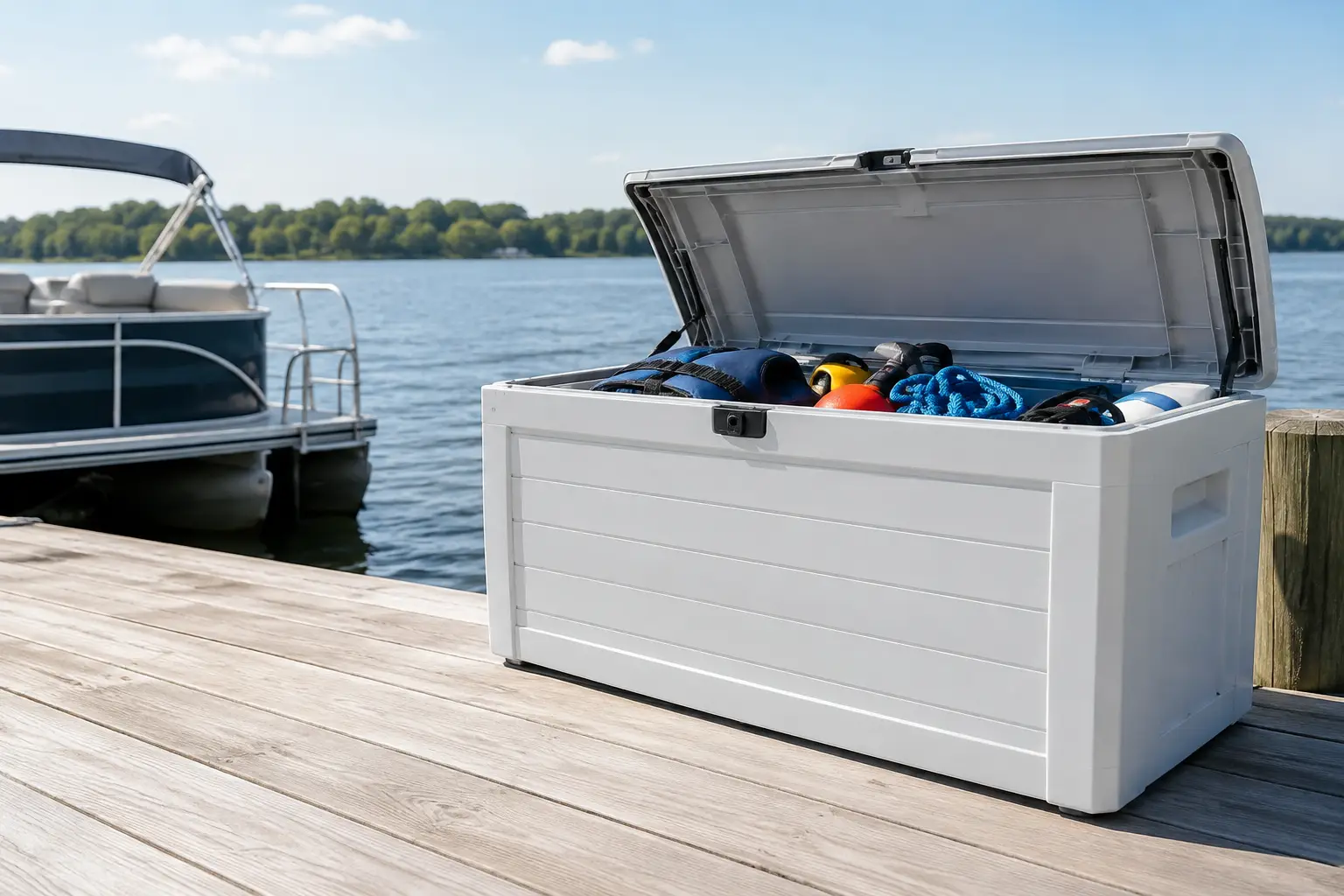
The best storage plan begins with a realistic look at what people actually use at the water. Safety equipment, dock lines, bumpers, paddles, life jackets, fishing tackle, cleaning supplies, and water toys are common dock-box items. At a public-access facility or marina, the list may also include operations equipment, rental gear, first-aid supplies, or maintenance tools.
Not every item belongs in a dock box. Electronics, valuables, fuel containers, and materials that can be damaged by heat or moisture may need a different storage solution. The goal is to keep durable, frequently used equipment close at hand while avoiding a box that becomes a catch-all for items no one can find.
Think about the busiest day of the year, not the quietest one. A family with one fishing boat has different needs than a property with pontoons, personal watercraft, kayaks, and guests. Likewise, a campground or community dock needs storage that supports many users without creating confusion or blocking access.
Choose a Dock Box Size That Matches Your Routine
A box that is too small fills up quickly. One that is oversized can take valuable walking space from the dock and make the layout feel crowded. Capacity should match the amount of gear kept at the water, but footprint matters just as much.
For many residential docks, one well-positioned box near the boarding area handles everyday essentials. Larger dock systems may benefit from separate storage zones: one box near a boat slip for lines and fenders, another near a swim or kayak area for life jackets and paddles. This approach makes it easier for each user to return equipment where it belongs.
Commercial and public waterfronts often require a more deliberate plan. Storage should support staff workflow while keeping visitor paths open. A box placed beside a launch may be convenient for attendants but inconvenient if it narrows a route used by wheelchairs, carts, or emergency personnel. Before selecting dimensions, identify boarding routes, gate locations, gangway landings, ladders, and areas where people naturally gather.
Leave Room to Move Safely
Dock storage should never compromise safe circulation. Lids need room to open without striking railings, boats, or people walking past. The box should not create a trip hazard at a transition point, such as the end of a gangway or the entrance to a slip.
On a floating dock, placement also affects how the system feels under load. A properly designed modular dock can accommodate accessories, but concentrated weight should be considered in the overall configuration. This is especially relevant for larger boxes stocked with wet gear, anchors, tools, or commercial supplies.
Look for Materials Built for Sun, Water, and Hard Use
A dock box lives in a demanding environment. Texas heat, reflected sunlight, rain, wind, wake action, and changing water levels can wear down poorly chosen storage quickly. The most useful box is not necessarily the least expensive one on day one. It is the one that continues to open, close, protect gear, and look presentable after repeated seasons on the water.
Marine-grade materials should resist corrosion, fading, cracking, and moisture damage. Hardware matters, too. Hinges, latches, fasteners, and mounting points must stand up to wet conditions and regular use. A lid that binds or a latch that rusts can make storage frustrating long before the box itself wears out.
Ventilation is another practical consideration. Life jackets, tow ropes, and towels often go into storage damp. A sealed box may keep rain out, but it can also trap moisture and odors if wet equipment is left inside for long periods. It depends on what you store and how often the box is opened. Good habits still matter: allow gear to dry when possible, empty standing water, and clean out debris before it becomes a problem.
Plan Boat Dock Box Storage Around Dock Access
A dock box should make waterfront access easier, not compete with it. Position storage close enough to the activity it serves while preserving a clear route to the boat, personal watercraft port, kayak launch, or fishing area.
For boat owners, a box near the slip entrance can hold dock lines, fenders, life jackets, and basic cleaning supplies. For a swim platform, place storage where towels and flotation gear can be reached without people crossing a boat-boarding path. Kayak and canoe users often benefit from storage near the launch, provided the box does not interfere with carrying or rolling a vessel to the water.
On docks serving multiple groups, clearly designated storage can reduce clutter and misplaced gear. A marina may reserve certain boxes for staff use and provide separate storage for rental or customer equipment. An HOA or municipal facility may need a lockable solution with clear operating procedures so only authorized users have access.
Consider Security Without Sacrificing Convenience
A lockable dock box can help protect gear at unattended lake homes, marinas, parks, and shared-access docks. Still, the lock should fit the level of risk and the way the property is used. A simple latch may be sufficient for personal equipment stored behind a gated community entrance, while a public facility may need more controlled access.
Do not rely on a dock box as the only security measure for high-value items. It is better suited for everyday equipment that benefits from weather protection and organized access. Keep keys or access procedures simple enough for approved users, especially when staff turnover, guests, or seasonal operations are involved.
Mounting and Placement Need Professional Attention
A full dock box can be heavy, and wind can put stress on an empty one with a broad lid. Secure mounting is essential. The box should be attached using hardware and methods appropriate for the dock structure, with enough support to handle the expected contents and regular lid operation.
Avoid drilling or modifying a floating dock without confirming how that change affects the system. Modular dock sections, connection points, and accessory locations are designed to work together. A poorly placed box can interfere with couplers, create drainage issues, or complicate future reconfiguration.
This is where a complete dock plan pays off. EZ Dock Texas can help property owners and facilities teams account for storage during the design process, along with gangways, anchoring, boat ports, railings, lighting, and other accessories. Planning these elements together creates a cleaner layout and avoids costly adjustments after installation.
Maintain the Box So It Keeps Doing Its Job
Dock boxes are low-maintenance, not no-maintenance. Periodically rinse off dirt, pollen, fish residue, and lake water deposits. Check hinges, latches, mounting hardware, and lid alignment at the start of the season and after severe weather. If the dock moves significantly with changing water levels, inspect accessory attachment points as part of routine dock checks.
At the end of a busy season, remove broken items, expired safety supplies, and gear that no longer belongs at the dock. A simple reset keeps the box useful. It also reveals whether your current storage capacity still fits the way the waterfront is being used.
The most effective dock storage is easy to overlook because it removes small frustrations before they interrupt the day. Put the gear people reach for most within arm’s reach, protect the walking surface, and choose materials made for years of waterfront exposure. That is how a dock box becomes part of a safer, more functional place to gather at the water.