A good fishing pier changes the way people use a shoreline. It gives the early-morning angler a stable place to cast, gives children a defined edge for supervised fishing, and gives a park, marina, or lake property a destination that draws people to the water safely. The best fishing piers are not simply platforms with room for a few chairs. They are planned access systems built around water conditions, user needs, safety, and years of use.
For private lake homes, ranches, public parks, campgrounds, and waterfront businesses, the right design starts with a practical question: what must the pier do well on its busiest day? That answer shapes every decision that follows.
What Makes Fishing Piers Work Better
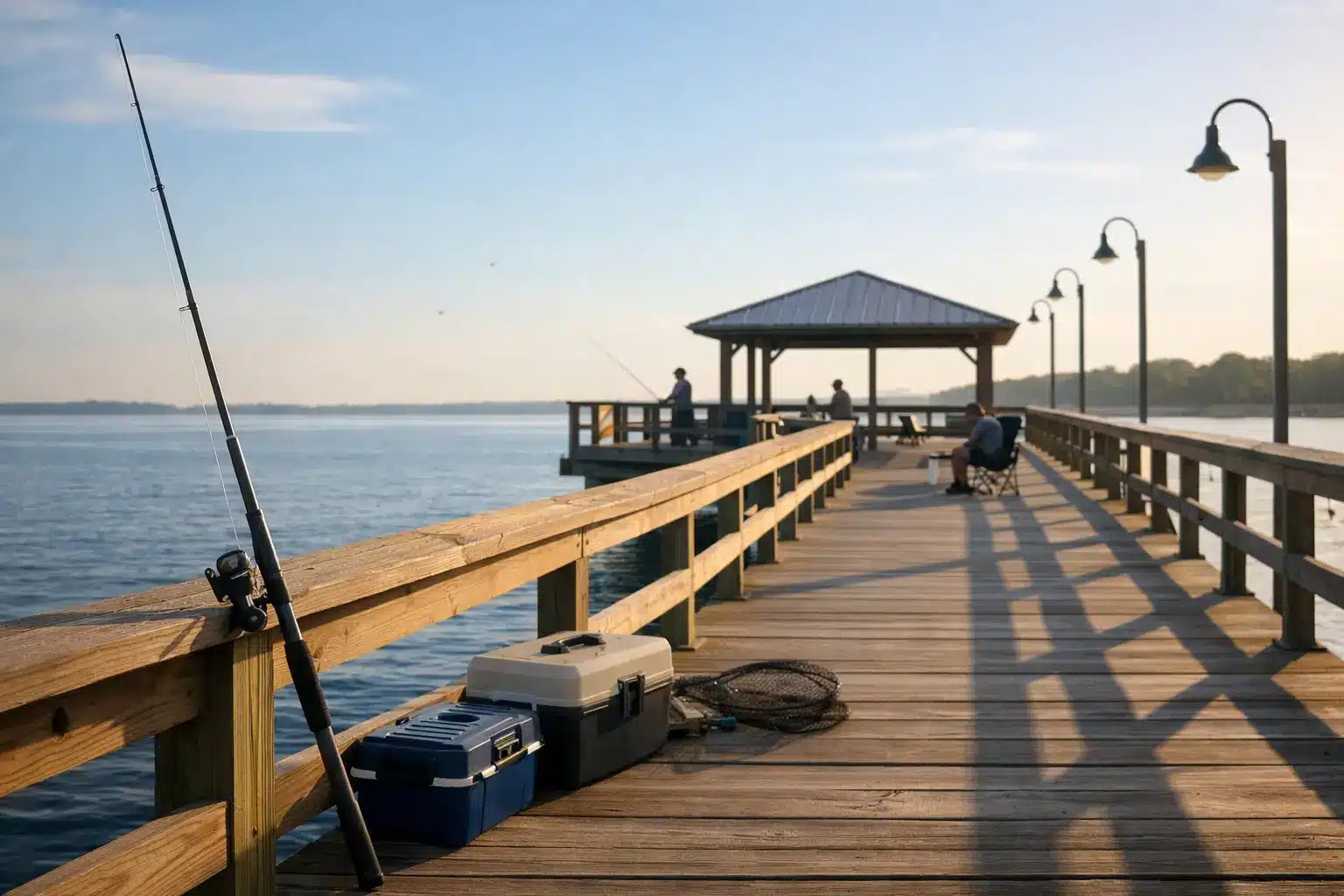
Fishing is a patient activity, but a pier should not test an angler’s patience. Narrow walkways, slippery surfaces, awkward elevation changes, and unstable edges can turn a relaxing outing into a frustrating one. A well-designed pier provides a comfortable route from shore, enough room for people to move past one another, and a fishing area where gear does not take over the entire platform.
The layout should reflect how the space will actually be used. A homeowner may want a quiet end platform with room for two or three anglers. A community or public facility may need wider passing areas, railings, accessible routes, and multiple fishing stations so one group does not block everyone else. A commercial property may also need the pier to support sightseeing, guest recreation, or waterfront events.
Water depth matters just as much as deck space. Fish habitat, prevailing wind, shoreline contours, boat traffic, and seasonal water changes all affect where a pier should extend and where anglers are most likely to use it. Building farther from shore is not automatically better. The objective is useful access to fishable water without creating an oversized structure that is difficult to anchor, maintain, or navigate.
Floating Fishing Piers for Changing Water Levels
Across much of Texas, Oklahoma, Arkansas, and New Mexico, reservoirs and private lakes can rise and fall significantly. A fixed pier may sit too high above the water during a dry period or become less functional when water reaches an unusually high level. Floating fishing piers rise and fall with the water, helping preserve a more consistent relationship between the deck and the surface.
That does not mean floating is the right answer for every site. Fixed structures can make sense where water levels are predictable, site conditions support permanent pilings, and the intended use is straightforward. But for fluctuating lakes, a modular floating system often provides greater long-term flexibility. It can be reconfigured as shoreline needs change, expanded for additional users, or adjusted when a new activity – such as kayaking, boating, or swimming – becomes part of the plan.
The connection to shore deserves close attention. A properly sized gangway creates a safer transition as water levels move. Its length, width, slope, handrails, and landing areas should be considered early, rather than treated as an accessory after the platform layout is complete. A fishing pier may look excellent from the water, but it only works if visitors can reach it comfortably from land.
Anchoring Is Part of the Design
A floating pier is only as dependable as its anchoring system. Wind exposure, water depth, bottom conditions, wake action, and expected fluctuations all influence the best approach. Some sites may use piling systems, while others may call for cables, deadweight anchors, or specialized deep-water stabilization.
There is no universal anchor plan that fits every lake. A quiet, protected stock pond has different needs than a large reservoir exposed to changing water levels and wind-driven waves. Planning the anchoring system alongside the pier layout helps protect the investment and keeps the structure positioned as intended.
Design Around the People Who Will Use It
The most successful pier designs begin with users, not square footage. Consider who will be casting from the deck and what they will bring with them. Families may need room for coolers, tackle boxes, folding chairs, and an adult standing close to a young angler. A lodge or campground may need open areas that allow guests to fish without crowding. Parks and public agencies may need designs that account for varied ages, mobility levels, and peak attendance.
A practical fishing pier often includes a main walkway and a wider platform at the end or along one side. The wider section gives anglers room to turn, land a fish, and manage gear without blocking the travel path. It also creates a natural place for benches, shade features, fish-cleaning access nearby, or educational signage where appropriate.
Railings require a balanced approach. They can add meaningful safety at elevated edges, near high-traffic areas, and along access routes. Yet anglers need clear, usable casting zones. The right railing strategy protects people without making fishing awkward. This may mean placing railings where falls are most likely, leaving selected fishing edges open where conditions permit, or using carefully planned openings that support casting and landing fish.
For public-facing projects, accessibility should be addressed from the beginning. A route that is technically present but too steep, too narrow, or difficult to navigate is not a good long-term solution. Gangway slope, deck transitions, clear space, handrails, and surface traction all contribute to an experience that welcomes more people to the water.
Materials That Reduce Long-Term Work
Waterfront structures work hard. They face sun exposure, moisture, changing temperatures, dirt, fishing gear, foot traffic, and occasional impacts. The lowest upfront price can become expensive when a pier requires frequent board replacement, staining, splinter repair, or extensive seasonal maintenance.
Modular polyethylene dock systems are designed for waterfront use and can offer a durable, low-maintenance alternative to traditional wood construction. Molded, slip-resistant surfaces help support safer footing, while flotation and structural components are engineered to perform in demanding environments. For property owners and facilities managers, less routine upkeep means more time using the waterfront and fewer recurring repair decisions.
Material selection should still match the application. A private fishing dock may prioritize a simple, comfortable layout. A marina, municipal park, or resort needs a system that stands up to repeated public use and can be repaired or expanded without rebuilding the entire facility. American-made components, available replacement parts, and a design that can adapt over time all support stronger ownership value.
Plan for Accessories Before They Become Problems
Accessories should support the way anglers use the pier, not clutter it. Lighting can improve visibility for evening use and safer trips back to shore. Dock boxes can keep shared equipment organized. Ladders provide a recovery option where appropriate, and seating may make the pier more welcoming for longer outings.
Think through the less obvious details as well: where fishing line, hooks, and wet gear will go; how trash will be managed; whether a maintenance team can access the structure; and how the pier will be secured during severe weather. These choices may seem small during planning, but they strongly affect how clean, safe, and usable the site remains.
Start With a Site-Specific Plan
Before selecting a layout, evaluate the shoreline, normal and extreme water levels, water depth, exposure, access from land, and intended users. It is also wise to identify any permitting, lake authority, HOA, or local requirements before installation begins. Public projects may have additional procurement, accessibility, and engineering considerations that should be addressed well ahead of construction.
A modular system gives owners room to make decisions in phases. Start with a functional fishing platform and shore connection, then add a side section, kayak launch, boat port, railing, or lighting as needs evolve. That flexibility is especially valuable for growing parks, changing family needs, and commercial properties that want to improve guest amenities without starting over.
EZ Dock Texas helps property owners, public agencies, and waterfront operators turn those site conditions into a workable design, from concept and product selection through delivery and installation. The goal is not to sell a standard rectangle. It is to build a fishing destination that fits the water, the people using it, and the years ahead.
A fishing pier should invite people to stay a little longer – to make one more cast, teach a child how to hold a rod, or enjoy the view while the line is still. Start with a design that makes those moments safer, easier, and worth returning to.