A dock that sits perfectly at the waterline in March can become an awkward climb by August. That is the practical issue behind the fixed versus floating dock decision. The right choice affects daily access to boats, kayaks, swim areas, and personal watercraft, as well as the long-term cost of owning and maintaining a waterfront system.
For many properties across Texas, Oklahoma, Arkansas, and New Mexico, changing reservoir levels are a defining factor. But water movement is not the only consideration. Shoreline conditions, intended use, accessibility requirements, local permitting, and how long you plan to own the property all deserve a place in the decision.
Fixed Versus Floating Docks: The Core Difference
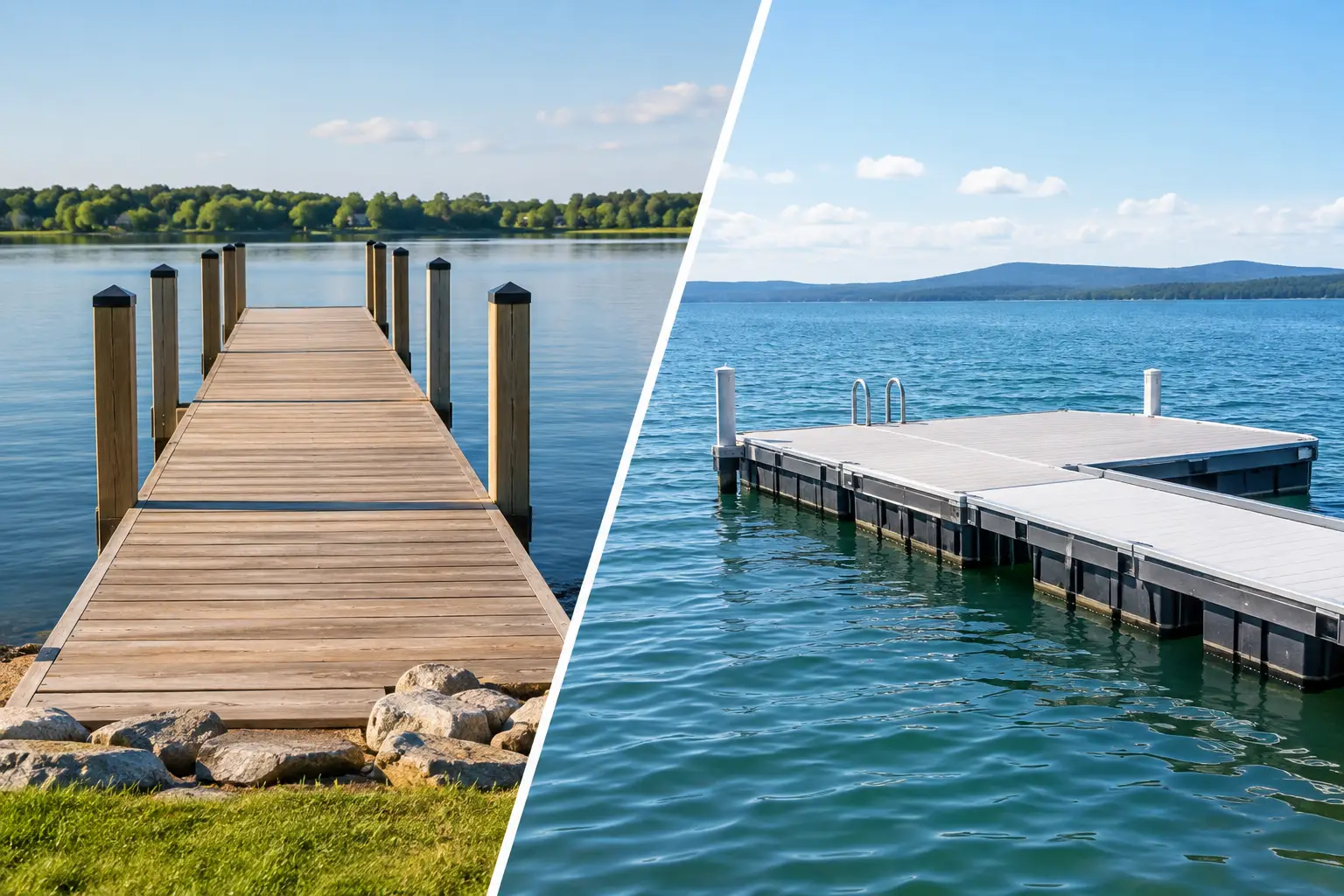
A fixed dock is built on pilings or posts driven into or otherwise secured to the lakebed. Its deck remains at a set elevation, regardless of whether the water rises or falls. Fixed docks are often associated with traditional wood-framed piers and are commonly used where water levels are stable, the water is shallow, and a permanent platform is the priority.
A floating dock rests on the water and rises or falls with it. It is typically connected to shore by a gangway and held in place with an anchoring system suited to the site, such as pilings, cables, or deadweight anchors. Modular floating systems can be configured for boat slips, fishing areas, kayak launches, PWC ports, boarding platforms, boardwalks, and more.
Neither approach is automatically better. The best dock is the one designed for the conditions at your shoreline and the way people will use it.
When a Fixed Dock Makes Sense
A fixed dock can be a practical option on a pond, protected inlet, or other body of water with minimal seasonal fluctuation. Because the deck height does not move, it can create a stable, familiar walking surface and a straightforward connection from shore. For a short fishing pier in consistently shallow water, that simplicity may be appealing.
Fixed construction can also suit sites where the dock is intended primarily as an overlook, a stationary gathering platform, or an extension of a shoreline landscape plan. If the water stays within a narrow range and boat boarding is not a major concern, a fixed structure may serve the purpose well.
The trade-off is that a fixed dock cannot adapt when water levels change. If the water drops, the deck may end up far above the surface. Reaching a boat, launching a kayak, or getting back onto the dock after swimming can become inconvenient or unsafe. When water rises, clearance beneath the structure may decrease, and the deck can sit uncomfortably close to the water.
Fixed docks also require careful planning around soil conditions, water depth, ice exposure where applicable, and piling installation. Repairs to framing, decking, and supports can become more involved over time, particularly with conventional materials that face constant exposure to sun, moisture, and fluctuating shorelines.
Why Floating Docks Work Well on Changing Water
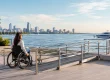
A floating dock maintains a more consistent relationship to the water surface. That matters every time someone steps from a boat onto the dock, transfers into a kayak, uses a wheelchair-accessible route, or helps children and guests near the water.
At a lake home, that means the boarding height for a boat does not change dramatically as the reservoir rises or falls. At a marina, it helps keep slips usable across more water conditions. At a public park or camp, it supports safer, more predictable access for a wider range of visitors.
Floating systems are especially valuable on reservoirs and lakes known for seasonal changes, drought cycles, storm events, or managed drawdowns. Instead of leaving a dock high and dry or creating a difficult step down to the water, the dock moves with the level. A properly designed gangway preserves the connection to shore while accommodating that movement.
Modern modular docks also offer flexibility that traditional fixed structures may not. A homeowner can begin with a simple platform and add a boat port, swim ladder, or kayak launch later. A marina operator can reconfigure a layout as slip needs change. A municipality can build out an accessible fishing pier, floating boardwalk, or launch area in phases.
Access and Safety Are Not Secondary Details
Dock selection is often framed around appearance or initial price, but access should carry equal weight. A dock is a transition point between land and water. The easier and more predictable that transition is, the more useful the waterfront becomes.
With a floating dock, the deck surface remains close to the vessel or watercraft. This makes boarding easier for boaters and can reduce awkward jumps, long reaches, and unstable steps. For kayak and canoe users, a purpose-built launch can make entry and exit more controlled than a steep bank or elevated fixed pier.
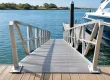
The gangway is a critical part of this equation. Its length, width, slope, handrails, and connection points should be chosen for the site rather than treated as an afterthought. A short gangway may work at a stable pond but become too steep when a lake drops. Longer gangways can accommodate a greater range of water levels and support more comfortable access.
For parks, HOAs, schools, camps, and public facilities, accessibility requirements and user safety should be addressed early in the design process. A waterfront system may need wider routes, railings, transfer points, rest areas, or specific launch features. Planning these elements from the start is more effective than trying to retrofit them after installation.
Maintenance and Long-Term Ownership
Every waterfront structure needs inspection and care, but the materials and construction method make a major difference. Traditional fixed wood docks can require recurring attention to boards, fasteners, framing, coatings, and supports. Exposure to sun, water, and changing shoreline conditions takes a toll.
Floating dock systems built with durable, low-maintenance polyethylene components avoid many of the common concerns associated with wood. They do not require staining or painting, resist splintering and rot, and are designed for long-term exposure to waterfront conditions. Textured surfaces can also provide dependable footing when wet.
Anchoring still needs periodic inspection, as do gangway connections, hardware, and any accessories. A floating dock is not maintenance-free, and no responsible provider should describe it that way. But a well-designed modular system can significantly reduce the recurring upkeep that comes with conventional dock construction.
Long-term value also comes from adaptability. If a family buys a pontoon boat, adds personal watercraft, or begins using paddleboards, the dock should not need to be replaced simply because the way they enjoy the water changes. The same principle applies to commercial and public facilities that expect changing visitor volumes, equipment, or programming.
Cost Depends on the Entire Project, Not Just the Dock
Comparing a fixed dock and a floating dock by price alone can be misleading. A fixed dock may appear less expensive in a simple, shallow-water application, but that comparison can change once piling work, site access, changing water levels, repairs, or future modifications are considered.
A floating dock system may involve a gangway, anchoring design, shoreline transition, and site-specific installation requirements. Those are essential parts of a functional system, not optional add-ons. The upfront investment should be evaluated against the expected life of the dock, maintenance demands, usability at different water levels, and ability to expand later.
For a marina, resort, or public agency, downtime also has a cost. A dock layout that remains usable through normal water-level changes can protect revenue, visitor access, and operational reliability. For a homeowner, it can mean the difference between enjoying the lake whenever time allows and avoiding the dock because the water is too low.
Questions to Answer Before You Choose
Start with the water, not the dock style. How far does the water level typically rise and fall? What happens during drought, heavy rain, or seasonal drawdowns? Is the shoreline exposed to wind and wave action? What are the water depths at normal, high, and low levels?
Then consider use. Will the dock support a boat, fishing, swimming, kayaks, paddleboards, or personal watercraft? Is it for a private family, a busy marina, a public launch, or an event that needs temporary waterfront access? Will older adults, children, guests, or people with mobility challenges use it?
Finally, plan for change. Waterfront needs rarely stay fixed. A modular floating system can be configured around current needs while leaving room for future slip extensions, launches, railings, lighting, ladders, and storage.
A site evaluation turns these questions into a practical layout. EZ Dock Texas helps property owners and organizations match dock configuration, anchoring, gangways, and access features to real shoreline conditions rather than relying on a one-size-fits-all answer.
The most useful dock is not simply the one that looks right on installation day. It is the one that continues to provide safe, dependable access when the water moves, the equipment changes, and the people using the shoreline expect more from it.