A dock that sits perfectly at the waterline in April can become a steep climb by late summer. That is the reality for many Texas lakefront properties, reservoirs, stock ponds, and commercial waterfronts. Floating docks solve that problem by rising and falling with the water, keeping boat access, swim access, and day-to-day use more consistent through changing conditions.
The right system does more than float. It needs to fit the shoreline, water depth, vessel type, traffic level, and the way people actually use the property. A homeowner may want a safe place to launch kayaks and board a pontoon boat. A marina, park, HOA, or resort may need accessible routes, protected slips, durable walkways, and a layout that can expand over time. Planning those details early makes a dock more useful for years to come.
Why Floating Docks Work Well in Texas
Texas waterways do not hold still. Reservoir levels can change significantly, private lakes can have soft or uneven bottoms, and seasonal rain can alter how people approach the shoreline. Unlike a fixed dock, a floating system moves with the water surface. That means the step from a boat to the dock remains more predictable, even when the shoreline and water elevation change.
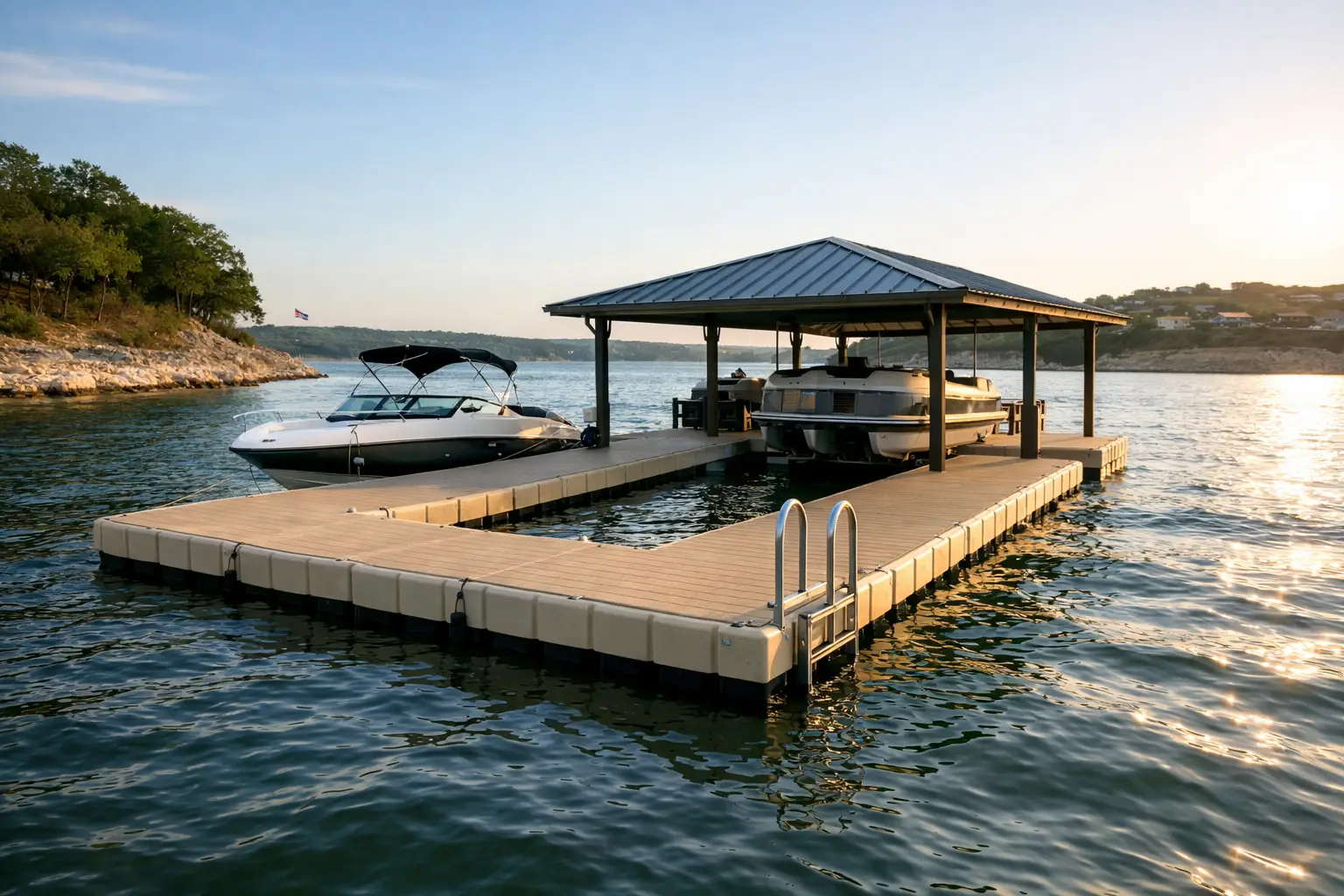
Modular floating dock sections also give property owners flexibility that traditional one-piece structures often cannot match. Sections can be configured into a straight walkway, an L-shaped fishing platform, a T-head, a multi-slip marina layout, or a swim and water-sports area. If a family adds a personal watercraft, buys a larger boat, or decides to create a kayak launch, the system can be adjusted instead of replaced.
For many owners, maintenance is another deciding factor. Quality polyethylene dock systems are designed to resist rot, splinters, corrosion, and the frequent painting or staining associated with many wood structures. That does not mean a floating dock is maintenance-free. Anchors, connectors, hardware, and shoreline transitions should still be inspected regularly. It does mean the dock surface itself can offer a cleaner, more durable long-term option for demanding waterfront use.
Start With How the Dock Will Be Used
The most effective dock layouts begin with a practical question: What needs to happen here on a normal weekend or workday? The answer shapes the footprint, access path, accessories, and anchoring approach.
A residential dock used mainly for swimming and fishing may benefit from a broad platform, a swim ladder, railing where appropriate, and space for chairs or a dock box. A family that uses kayaks, canoes, or stand-up paddleboards may need a lower, more stable launch area that makes entering and exiting the water less awkward. Boat owners need to consider boarding location, cleat placement, port options, and enough room to move safely around the vessel.
Commercial and public-use properties require another level of planning. Marinas and resorts may need separate traffic zones for fueling, loading, fishing, and transient boaters. Municipal and park facilities may need durable surfaces that accommodate frequent traffic and support accessible routes. Rowing programs, military facilities, and event organizers often need layouts tailored to specific equipment, participant flow, and temporary operating conditions.
A dock can look good on a site plan and still create daily frustration if the access route is too narrow, the boarding side is wrong, or the platform does not allow room for gear. Designing around actual use is more valuable than simply choosing a standard package.
Choose the Right Shore Connection
The shore connection is where the dock becomes part of the property. A walkway or gangway must accommodate changing water levels while providing a comfortable route from land to the floating system.
On a gently sloped shoreline with modest water-level changes, a floating walkway may be a practical choice. Where water changes are more dramatic, a gangway can provide a more stable transition from a fixed shore landing to the dock. The appropriate length, width, slope, and handrail configuration depend on the site and the users. A steep gangway may be manageable for an able-bodied homeowner but unsuitable for guests, older users, carts, or public access.
Shore conditions matter just as much. Riprap, retaining walls, sandy banks, and concrete bulkheads each call for different attachment and transition details. Before selecting components, evaluate the shoreline grade, typical low-water level, likely high-water level, and any obstacles beneath the water. This is also the point to consider local permitting requirements, utility locations, and property restrictions.
Anchoring Is What Keeps a Good Layout Working
Floating docks are designed to move vertically with water levels, not to drift across the cove. The anchoring system controls that movement and is one of the most important parts of the project.
The best anchoring method depends on water depth, bottom conditions, exposure to wind and boat wake, seasonal level changes, and whether the dock will remain in place year-round. Piling systems can provide strong guidance in suitable locations. Cable, stiff-arm, deadweight, and other anchoring approaches may be better suited to different shorelines and bottom conditions. There is no one anchor solution that works everywhere.
A protected private cove may require a very different approach than an open lake frontage exposed to long fetch, prevailing winds, and heavy boat traffic. In higher-energy locations, the dock layout, connection points, and wave protection all deserve closer attention. A floating dock can be exceptionally durable, but it must be designed for the forces it will face.
Anchoring should also allow for practical service. Hardware needs periodic review, especially after major weather events, prolonged high water, or unusual water-level drops. An experienced dock designer can identify whether the system has enough travel, whether the shoreline connection will remain usable, and where wear is most likely to occur.
Build Around the Boats and Watercraft You Own
Boat ports and personal watercraft ports protect equipment and simplify launching. Instead of tying a boat loosely alongside a dock or backing a PWC trailer into the water every time, owners can guide their equipment onto a purpose-built platform. The right port depends on hull shape, weight, length, width, and how the vessel will be used.
For a boat lift or port configuration, consider propeller clearance, boarding access, approach angle, prevailing wind, and whether passengers can step safely from the dock. For personal watercraft, drive-on ports can make getting on and off the water faster while helping keep the craft out of the water when not in use. A port should not create a bottleneck that blocks access to the rest of the dock.
If the property supports several types of recreation, separate zones often work best. Keeping fishing, swimming, paddling, and boat boarding areas distinct reduces crowding and makes the dock safer for everyone.
Add Safety and Comfort Where They Matter
Accessories should solve a real need, not simply fill the perimeter of a dock. Lighting helps define walking paths and supports evening use. Railings can add confidence along elevated approaches, gangways, or areas where users need extra support. Ladders make water exit easier for swimmers, while dock boxes keep life jackets, lines, fishing gear, and water toys from becoming trip hazards.
For public and commercial facilities, safety planning should include traffic flow, visibility, edge protection where appropriate, emergency access, and a regular inspection routine. For homes, simple improvements such as properly placed cleats, a stable boarding surface, and clear access to a ladder often have the greatest day-to-day value.
It is worth thinking about future use, too. A dock that starts as a fishing platform may later need room for a boat port, additional seating, or a kayak launch. Modular systems make those upgrades more straightforward, provided the original layout, anchoring, and shore connection were designed with expansion in mind.
Work With the Waterfront You Have
The best floating dock is not necessarily the largest one or the one with the most accessories. It is the system that fits the property, handles local conditions, and makes the water easier to enjoy or manage. That may mean a compact platform on a stock pond, a long gangway for fluctuating lake levels, or a commercial layout built for repeated public use.
EZ Dock Texas has worked with Texas waterfronts since 2000 and can help translate site conditions into a practical dock design, from shoreline access and anchoring to ports, lighting, and future expansion. A site-specific design consultation is a useful next step before committing to a layout, especially when water levels, shoreline conditions, or high-use demands are part of the equation.