A dock can look great on the day it is installed and become a recurring weekend project a few seasons later. For lake homes, ranches, marinas, parks, and public access sites, the choice between polyethylene docks versus wood docks affects far more than appearance. It determines how much time you spend on upkeep, how the dock handles changing water, and how confidently people can use it year after year.
Wood docks remain familiar for good reasons. They can complement a traditional waterfront setting, and many property owners appreciate their natural look. But a modern polyethylene floating dock brings a different set of advantages: a slip-resistant molded surface, buoyancy that moves with the water, and a modular design that can change as your needs change.
Polyethylene Docks Versus Wood Docks: The Core Difference
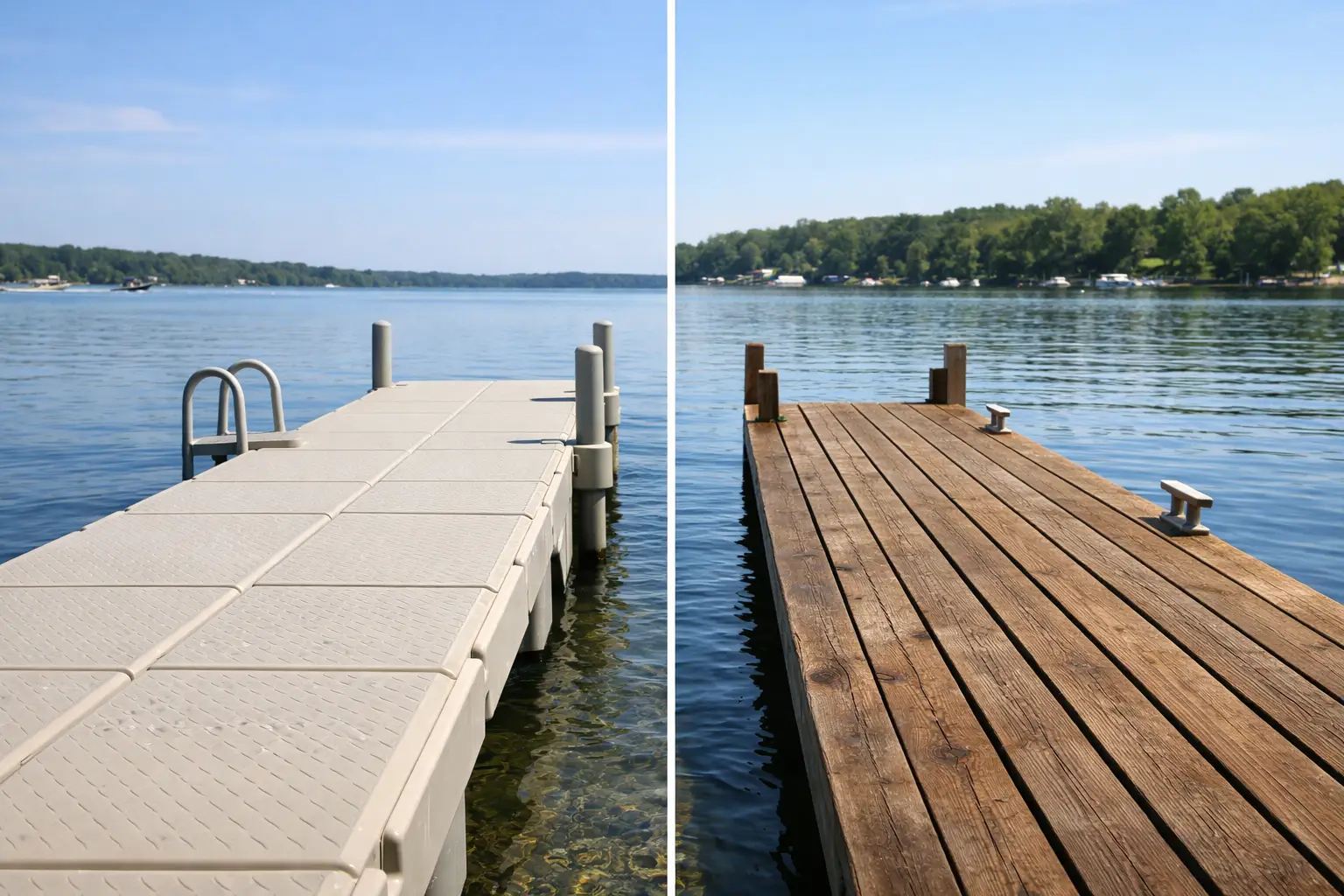
A traditional wood dock is generally a framed structure with wood decking, supported by pilings, fixed legs, or flotation beneath the frame. Depending on its design, it may stay in place as the water rises and falls or require seasonal adjustment, removal, or repair. The deck surface is made from individual boards that are exposed to sun, rain, moisture, and foot traffic.
A polyethylene floating dock uses molded polyethylene sections filled with foam for flotation. The sections connect to create a stable platform that rises and falls with the water. Gangways, anchoring systems, boat ports, PWC ports, launches, railings, and other accessories can be incorporated into the same system.
That construction difference matters in regions where reservoir levels change dramatically or where shorelines have gradual slopes. A floating system is not automatically the right answer for every waterfront, but it is often a more practical one where changing water levels are part of normal life.
Maintenance: Where Ownership Costs Begin to Separate
Wood requires ongoing attention because it is an organic material in a wet environment. Even pressure-treated lumber eventually needs inspection for splinters, loose fasteners, warped boards, rot, and weathering. Many wood docks also need regular staining, sealing, or board replacement to remain presentable and safe.
The maintenance burden can grow quickly at a busy marina, campground, or community dock. A loose board is not merely cosmetic when guests, children, anglers, and staff use the facility every day. It can become a safety concern, a liability issue, and an interruption to operations.
Polyethylene dock sections do not need staining or sealing. Their molded surfaces are designed for waterfront exposure and can usually be cleaned with routine washing. The material will still collect dirt, pollen, algae, and mineral residue depending on the location, but cleaning is different from rebuilding a deck surface.
Low maintenance does not mean no maintenance. Anchors, connections, gangways, hardware, and accessories should be inspected regularly on any dock. The advantage is that a polyethylene system shifts the focus from preserving the deck material to maintaining the overall dock configuration and safety components.
Safety Under Bare Feet and Heavy Use
Wood can become slick when wet, particularly after algae growth, rain, or repeated water traffic. It can also splinter and develop uneven surfaces as boards age. These concerns are especially relevant for swimming areas, kayak launches, youth programs, rental operations, and public parks where users may be barefoot or unfamiliar with the facility.
Molded polyethylene dock systems typically provide a textured, slip-resistant walking surface. Because the dock is made of connected sections rather than individual deck boards, there are no boards to cup, split, or lift at the edges. That can make a meaningful difference for daily use around boats, paddleboards, fishing gear, and personal watercraft.
Safety still depends on the complete design. A dock should have appropriate freeboard, stable connections, a properly sized gangway, secure anchoring, and railings where they are needed. Accessibility requirements may also influence slope, width, handrails, transition points, and boarding areas. Material selection is one decision within a larger waterfront safety plan.
Appearance and Waterfront Character
This is one category where wood can have a legitimate edge. A well-built wood dock has a classic warmth that may suit a rustic lake house, lodge, or property with established timber structures. Some owners simply prefer the way natural wood looks at the shoreline.
The trade-off is that the look needs ongoing work to stay attractive. Sun bleaching, staining, and uneven board aging can change the appearance quickly in exposed locations.
Polyethylene docks have a clean, consistent appearance that suits contemporary homes, marinas, parks, and commercial waterfronts. Their visual appeal is more functional than rustic, but a thoughtful layout can make the system feel intentional rather than industrial. Dock configuration, entry design, lighting, furniture, boat ports, and shoreline transitions all contribute to the finished result.
Water Levels, Shorelines, and Installation Conditions
Fixed wood docks can work well in stable water conditions, particularly when they are engineered around a predictable lake elevation and supported by suitable pilings or legs. They may be a reasonable choice for a protected pond or a waterfront where water movement is limited and the desired layout is unlikely to change.
However, fixed structures can become too high above the water during low periods or partially submerged during high water. On reservoirs with significant seasonal fluctuation, that can make boarding, fishing, swimming, and launching small craft less convenient. A floating dock follows the waterline, keeping the deck-to-water relationship more consistent.
Polyethylene sections are also modular. If a homeowner later adds a boat, purchases a PWC, creates a kayak launch, or wants a larger fishing platform, the layout can often be expanded or reconfigured. For commercial and public sites, modularity can support phased development, changing guest traffic, or temporary event needs.
The shoreline and anchoring approach are critical. Deep water, steep banks, soft lake bottoms, wave exposure, wakes, and fluctuating elevations all influence the right system. An experienced dock professional should evaluate those site conditions before recommending a layout, rather than treating every shoreline the same.
Initial Price Versus Long-Term Value
A basic wood dock can have a lower initial price than a modular polyethylene floating system. That can make wood appealing when the project is small, the budget is limited, and the owner is prepared to handle ongoing maintenance. Comparing only the first invoice, though, can be misleading.
Over time, wood dock ownership may include replacement lumber, fasteners, stain or sealant, labor, repairs after storm damage, and the value of weekends spent maintaining the structure. For a business, municipality, or HOA, it may also include downtime and maintenance planning.
A polyethylene floating dock often represents a higher upfront investment, particularly when the project includes a gangway, engineered anchoring, boat ports, accessibility features, or professional installation. Its value is found in longer service life, reduced deck maintenance, adaptable configuration, and consistent usability as water levels move.
The better financial choice depends on the property, expected use, and ownership horizon. A dock intended for a few years of light seasonal use deserves a different calculation than one expected to support a family, marina guests, or public recreation for decades.
Which Dock Is Right for Your Waterfront?
Choose wood when a traditional appearance is the highest priority, water levels are stable, the project is relatively simple, and you are comfortable with regular maintenance. Wood may also fit properties where an existing fixed pier or structural design already dictates the material choice.
Consider a polyethylene floating dock when low maintenance, barefoot-friendly surfaces, fluctuating water levels, and future flexibility matter more. It is particularly well suited to active lake homes, marinas, resorts, HOAs, parks, fishing locations, and public access projects where the dock must serve many people reliably.
For either option, start with how the waterfront will actually be used. Think beyond boat tie-up. Consider swimming access, fishing space, kayaks, paddleboards, personal watercraft, guest traffic, accessibility, storm exposure, and what the property may need five or ten years from now.
A dock should make time on the water easier, not create another property maintenance list. A customized site evaluation can identify the right floating layout, anchoring approach, access points, and accessories before installation begins. EZ Dock Texas can help turn those practical details into a waterfront system built for the way you use it.