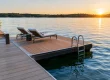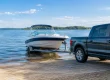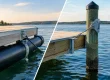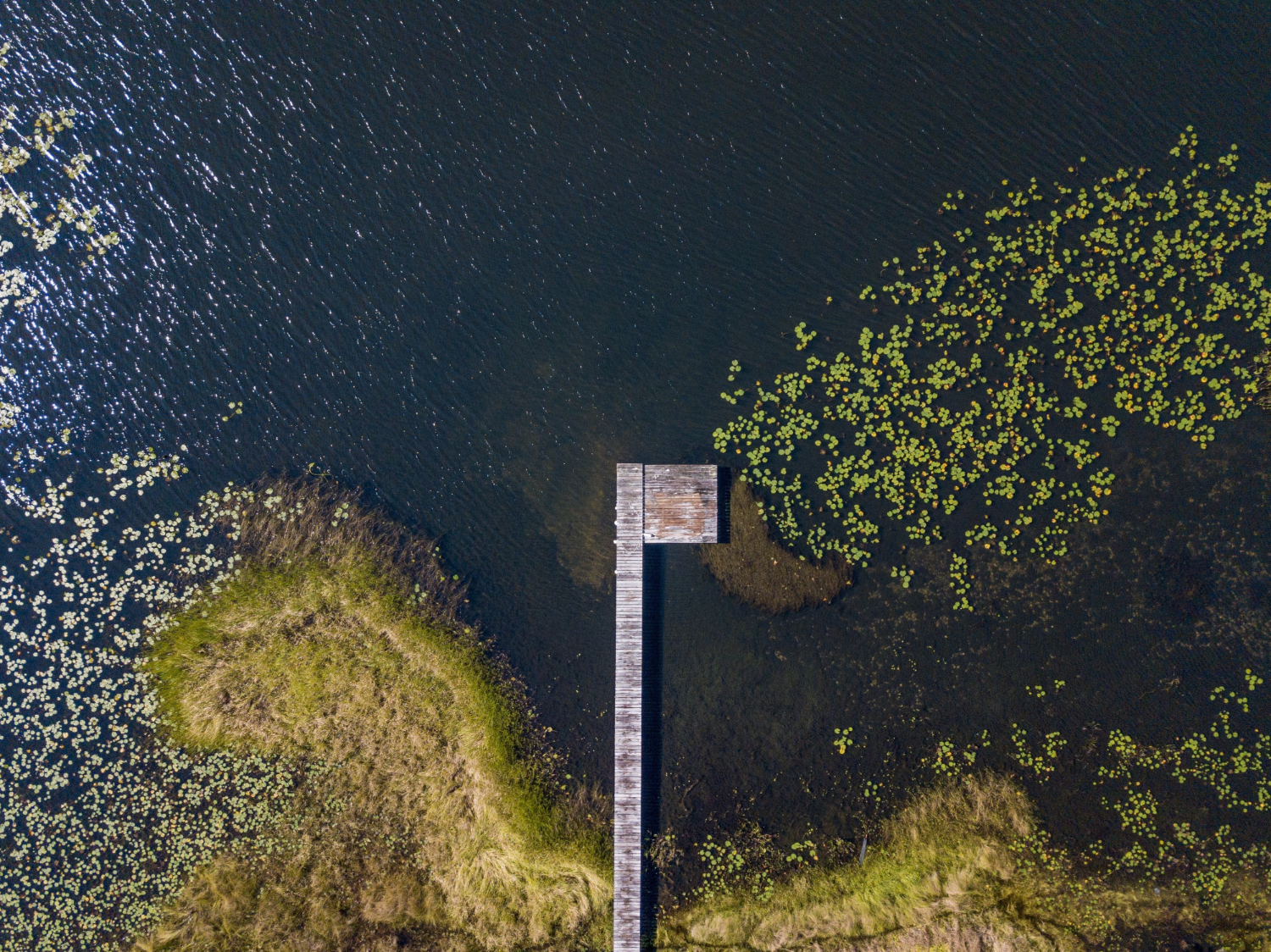
Managing marine assets in deep-water lakes requires a dynamic infrastructure that adapts effortlessly to extreme water-level fluctuations. For asset managers, navigating fluctuating water levels in deep Texas reservoirs requires moving away from rigid fixed piers and choosing self-leveling, heavy-duty floating dock infrastructure. These specialized systems adjust automatically to vertical water swings of twenty to forty feet, protecting docks from getting submerged during flood control releases or stranded high and dry during summer droughts. By using modular polyethylene components held by flexible vertical tracking or long-travel cable anchors, properties ensure constant water access, maintain guest safety, and protect long-term asset longevity.
The Physics of the Waterfront: Managing Site Conditions
Deep Texas reservoirs—such as Lake Travis, Lake Richland Chambers, and Lake Possum Kingdom—experience some of the most dramatic water level shifts in the country. Driven by heavy seasonal rains, downstream water commitments, and strict river authority flood controls, these lakes can see water levels swing vertically by dozens of feet in a single season. Traditional fixed timber or steel pile piers fail under these conditions; they either end up completely underwater during floods or sit stranded far above the water during drawdowns, making boat slips unusable and hazardous.
Additionally, as shorelines move back and forth over hundreds of feet of exposed lakebed, fixed docks cannot adjust. An engineered floating dock system solves this challenge by riding the water surface directly. It maintains a constant deck height above the water, while its dynamic anchoring systems allow the entire layout to move out into deeper water as levels drop, preserving your waterfront access.
Primary Risk and Operational Challenges
Structural Stranding and Grounding Failure
When lake levels drop rapidly, floating docks can settle onto uneven rocky lakebeds. This grounding can warp frames, puncture floats, and bend anchor brackets, causing severe structural damage and costly repairs for the property.
Lost Water Access and Usability Downtime
If a dock cannot adjust to a major water drawdown, boat slips become unusable. For luxury hospitality operators, private resorts, and multi-family developments, this downtime hurts rental income, lowers property values, and disrupts guest experiences.
Anchor Over-Tightening and Structural Fatigue
Standard cables or rigid anchor rods can easily bind or break when subjected to extreme vertical shifts. If anchor lines lack the proper length or self-tensioning hardware, rising waters can pull a dock underwater, while falling waters can snap cables, causing the entire dock to drift away.
Engineering and Design Evaluation Criteria
Surviving the extreme water shifts of deep Texas reservoirs requires dock materials with high impact resistance to handle floating logs, debris, and lakebed contact without cracking or puncturing. Property managers should look for heavy-duty, UV-stabilized linear low-density polyethylene (LLDPE) systems engineered with a thick-walled, rotationally molded hollow design. This high-performance polymer is completely water-impermeable and chemical-resistant, ensuring it will never rot, rust, or corrode, and it remains fully functional even if it temporarily rests on a soft mud bottom.
The anchoring system must deliver exceptional depth adaptability without relying on short fixed pilings or rigid underwater grout. Using heavy-duty, winch-controlled cable tracking systems or extra-long telescoping slide rails allows the dock to expand and contract its anchor lines safely as water levels shift. This modular scalability ensures that if the shoreline moves significantly, the dock layout can be easily extended with extra walkways or reconfigured with additional slips without needing a brand-new engineering design.
Best Practices for Site Integration and Longevity
A successful reservoir installation depends on a thorough site assessment to map out the underwater slope, drop-offs, and historical low-water marks of the lakebed. Position the primary dock assembly over a steep drop-off whenever possible, ensuring the structure stays afloat even during severe drawdowns.
The dock should connect to the shore using an articulated, self-leveling aluminum gangway mounted on rolling wheel sets. This setup allows the gangway to glide smoothly across the shoreline as the dock shifts in and out with changing water levels. Connect all modular sections with high-tensile composite couplers that absorb twisting forces and prevent structural fatigue. For properties facing flash floods, set up a regular maintenance routine to check and adjust anchor winch cables, ensuring the dock has enough room to ride up high-water surges safely.
Site Assessment Planning Checklist
- [ ] Historical Lake Level Log: Review the river authority’s twenty-year record for maximum high and low water marks to plan your anchor lengths.
- [ ] Subsurface Bathymetry Mapping: Analyze the slope and depth of the lakebed out from the shoreline to find the safest spot to place the dock.
- [ ] Gangway Travel Path Clearance: Clear trees, boulders, and debris from the shoreline path where the rolling gangway will move back and forth.
- [ ] Anchor Cable Length Calculation: Verify that all shore-tied cables have enough extra length to handle maximum high-water events.
- [ ] Winch and Tensioner Inspection: Check all mechanical lake winches and self-tensioning anchor blocks to ensure smooth operation.
- [ ] Flotation Buoyancy Reserves: Confirm the dock modules have enough buoyancy to stay supported if parts of the structure temporarily touch bottom.
- [ ] Fastener Structural Torque: Inspect all connection bolts and backing plates to ensure they are torqued correctly ahead of seasonal storms.
- [ ] Local River Authority Permitting: Ensure all cable anchoring layouts and shoreline adjustments match local lake management rules.
Frequently Asked Questions
How does a floating dock solve the issue of a twenty-foot water drop on a Texas reservoir?
Because the dock floats directly on the surface, it rises and falls automatically with the lake. Paired with rolling shore gangways and adjustable cables, the dock moves in and out with the water, keeping your slips fully usable.
Will resting on the lakebed during a severe drought damage a polyethylene dock?
Premium rotationally molded polyethylene is incredibly durable and flexible. If the lake draws down completely, the thick-walled hollow modules can rest on mud or sand without cracking or puncturing.
How often do anchor cables need to be adjusted on a fluctuating reservoir?
It depends on the lake. During steady seasonal shifts, a quick check and adjustment once a month is usually plenty. For fast flood-control releases, property managers should check cable tension weekly.
Can we add jet ski ports and kayak launches to a dock that moves this much?
Yes. Thanks to the modular flexibility of floating dock infrastructure, PWC ports and kayak launches connect directly to the main dock and move with it, keeping all your watercraft fully accessible at any water level.
What happens to the shore power and water lines when the dock moves in and out?
Property managers use specialized marine utility loops and flexible conduit tracks along the moving gangway, allowing power and water lines to extend and retract safely without pinching or breaking.
Securing Texas Waterways with Consulting Engineering Expertise
Protecting your waterfront investment on a dynamic deep-water lake requires specialized marine engineering. Successfully navigating fluctuating water levels in deep Texas reservoirs keeps your slips open, protects your watercraft, and ensures your infrastructure delivers reliable service through years of unpredictable weather.
As a premier consulting, planning, and engineering partner for elite residential developments, private estates, and commercial marinas across Texas lakes, EZ Dock Texas provides custom site assessments and heavy-duty floating dock infrastructure built for changing waters. Our professional team delivers turn-key layouts designed for long-term durability and peace of mind. To see our latest reservoir projects and connect with regional experts, visit our community page on Facebook.